

Is Kalshi Accurate? How Its Predictions Compare with Bookmakers and Betting Exchanges
Prediction markets have become increasingly popular over the last few years, with millions of dollars changing hands on everything from sporting events and elections to interest rates, economic announcements and entertainment awards.
One of the biggest names in this emerging industry is Kalshi, a US-regulated prediction market where traders buy and sell contracts based on whether particular events will happen.
But how accurate is Kalshi?
When its markets suggest there’s an 80% chance of something happening, does that event really occur eight times out of ten? And how does Kalshi’s forecasting record compare with traditional bookmakers and established betting exchanges such as Betfair?
These are important questions, particularly as prediction market prices are increasingly being reported as forecasts of future events.
Fortunately, we now have substantial historical data to examine, including academic research involving more than two million Kalshi markets.
In this article, we’ll look at the evidence, explain what the statistics actually mean and consider whether prediction markets really are better at forecasting outcomes than traditional betting markets.
How Does Kalshi Predict the Probability of an Event?
First, it’s worth understanding that Kalshi doesn’t employ a forecasting algorithm that independently predicts the outcome of each event.
Instead, its prices are determined by market participants buying and selling contracts.
For example, suppose Kalshi offers a contract on whether the Bank of England will cut interest rates at its next meeting.
If a Yes contract trades at $0.70, this represents a market-implied probability of approximately 70%.
If the event happens, the contract settles at $1. If it doesn’t, it settles at zero.
The theory is that thousands of traders, each analysing the available information, collectively produce a reasonably accurate estimate of an event’s probability.
This is sometimes described as the wisdom of the crowd.
It’s essentially the same principle underlying betting exchanges, where prices are determined by supply and demand rather than a bookmaker setting the odds.
However, there are some important differences, particularly concerning liquidity, fees and the types of markets available.
How Accurate Has Kalshi Been Historically?
The most comprehensive research so far comes from an August 2026 paper, Calibration in Prediction Markets: Theory and Evidence, written by Nicole Kagan and Rubens Baiocchi of Kalshi.
The researchers examined 2,243,741 resolved markets across 11 categories, covering the platform’s history from 2021 to mid-2026.
That is an enormous dataset, providing a much more meaningful assessment than highlighting a handful of correct or incorrect predictions.
The researchers found that Kalshi’s probabilities were generally well calibrated, particularly as markets approached settlement.
In other words, events assigned a probability of around 70% tended to happen approximately 70% of the time.
The study used a statistical measure called the Brier score to assess forecasting accuracy.
What is a Brier score?
A Brier score measures the difference between predicted probabilities and actual outcomes.
For a binary Yes/No event, the formula is:
Brier score = (Predicted probability − Actual outcome)²
The actual outcome is either 1 (the event happened) or 0 (it didn’t).
A perfect forecast receives a score of zero, while larger scores indicate less accurate predictions.
For example, suppose Kalshi predicts an 80% probability of an event occurring.
- If it happens, the Brier score is 0.04.
- If it doesn’t happen, the Brier score is 0.64.
The important point is that Brier scores reward probabilities that accurately reflect how frequently events occur, rather than simply rewarding predictions that turn out to be correct.
Kalshi’s historical Brier scores
The August 2026 research found that, across the markets included in its main analysis, Kalshi’s Brier score improved substantially as events approached resolution.
Approximately 0.08–0.09 three months before resolution, falling to around 0.02 at closing.
Those are impressive results, particularly given the wide range of subjects covered by the platform.
They suggest that Kalshi’s market participants become increasingly effective at assessing probabilities as new information emerges.
However, there is an important qualification.
A forecast made just before an event is settled often has a considerable informational advantage over one made months earlier.
For example, predicting whether a particular economic statistic will exceed a threshold is generally easier when the announcement is imminent than several months beforehand.
Therefore, a very low Brier score immediately before resolution doesn’t necessarily demonstrate exceptional long-term forecasting ability.
It is also worth remembering that this research was conducted by Kalshi-affiliated researchers, although its findings can be compared with independent studies.
Independent Research Into Kalshi’s Accuracy

A separate study published in October 2026 provides another perspective.
In Prediction Market Efficiency: Evidence from Kalshi on Pricing Accuracy, Forecasting, and Risk, researcher Tanay Subramanian examined 103,003 resolved Kalshi markets across 16 categories, using data available up to November 2025.
The study found that Kalshi’s prices contained useful forecasting information, but that accuracy differed substantially between markets.
Economic markets were generally well calibrated, while entertainment markets showed greater pricing biases.
Importantly, the researcher found that statistical models incorporating market prices alongside other publicly available information could outperform the original market forecasts.
In the reported tests, a machine-learning approach reduced Brier error by approximately 30% relative to the market-based baseline.
This doesn’t mean ordinary traders could automatically achieve those improvements or earn a profit. The study used particular modelling methods and testing conditions.
Nevertheless, it suggests that Kalshi’s prices, while informative, aren’t necessarily the best possible probability estimates.
What about Kalshi’s economic predictions?
Kalshi appears particularly useful for monitoring expectations about interest rates and economic announcements.
A 2026 Federal Reserve research paper examined the platform’s macroeconomic prediction markets and found that they provide a valuable, continuously updated source of economic expectations.
Another study by David Krause, covering 594 unique Kalshi markets and 1,860 forecast observations from 2025 to June 2026, reported an overall Brier score of 0.0987.
Accuracy varied considerably between economic indicators.
Federal funds rate markets were particularly well calibrated, while unemployment rate predictions were less accurate.
This illustrates an important point: Kalshi doesn’t have one universal accuracy rate.
Its performance depends on the type of event, the available information, market participation and how far in advance the forecast is made.
How Accurate Are Traditional Bookmakers?
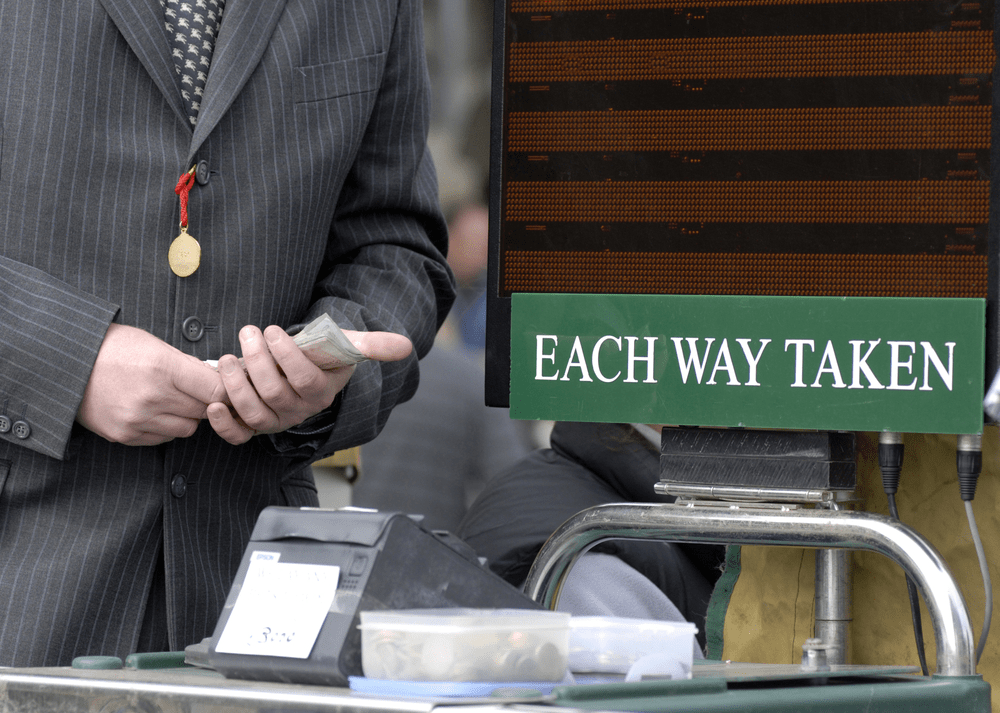
It’s easy to assume that bookmakers are simply trying to attract bets rather than accurately forecast results.
However, their odds contain a considerable amount of forecasting information.
Bookmakers employ specialist traders, statistical models and sophisticated risk-management systems. Their odds also react to betting activity and information emerging elsewhere in the market.
Consequently, the prices available shortly before a sporting event often provide remarkably effective probability estimates.
A 2010 study of 10,699 European football matches examined odds from ten online bookmakers.
The researchers found that bookmaker odds were useful forecasts of football results, although accuracy varied between bookmakers and competitions.
They also found evidence that forecasting performance had improved over time.
More recently, a 2025 study published in the International Journal of Forecasting examined European football betting markets.
It identified significant favourite–longshot bias in traditional match-result betting, while finding that Asian handicap markets could provide more efficient probability forecasts.
This distinction is important.
Bookmakers can be very good at estimating probabilities without offering equally good value on every selection.
The bookmaker’s margin
Unlike a prediction market, a bookmaker generally builds a profit margin into its odds.
Suppose two equally likely outcomes are both priced at 1.90.
The implied probability of each is:
1 ÷ 1.90 = 52.63%
Together, the probabilities total 105.26%.
The additional 5.26 percentage points represent the bookmaker’s overround.
This means bookmaker odds cannot simply be converted into probabilities and compared directly with Kalshi prices without adjusting for the margin.
Once the margin has been removed, bookmaker probabilities may be much closer to the true likelihood of each outcome.
It’s also why an accurate bookmaker forecast isn’t necessarily a profitable betting opportunity.
Are Betting Exchanges More Accurate Than Bookmakers?

This is where things become particularly interesting.
Betting exchanges such as Betfair operate in a similar way to Kalshi, with market participants effectively determining the available prices.
Instead of buying a Yes contract, traders can back or lay sporting outcomes.
The underlying principle is comparable: prices emerge from the interaction of buyers and sellers.
But does this produce better forecasts?
Research involving 5,478 football matches
A particularly relevant study was published in the International Journal of Forecasting in 2010.
The researchers examined 5,478 football matches across Europe’s five major leagues, comparing odds from eight bookmakers with corresponding prices on Betfair Exchange.
The study, Prediction Accuracy of Different Market Structures — Bookmakers Versus a Betting Exchange, found that the betting exchange generally produced more accurate forecasts.
The researchers also investigated whether discrepancies between bookmakers and exchange prices could provide profitable betting opportunities.
Some strategies produced positive historical returns, although that doesn’t guarantee similar results today.
This was a significant finding because it supported the argument that market-based prices can incorporate information more efficiently than traditional bookmaker odds.
But betting exchanges don’t always win
Other research has reached more nuanced conclusions.
A 2014 study on converting betting odds into probability forecasts found that betting exchange odds weren’t necessarily the most accurate source, particularly in smaller markets.
The researchers also demonstrated that the method used to remove bookmaker margins can influence comparisons.
More recently, an October 2026 analysis by StatsBet compared bet365 and Betfair Exchange closing odds across 1,635 football matches.
Its reported Brier scores were virtually identical:
- Betfair Exchange: 0.1934
- bet365: 0.1935
Although this is a smaller, independently published industry analysis rather than a direct replication of the earlier academic research, it illustrates how little difference there can be between mature betting markets.
So the evidence doesn’t support a blanket claim that exchanges are always more accurate than bookmakers.
Kalshi vs Bookmakers vs Betfair: Which Is More Accurate?

Unfortunately, there is no large-scale academic study that establishes a definitive comparison between all three platforms on exactly the same events and under identical conditions.
This matters because comparing Kalshi’s economic and political markets with Betfair’s football markets would be like comparing apples with oranges.
The difficulty of predicting a football match is very different from estimating whether an already heavily anticipated interest rate decision will occur.
Even their reported Brier scores aren’t necessarily directly comparable because the studies cover different event types, probability distributions and forecasting horizons.
Nevertheless, the available research supports several broad conclusions.
Kalshi: Strong historical probability calibration across a wide range of events, particularly close to settlement, but meaningful differences between market categories.
Traditional bookmakers: Generally effective sporting-event forecasts, especially in mature markets, although margins and favourite–longshot biases can make some odds poor value.
Betting exchanges: Strong predictive performance in liquid sporting markets, with some historical studies showing an advantage over bookmakers, but other studies finding little meaningful difference.
Perhaps the most important factor isn’t whether a probability comes from Kalshi, Betfair or a bookmaker.
It’s how much reliable information is available and how efficiently that information is reflected in the price.
The Problem With Kalshi’s Longshots
One particularly interesting finding concerns low-probability events.
In a 2025 working paper, subsequently revised in January 2026, researchers Constantin Bürgi, Wanying Deng and Karl Whelan analysed more than 300,000 Kalshi contracts.
Their study, Makers and Takers: The Economics of the Kalshi Prediction Market, found evidence of favourite–longshot bias.
Essentially, low-priced contracts tended to win less often than their prices suggested was necessary to break even after fees.
Higher-priced contracts performed better relative to their implied probabilities.
This is strikingly similar to a long-established phenomenon in traditional betting markets.