
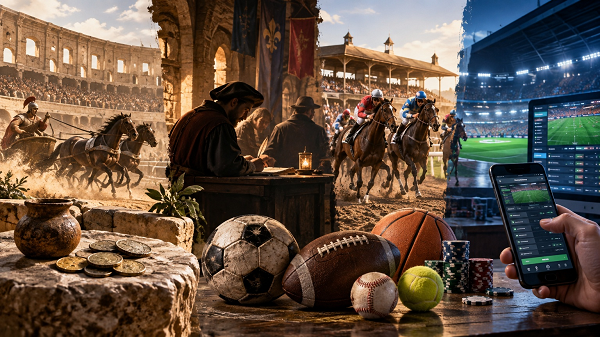
History of Sports Betting: From Ancient Wagers to Online Betting
Sports betting might feel like a modern industry, particularly now that millions of bets can be placed from a mobile phone in a matter of seconds.
In reality, people have been wagering on sport for thousands of years.
Whenever humans have competed against each other — whether running, racing horses, boxing or playing team sports — there has usually been someone nearby willing to bet on the outcome.
The history of sports betting stretches from wagers at the ancient Olympic Games through medieval horse racing, Victorian bookmakers and football pools to today’s online sportsbooks, betting exchanges and in-play markets.
What has changed dramatically is not so much the desire to bet, but the way bets are organised, regulated and settled.
In this guide, we take a look at how sports betting developed, with a particular focus on Britain and the events that helped create the modern betting industry we know today.
When Did Sports Betting Begin?
There is no single date that can be identified as the beginning of sports betting.
Informal wagering probably existed long before anybody thought to record it.
If two people competed to discover who was the fastest runner, strongest fighter or best horseman, it would not have taken long before spectators started backing their favourite.
What we do know is that organised betting on sporting contests can be traced back thousands of years.
Ancient civilisations including the Greeks and Romans had strong traditions of competitive sport, and gambling frequently developed alongside them.
That basic relationship remains surprisingly familiar today.
People enjoy sport because the result is uncertain. Betting simply adds another layer to that uncertainty.
Sports Betting in Ancient Greece

Ancient Greece is one of the earliest places where organised sporting competitions became an important part of public life.
The ancient Olympic Games traditionally date back to 776 BC, although athletic contests existed before then.
Competitors took part in events such as running, wrestling, boxing, chariot racing and the pentathlon.
Spectators could wager on competitors, particularly in major contests where reputations were well established.
There were obviously no online bookmakers offering decimal odds or cash-out buttons.
Most betting would have been informal, taking place directly between individuals.
However, the basic idea would be immediately recognisable to a modern bettor:
One person believes competitor A will win, another prefers competitor B, and the two agree a stake.
In other words, peer-to-peer betting existed long before the term was invented.
The Romans Take Betting to Another Level
The Romans adopted many elements of Greek sporting culture but developed an even greater appetite for gambling.
Chariot racing was particularly popular.
Huge crowds attended venues such as the Circus Maximus in Rome, where spectators followed particular charioteers and racing factions.
Betting on the races became part of the experience.
Gladiatorial contests were another obvious opportunity for wagering, although describing them simply as sport understates their often brutal nature.
Roman authorities periodically attempted to restrict gambling, but betting remained widespread.
This pattern would repeat itself many times over the following centuries: governments tried to control gambling, while the public continued finding ways to bet.
Horse Racing Becomes Central to British Betting
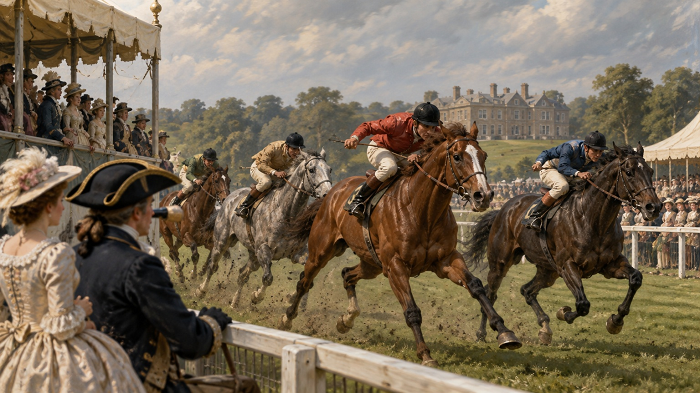
If one sport can claim to have shaped the British betting industry more than any other, it is horse racing.
Horse racing had taken place in Britain for centuries, but it became increasingly organised during the 17th and 18th centuries.
The sport attracted royal and aristocratic support, with Newmarket becoming particularly important.
As racing developed, so did betting.
At first, bets were largely agreements between wealthy individuals attending race meetings.
However, the growing popularity of racing created demand for more organised methods of recording and settling wagers.
This eventually helped create the bookmaker.
The Birth of Bookmaking
One of the most important figures in the history of sports betting was Harry Ogden, who is often credited with being one of the first bookmakers to regularly offer fixed odds on horse races in the late 18th century.
This was a significant development.
Previously, many racing wagers had effectively been private agreements.
A bookmaker offering prices on multiple runners created something much closer to the system we recognise today.
Rather than simply finding another punter who disagreed with your opinion, you could choose a horse and take a stated price.
Bookmakers would adjust those prices according to the amount of money being wagered and their assessment of each horse’s chances.
The principles have changed surprisingly little since.
Tattersalls and the Growth of the Betting Ring
The development of dedicated betting areas at racecourses was another important step.
Tattersalls became closely associated with racing and betting after Richard Tattersall established his horse auction business in the 18th century.
Over time, organised betting rings developed where bookmakers could offer odds and bettors could compare prices.
For generations of racing fans, attending the betting ring was almost as important as watching the race itself.
Bookmakers would call out their odds while punters searched for the best price.
It was an early version of odds comparison.
Today you might compare ten bookmakers on a smartphone in a few seconds.
In the 19th century, you might have walked along a line of bookmakers looking for someone willing to offer 5/1 instead of 9/2.
Betting Shops Were Once Illegal
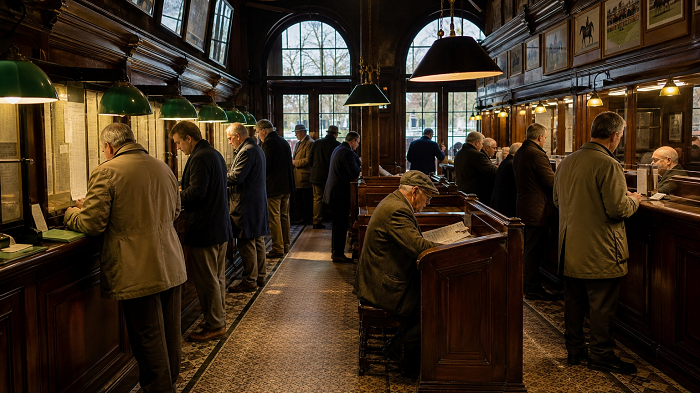
One of the more surprising parts of British betting history is that high-street betting shops are relatively recent.
During the 19th century, concern grew about gambling among the working classes.
The Betting Act 1853 attempted to suppress betting houses.
However, betting certainly did not disappear.
Bookmakers continued operating, often through runners or informal networks, while betting at racecourses remained popular.
This created an unusual situation.
Betting was widespread, but much of it took place in a legal grey area or outside formal premises.
That situation lasted for decades.
The Rise of Football Betting
Horse racing dominated British betting for a long time, but the explosive growth of professional football created an enormous new market.
The Football League was established in 1888, and football gradually became the country’s most popular spectator sport.
Punters naturally wanted to bet on matches.
However, football betting developed differently from horse racing.
One of its biggest innovations was the football pools.
Football Pools Become a National Institution
Football pools became hugely popular during the 20th century.
Rather than simply backing a team to win, customers attempted to predict a series of football results, particularly score draws.
Coupons were completed each week and submitted for the chance to win potentially life-changing prizes.
Companies such as Littlewoods became household names.
Before the National Lottery and online betting, winning the football pools was one of the most famous routes to sudden wealth in Britain.
At their peak, millions of people entered every week.
The pools also demonstrated something that remains important in betting today: people enjoy bets that turn a small stake into the possibility of a very large payout.
Modern football accumulators are essentially built around the same appeal.
Legal Betting Shops Arrive in Britain
The modern British betting industry changed dramatically with the Betting and Gaming Act 1960, which paved the way for licensed betting shops.
The first legal betting shops opened in 1961.
This transformed betting.
Instead of dealing with informal bookmakers or placing bets primarily at the racecourse, customers could walk into a local shop and place a wager legally.
Early betting shops were nothing like the brightly lit premises that later became common.
Regulations were deliberately designed to prevent them being too attractive or comfortable.
Nevertheless, they quickly became part of British high streets.
Horse racing remained the main product, but football betting and other sports gradually became increasingly important.
The Creation of the Tote
Another major development in British racing betting came with pool betting.
The Racecourse Betting Act 1928 led to the creation of the Horserace Totalisator Board, commonly known as the Tote.
Unlike traditional fixed-odds betting, Tote bets are pooled together.
After deductions, the remaining money is shared among winning tickets.
This means the eventual payout depends on how much money has been bet and how many winning selections there are.
Pool betting still exists today, although fixed-odds bookmakers dominate most of the UK market.
Betting Tax and the Move Offshore
For much of the late 20th century, UK bettors had to contend with betting duty.
Punters would typically either pay tax on their stake or choose to pay tax on their winnings.
This could significantly reduce returns.
The arrival of telephone and internet betting created opportunities for bookmakers to base operations offshore, particularly in locations where betting taxes were lower.
This placed pressure on the British tax system.
Eventually, betting duty for customers was abolished in 2001, helping UK bookmakers compete more effectively with offshore operators.
For punters, it was an important change.
Sports betting winnings in the UK are now generally paid without the bettor having to pay tax on them.
The Internet Changes Everything

The arrival of internet betting during the 1990s and early 2000s was arguably the biggest transformation in sports betting since the legalisation of betting shops.
Previously, a bettor might have needed to visit a betting shop or telephone a bookmaker.
Now they could place bets from a computer at home.
The internet also massively increased the number of markets available.
A traditional bookmaker might once have focused largely on horse racing and major football matches.
Online sportsbooks could offer betting on:
- football leagues around the world
- tennis
- golf
- cricket
- rugby
- American sports
- darts
- snooker
- motorsport
- boxing
- MMA
- and hundreds of smaller sporting events.
Betting became a truly global industry.
Betting Exchanges Arrive
Another major innovation came with the launch of betting exchanges.
Betfair, founded in 2000, transformed the traditional bookmaker model by allowing customers to bet directly against each other.
Punters could back an outcome to happen or lay it not to happen.
The exchange charged commission rather than building a traditional bookmaker margin into every market.
This opened up entirely new betting and trading strategies.
For serious bettors, exchanges also provided greater transparency around market prices.
The exchange model effectively brought ancient peer-to-peer betting into the internet age.
Instead of two spectators at an ancient sporting contest agreeing a wager between themselves, thousands of people could now trade prices electronically.
Mobile Betting Creates the Modern Industry

The next revolution came from smartphones.
Mobile betting transformed sports gambling from something requiring a visit to a shop or computer into something available almost anywhere.
This also helped create the enormous growth in in-play betting.
Instead of placing all wagers before an event started, customers could bet while the action was taking place.
A football match might offer hundreds of changing markets covering everything from the next goalscorer to the number of corners.
Prices could update almost instantly according to what was happening on the pitch.
This changed the psychology of sports betting significantly.
Betting became faster, more interactive and more closely connected to the live sporting experience.
Cash Out, Bet Builders and Modern Betting Markets
Modern sportsbooks have continued developing new products.
Cash out allows bettors to settle a wager before the event has finished.
Bet builders allow multiple selections from the same event to be combined into one wager.
Statistics-driven betting has also become increasingly sophisticated.
Markets that would once have seemed extremely niche are now commonplace.
A modern football bettor might wager on:
- the match result
- total goals
- both teams to score
- corners
- cards
- player shots
- player tackles
- goalscorers
- handicaps
- expected match statistics.
The variety is enormous compared with even 20 or 30 years ago.
How Sports Betting Regulation Has Changed
The growth of online betting also forced governments to reconsider regulation.