
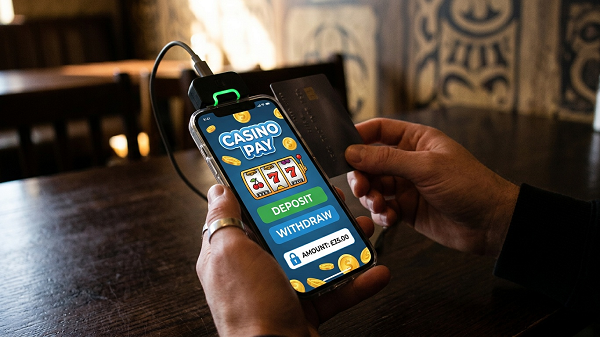
Pay by Mobile at Online Casinos: Honest Look at Who It Suits and Who It Doesn’t
Pay-by-mobile gets marketed as the easy, fast, modern deposit method. The card details disappear. The wallet stays in your pocket. The deposit lands in your casino account in seconds.
Some of that is genuinely true. Some of it is marketing. This guide is for anyone considering using the method who wants the actual trade-offs spelled out before they sign up to anything.
How It Actually Works
Pay-by-mobile, sometimes called pay-by-phone-bill, charges your deposit either to your monthly mobile bill or to your prepaid PAYG credit. The casino sends a text. You reply to confirm. The funds appear in your account.
The settlement happens later, when the phone bill is paid or the PAYG credit is used.
Behind the scenes, the transaction routes through one of a handful of UK direct carrier billing providers, the main ones being Fonix, Payforit, and PayViaPhone, plus Boku in some cases.
The provider handles authentication, settlement, and the payment guarantee back to the casino. The casino itself never sees your card details, your bank account, or anything else identifying. The phone number is the credential.
UK-licensed casinos that offer a pay by mobile casino deposit option all run through some combination of these providers.
The user experience is similar across operators because the underlying infrastructure is the same.
The Limits That Are Set By Law, Not By the Casino
This is the part people miss most often. The daily and monthly limits on pay-by-mobile transactions are not set by the casino. They are set by the regulator.
The Phone-paid Services Authority, which regulates premium-rate and direct carrier billing in the UK, sets a monthly cap of £240 across all providers combined.
Daily limits depend on the provider: Fonix is £40 per day, while Payforit and PayViaPhone are typically £30.
These caps apply to all your DCB transactions combined, including ringtones, charity donations, parking apps, and any other use of the method, not just to casino deposits.
That £240 monthly figure resets at the start of each calendar month. If you hit it on the 28th, you wait until the 1st. There is no opt-out and no operator-level workaround. The cap is genuinely a hard ceiling.
Where Pay-by-Mobile Actually Makes Sense
Some bettor profiles are well served by the format. Some are not. Here is the honest breakdown:
- Suits you if: You make small recurring deposits of £10 to £30, you treat the £240 monthly cap as a built-in budget tool, and you value the security of not entering card details on mobile networks or public Wi-Fi.
- Suits you if: You play casually on a phone, with mobile-only sessions and no real interest in chasing larger stakes. The format is purpose-built for this profile.
- Suits you if: You have a contract phone with a major UK network (EE, O2, Vodafone, Three, Virgin, Giffgaff) and prefer to consolidate small digital payments into your monthly bill rather than running them through a card.
- Doesn’t suit you if: You bet or play in larger amounts. The £30 to £40 daily ceiling is genuinely restrictive for anyone who routinely deposits more than that, and there is no way around it.
- Doesn’t suit you if: You want winnings paid back quickly through the same channel. Pay-by-mobile is deposit-only by UK regulation. Withdrawals have to go to a separate registered method, usually a card or bank account.
- Doesn’t suit you if: You expect to qualify for every casino welcome bonus. Some operators exclude pay-by-mobile deposits from bonus eligibility because the small cap sizes make wagering harder to clear in the bonus validity window. Worth checking the terms before depositing.
The Withdrawal Question
This is the bit most new users find out the hard way. You cannot withdraw winnings to your phone bill.
UK regulation prohibits it, partly because the original purpose of DCB was small-value payments for digital content, and partly because routing winnings back through a mobile network creates problems that the regulator does not want to deal with.
In practice this means every casino that offers pay-by-mobile deposits will require you to add a separate withdrawal method, usually a debit card or bank account, before you can take any money out.
The first withdrawal is the most friction-heavy. After that the method is set up and subsequent withdrawals work normally.
The practical effect for new users is that pay-by-mobile feels easy on the way in and slightly awkward on the way out. That is the actual user experience. It is worth knowing about before you commit.
Bonus Eligibility: Operator by Operator
Most UKGC-licensed casinos make pay-by-mobile deposits eligible for welcome bonuses. A meaningful minority do not, usually citing the small deposit caps as the operational reason for the exclusion.
If a welcome bonus is the main reason you are signing up to a particular site, check the bonus terms specifically for pay-by-mobile eligibility.
The exclusion, where it exists, will be stated in the promotion’s terms and conditions. It is one of the more common terms that gets missed at the headline-offer stage.
If the bonus is genuinely incompatible with pay-by-mobile deposits, you have two choices: use a card or e-wallet to claim the bonus on your first deposit, then switch to pay-by-mobile for subsequent top-ups, or just skip the bonus and use the deposit method you actually prefer.
UKGC rules require operators to allow deposits without bonus claims, so the second option is always available.
Security and the SIM Swap Question
The standard pitch for pay-by-mobile is that it is more secure than entering card details. That is partly true and worth a bit of nuance.
The strength of the method is that the authentication uses two separate channels: the casino website where you initiate the deposit, and the SMS network where you confirm it. An attacker who has compromised your browser session or your password cannot complete a deposit without also having access to your phone number’s SMS messages.
The weakness of the method is that the entire security model depends on the integrity of your phone number. SIM swap fraud, where an attacker convinces your network operator to transfer your number to a SIM they control, defeats the second-channel security entirely.
The networks have tightened their SIM swap procedures over the past few years in response to growing fraud, but the vulnerability has not gone away.
For most casual users with reasonable phone hygiene, pay-by-mobile is meaningfully safer than handing card details to a casino site, particularly one you have not used before.
For users with a higher threat profile, the same vulnerabilities that affect SMS-based two-factor authentication apply to pay-by-mobile deposits, and a card-plus-3DS combination may actually be the stronger option.
Should You Bother?
For casual recreational players who deposit small amounts, who play primarily on a phone, and who like the structural budget cap that the £240 monthly limit creates, pay-by-mobile is a perfectly reasonable choice.
It does what it says on the tin, the fees are usually zero, and the friction is genuinely lower than card-based alternatives for small repeat top-ups.
For serious bettors, or for anyone who values the option to deposit larger amounts when conditions warrant it, pay-by-mobile is fundamentally too restrictive to serve as a primary funding method.
It works as a supplementary option for small top-ups but not as the main rail.
The marketing around the method tends to oversell its universal applicability. It is not a payment method for everyone.
It is a payment method for a specific use case, and within that use case it is genuinely good. Outside that use case, a card, a bank transfer, or an e-wallet is the better tool.
Responsible Play
Pay-by-mobile makes deposits faster and frictionless, which is useful in some contexts and worth being mindful of in others.
The convenience that suits the method to small recreational deposits is the same trait that can mask cumulative spending over time.
Setting personal deposit limits within your casino account, in addition to the regulatory PSA caps, is sensible practice.
BeGambleAware offers free, confidential support and information at begambleaware.org.
The National Gambling Helpline operates 24 hours a day on 0808 8020 133. GamStop national self-exclusion is available at gamstop.co.uk and applies across all UKGC-licensed operators within 24 hours of registration.




Leave a Reply
Want to join the discussion?Feel free to contribute!