Here you can find the latest betting tips and insider advice on the best systems and tipsters, sign up for updates to find out how to beat the bookies.,

How does over/under betting work?

When it comes to sports betting, there are a lot of different options available. Some of these options can offer better odds, but the conditions you need to meet in order to win can be tricky to understand.

One of the most popular types of bets, especially in sports, is over/under betting. In this guide, we explore this form of bet comprehensively. We look at examples of over/under bets, the sports that you can place these bets on, and look specifically at Premier League football.

Let’s dive in.

What is an over/under bet?

An over/under bet is something that exists within the world of sports betting. It refers to the odds of whether a statistic in a game will be higher or lower than a certain value.

These types of bets often come in the form of a score of .5, and we’ll look at some examples below. For example, you could back a team to score more than 2.5 goals in a game. This means that the team needs to score three goals or more in order for you to win. If they score two goals, you lose.

Over/under bets are also known as total bets and sometimes are abbreviated to O-U.

Some people prefer this type of bet to others for the simple reason that you’re trying to predict just one statistical outcome of the game, rather than the entire outcome. Sometimes, this can be easier to call.

Examples of over/under bets

Before any game, a bookmaker or betting company will conduct extensive research and offer odds based on that research. In the context of football, one of the most popular sports for over/under betting, markets are usually offered on the likes of:

  • The total number of goals scored by a team or in the match as a whole.
  • The number of corner kicks in a half or game.
  • The total number of yellow cards.
  • The number of goals an individual player may score.

What types of over/under betting can you make on the Premier League?

Let’s take a deeper dive into the first example on the list above. It’s not uncommon for sportsbooks to offer odds on the total number of goals scored, either in a half or in the game as a whole. This will usually come in the form of decimal values such as:

  • Over/under 0.5 goals.
  • Over/under 1.5 goals.
  • Over/under 2.5 goals.
  • Over/under 3.5 goals.

The reason why these figures are set at .5 is because in football, you can’t score half a goal. So, if both teams combined score four goals and you’ve backed over 3.5 total goals, then your bet will succeed. If the game finishes on 2-1, then you would lose your bet.

In terms of the odds offered, the higher the value, the less likely it is to happen – unless both teams going into the game are prolific goal scorers and have very leaky defences.

Odds on the likes of over 0.5 goals will usually be quite poor.

However, you can combine over/under bets to build an accumulator and get better odds. For example, you could back Arsenal, Chelsea, Everton and Luton Town to all score over 1.5 goals in the Premier League. If each of them bag two goals in their respective matches, your bet will come in.

What sports offer over/under bets?

Over/under betting isn’t just restricted to football but is offered in a broad range of sports. A popular sport that it’s offered in is basketball.

The premise is exactly the same as we’ve outlined above, however, the values and what you can bet on may be a little different. For example, basketball works on a points-based system, with some NBA teams regularly scoring over 120 points per game.

It’s possible to bet on the total number of points that a team may score or the total scored in the overall tie.

The same applies to American football and the likes of the National Football League (NFL). Over/under bets are also popular in Major League Baseball (MLB), the National Hockey League (NHL) and other sports such as rugby, cricket and tennis.

With tennis, you can bet on the likes of the total number of games played or the total number of sets completed. A common example could be over/under 22.5 games. Again, odds for different values could drastically differ.


How Do Tipsters Make Money?

A common question people have about tipsters is “how do they make their money?” 

The life of a tipster is shrouded in mystery and it is one of these slightly grey areas where there is no “official” way for a tipster to be paid. At the same time, there has been some controversy in recent years regarding partnerships between bookies and tipsters, but as we discuss below this is not always as problematic as it may at first appear. 

It may sound like quite a glamorous and exciting lifestyle for a betting expert to earn money from issuing tips, but it is not always quite so straightforward and normally involves significant ups and downs and a lot of hard work to be successful at. 

There are various ways a tipster can earn money – whether that’s by being paid by a newspaper (or website) to provide tips, charging a subscription directly to members of their tipping service, through advertising or taking a percentage of any winnings made. 

Each of these options has its pros and cons for both punter and tipster and we will take a look at the implications of each one below. 


The Evolving Career of the Tipster

Since the earliest days of gambling, where there have been bets being placed on sports, invariably tipsters have followed. It makes sense for people to seek out experts in any field, who may have more in-depth knowledge and expertise that can be utilised to their advantage. When people are placing money on an event, it is logical they may want the advice of a professional rather than relying on their own guesswork or doing a little bit of form study. 

This is particularly the case in sports like horse racing, where there are a huge range of factors to consider and the sense that there is “inside information” that not all punters may be privy to. 

Back in the early days of racing, a tipster would typically attend the racecourse in person and hand out slips of paper with their tips on in exchange for a small fee. The tipster would often be someone connected to the stables or trainer with a claim to some “inside info.” 

This gradually evolved to a more formal service where tipsters would provide their selections in a newspaper column, together with write-ups explaining their reasoning. The newspaper would pay the tipster a salary if they were a regular contributor, or fees for individual articles if the advice was more occasional. 

As the popularity of betting grew over the course of the twentieth century, specific newspapers dedicated to betting, like the Racing Post and Sporting Life, sprang up. These had whole panels of tipsters devoted to particular sports or even disciplines within sports. 

Within such newspapers, there were also private tipsters who would take out adverts to promote their services to readers. These tipsters would normally provide their tips via a phone-line, for which they would charge a premium rate and earn a fee. 

All of this was of course turned on its head by the arrival of the internet in the late 1990s. The whole gambling world was changed dramatically by the internet and tipping was no exception. 

As bookmakers moved online, so did the majority of tipsters. It opened up the possibility for many more budding tipsters to offer their services to the public, which had previously been the reserve of a select few. 

How tipsters offered their services also changed, with tips being provided via a whole variety of channels including e-mail, text and more recently, apps like Telegram. 

Tipster platforms also sprung up, which are websites allowing people to offer their tips, whilst taking care of things like admin and marketing on behalf of the tipster to save them time. 

You would expect that in a general sense, any tipster would make some money from betting on their own tips first and foremost. However, some may have suffered bookie restrictions and their strategy might not be viable on the exchanges so that is not always possible – and in some cases not being able to bet themselves may even be the factor that drove them to becoming a tipster in the first place. 

Leaving that aside though, the options for how a tipster can make money today are quite varied. The option they go for can have quite a significant impact for them and for the punter however, which we will dive into further below. 


The Traditional Method – A Newspaper Tipster

The method through which a tipster was traditionally be paid was by having a job as a newspaper columnist and being paid a regular salary by that newspaper.

The tipster would normally produce a regular column, whether on a weekly or daily basis, providing tips for upcoming races. Those in the UK will probably be familiar with names such as Pricewise (Tom Segal) at the Racing Post or Templegate at the Sun newspaper. The advantage of this approach from the tipster’s perspective is that they get paid a regular income and do not have to worry about the ups and downs that can come with a subscription-based model (more on that below). 

The advantage of this approach from the punter’s point of view is that it is free (or cheap, as in the cost of the newspaper). However, the disadvantage is that often the newspapers don’t keep a record of the tipster’s results or seem to place much importance on the tipster’s performance.

Many newspaper tipsters for example actually have losing records. It is more about regularly churning out articles and being a good, knowledgeable writer, rather than producing a long-term profit per se

The other potential downside of the newspaper tipster is that it can be very hard to obtain the advised prices. With thousands – or even millions – of punters seeing the same tips posted in a popular newspaper (or site) at the same time, it can cause a price crash.

Those who have used Pricewise will probably be familiar with this and it was evident in our review of Hugh Taylor of At the Races, who whilst producing excellent results at advised prices struggled to produce a profit at prices that were actually obtainable.  


Today’s Method of Choice: A Subscription-based Model 

Since the advent of the internet in the late 1990s, the most common method for tipsters to be paid is via a subscription-based model. 

So for example a tipster will charge a monthly or quarterly subscription fee for people to receive their tips. Once signed up, tips are sent out via e-mail, text or Telegram app, or via logging in to a website. 

This method works well and is pretty simple and straightforward for both parties. The tipster and punter’s interests are very much aligned – the tipster knows that if they don’t produce the goods, people will stop subscribing. 

From the tipster’s point of view, on the downside that means if they go through a losing spell, their income can fall quite dramatically. If the drawdown drags on for a while, that can mean having to live off very little income for an extended period. 

The flipside of course is that if they have a really good run, subscriber numbers can soar and the tipster can receive a very tidy income. If for example a tipster charges £30 per month and hits a purple patch with lots of winners, they could see 200 subscribers joining their service, bringing in income of £6,000 per month. 

So operating a subscription model can be “feast or famine” for the tipster and if going down that route, a tipster probably has to be prepared for a wild ride in terms of their income level. Some months will be tough and some very lucrative, so learning to look at the average over a year is probably the best way to approach it. 

From the punter’s perspective, the subscription model is a favourable one as we say, as you know the tipster will be doing everything they can to produce a profit and keep the subscribers signed up. That doesn’t guarantee they will make a profit of course, but at least you know your and their interests are aligned. 

Most of the best tipsters we have reviewed on this site, such as The Bookies Enemy and Hanbury Racing, run on a subscription basis, which we think is the most sensible model overall. 


Taking A Cut – Profit Share Model

Another way for tipsters to get paid is a profit share model. This is a lot less common than a subscription model, but means the punter pays a share of profits made to the tipster over a given period. 

So for example a tipster might set a 20% profit share model over a month. If the tipster makes £1000 profit for the punter over that month, then the punter would pay £200 from that to the tipster.

A profit-sharing model was used by the (now-defunct) site Betmarkets and we have seen it a few other times over the years, but as we say it is not very common. 

One of the drawbacks to this model is that if in the example above, after making £1,000 profit the tipster then made a loss of £1,000 the next month, the punter is out of pocket by £200, whilst the tipster has actually broken even. Losses can be carried over to be counted against future profits, but there is no guarantee the tipster will make back enough profit to cover this. 

Additionally it can be complicated to set up and ensure that funds are collected and distributed in the correct way. 

A slight variation on this is the “pay as you win” model, whereby a punter does not pay a subscription but pays based on any profits made by the tipster. 

For example the tipster might charge £1 per point of profit made. If the tipster makes 50 points profit, you would then pay £50. 

This approach can suffer from the same issue as the profit share model if the tipster then goes and loses the previous profits made, but in a way it is not that different to paying a monthly subscription fee with the risk that the tipster makes a loss that month on top of the subscription fee you have paid. 

The pay as you go approach is also easier to administer than a profit sharing model, so is slightly preferred of the two.


Advertising 

The other principal way a tipster can make money is through advertising. This is perhaps the most controversial one and has provoked some lurid articles in the press regarding advertising deals struck between bookies and tipsters. 

Essentially in these scenarios, the tipster signs up as an affiliate of a bookmaker. They then promote that bookmaker on their tipping website and receive a share of the revenues from any person who signs up to that bookmaker from their site.

What this means in effect is that the tipster receives a share of any losses made by the customer. Often these deals are set at 20-30%. So if the punter were to lose £1,000 and the tipster was on a 30% affiliate deal, they would receive £300 from the bookie. 

You can see how quite easily this could lead to a conflict of interest, with the tipster incentivised to provide “bad tips” so the punter loses money and the tipster gets a cut of their losses. 

Whilst there do appear to have been some instances of this happening – particularly with social media tipsters – you can also see how quickly this approach would fall down. Punters would stop following a losing tipster very quickly and the tipster would not get any new customers. So it might work in the short term but would not be viable for very long. 

More common in this scenario is that the tipster will still try to provide winning tips and make a profit for their followers, thus retaining their punters and bringing new ones to their site, but the weight of statistics will play its part in the long run.

With studies showing over 98% of gamblers lose money overall, it is a sad fact that even if they were receiving some profitable tips, most punters will still go on to lose money from their betting overall. This could be through placing what could be termed “mug bets” such as at online casinos or on accumulators for example. 

So the advertising model in many instances is not as controversial as the press have tried to make out, as being a losing tipster is not viable for any length of time at all. In any event, with additional regulations that have been brought in, the bookies have largely stopped working with affiliate tipsters so this model is not very common anymore. 

Of course tipsters could just offer general advertising on their site not related to bookmakers, but the revenues from general advertising (pay-per-click) tend to be very low unless a website is attracting millions of visitors. So it would only really be viable for the big betting websites like At the Races and the Racing Post, which as described above already have their salaried in-house tipsters. 

In essence then advertising is rarely used as a means for tipsters to make money these days and in fact it’s a while since we have seen any tipsters operating this model. 


Conclusion – It’s A Tipster’s Life

The career of a tipster is one of those areas that is shrouded in mystery and attracts a fair amount of controversy. 

To be honest though, making money as a tipster is hard and other than those lucky enough to land a job as a salaried newspaper tipster, generally it involves a lot of ups and downs with wildly fluctuating income. 

Even those fortunate few who do land a job as a resident tipster at a newspaper are still – like all tipsters – under pressure to produce results. 

So it is perhaps not surprising to learn that many tipsters these days do it as a second income rather than their primary job, given the pressures and ups and downs of it. 

Those who have managed to do it professionally and successfully for a long period tend to be only the very best – for it is only they who can it make it viable ultimately. 

Some of those top tipsters you can check out here in our list of the Best Horse Racing Tipsters.


The Secrets of Successful Sports Trading: A Comprehensive Guide

Are you an avid sports fan looking to turn your passion into profit? Look no further, because we have the ultimate guide for you!

In this comprehensive guide, we will unveil the secrets to successful sports trading that will take your game to the next level.

Whether you are a beginner or an experienced trader, our expert tips and strategies will help you navigate the unpredictable world of sports trading with confidence.

From understanding the basics of sports trading to mastering advanced techniques, we will cover it all. Learn how to analyze sports markets, identify profitable opportunities, manage risks, and make informed trading decisions.

Discover the power of data analysis, the importance of psychological resilience, and the art of timing.

With our insider knowledge and actionable insights, you’ll be well-equipped to maximize your profits and minimize your losses.

So get ready to unlock the secrets to successful sports trading and take your trading skills to new heights!


What is Sports Trading?

First up, a simple explanation of what we mean by sports trading.

Sports trading refers to the practice of buying and selling bets on sporting events in order to profit from the changing odds and market conditions. Exchanges such as Betfair are used to do this, with users able to bet against each other rather than against a bookmaker.

In traditional sports betting, you place a bet on a specific outcome, such as Team A winning a football match.

However, on the exchanges you have the option to both back (bet for) and lay (bet against) an outcome. This creates an opportunity for sports traders to profit by taking advantage of fluctuations in the odds.

Sports traders aim to buy low and sell high, similar to trading in financial markets.

Here is an example from a cricket match between England and Australia in the Ashes:

It is early on the first day and England are batting. Whilst they are fairly settled at a score of 150/3, England have some young inexperienced batsman who are unproven at this level whilst Australia have a strong bowling attack. 

Australia are priced at odds of 4.20, which seems quite high given the scenario and with there being a lot of time left in the match to turn things around. 

So we place a £50 bet on Australia at odds of 4.2:

Matched bet - Australia

Things turned around very quickly, with Australia taking two quick wickets shortly after we placed our back bet. 

After the two wickets their odds fell to 2.44. 

We felt this was a good point to exit the trade and lock in some profits, as we had seen a good, sharp move in the odds. 

Remember we are trading, not betting, so we are not trying to figure out who will actually win the match, just where there are opportunities for the odds to fluctuate and make some profit from those fluctuations. 

So we “cash out” out our bet, placing a lay stake of £86.05 at odds of 2.44:

Lay stake - Australia

That gave us a healthy profit of £36.05 whatever happens. 

We do not have to worry about who is going to win the match, we can just sit back and enjoy our profits.

So that is an example of a simple sports trade in action. 

You can of course do it the other way, by laying first and then backing. In that case you would be hoping for the odds to rise after placing your initial bet.  

Traders often use various strategies and techniques, such as scalping (making small, quick profits from small price movements), swing trading (capitalizing on larger price swings), and hedging (reducing risk by placing opposite bets).

We will have a look at some of these in more detail below.


Can You Make Money From Sports Trading?

It is possible to make money from sports trading – in fact many would argue it is easier to make money from trading than betting, as you are just looking to capitalize in the movement in odds rather than trying to overcome the bookies’ considerable edge. 

There are a number of successful, well-known sports traders out there, including Paul Krishnamurty who trades mainly cricket and politics and Peter Webb who trades a variety of sports including football and horse racing. 

However, it is important to understand that sports trading requires skill, knowledge, and effective strategies. Successful sports trading is not based on luck alone but on analyzing data, understanding market trends, and making informed decisions.

It involves risks just as with betting and it’s advisable to start with small stakes, learn different strategies, and gradually increase your involvement as you gain experience and confidence in the sports trading process.


The Key Principles of Successful Sports Trading

Successful sports trading is built on a foundation of key principles that guide traders in their decision-making process.

These principles are essential for navigating the volatile and unpredictable world of sports markets and can mean the difference between profit and loss. Here are some key principles to keep in mind:

  1. Research and Analysis: Before placing any trades, it’s important to conduct thorough research and analysis. This includes studying past performance, analyzing statistical data, and keeping up with the latest news and developments in the sports world. By arming yourself with knowledge, you can make more informed trading decisions and increase your chances of success.
  2. Risk Management: Managing risk is crucial in sports trading. This involves setting stop-loss levels, diversifying your portfolio, and being disciplined in your trading activities. By managing your risk effectively, you can protect your capital and minimize potential losses.
  3. Patience and Discipline: Patience and discipline are key virtues in sports trading. It’s important to wait for the right opportunities and not let emotions dictate your trading decisions. By sticking to your trading plan and exercising discipline, you can avoid impulsive trades and increase your chances of success.

By adhering to these key principles, you can lay a strong foundation for your sports trading journey and increase your chances of long-term success. These principles form the backbone of successful sports trading and should be incorporated into your trading strategy.


How to Trade Sport Successfully

In order to trade sport successfully you need to have a good strategy. There are various approaches you can take and professional traders tend to focus on one particular method or combine a few different strategies they have found to work for them. 

Broadly the main approaches to sports trading are scalping, swing trading and hedging. We will look at each of these separately below. 

Scalping

Scalping in sports trading is a trading strategy where traders aim to make small, quick profits from small price movements in the odds of a sporting event. The objective is to take advantage of short-term fluctuations in the market to secure profits.

Here is a simple example of a scalp trade from a tennis match:

Alex Molcan is playing Tomas Machac in a Challenger event. 

Molcan has won the first game and Machac is about to serve. 

We lay Molcan at 1.64 for £10:

Betfair trading screenshot - tennis

What normally happens is that if the server wins just a point or two on their own serve (which is a likely outcome in men’s tennis), the odds will move a few ticks in their favour and we can trade out for profit. 

That is what happened in this case, with Machac going 30-15 ahead on his serve. 

Molcan’s odds moved a nice five ticks, drifting out to 1.69.

Betfair trading screenshot - tennis

So we would be able to take a nice £0.24 profit here, even though the server is only one point ahead in the game (30-15).

Often scalpers just look for one or two ticks profit rather than the five we have gained here. 

There are countless markets you can scalp and ways you can do it, but some of the most popular include:-

  • Scalping the unders market in football: Often the odds move a tick or two in less than a minute, giving the potential for a quick profit if no goal is scored. 
  • Scalping the match odds in cricket: if a run or two are scored, the odds will normally shift a tick or two, allowing for a simple profit if a wicket is not taken.
  • Scalping the favourite in horse racing markets before the off.
  • Scalping the match odds in NFL as a team advances forward down the field.
  • Scalping the server in tennis – as above.

You can study the markets yourself to find suitable scalping opportunities. The key thing you are looking for is quick movements of a tick or two that are repeatable over and over again. 

You also need to be aware of what your losses will be if the scalp goes against you. 

Try to work out the percentage chance of that happening and weigh up whether it is worth it entering a scalp trade. 

For example, if you are gaining two ticks but risking forty ticks if the market moves against you, you effectively have a 1-in-20 trade. 

If the chances of the scalp going against you is approximately 1-in-10, then it wouldn’t be worth it. If it was more like 1-in-30, then it would be worth doing the scalp. 

Here’s a step-by-step breakdown of how scalping works in sports trading:

  1. Identifying Opportunities: Traders look for sporting events with high liquidity and volatility. Liquidity refers to the availability of money in the market, while volatility indicates the magnitude and frequency of price movements.
  2. Monitoring the Market: Traders closely monitor the odds of the selected event on a betting exchange platform like Betfair. They track the odds movement and identify patterns or trends that present potential scalping opportunities.
  3. Placing Bets: Once a scalping opportunity is identified, the trader places both a back (bet for) and a lay (bet against) bet on different outcomes. The bets are typically placed with small stakes.
  4. Quick Profit-Taking: As soon as the odds move in a favorable direction, the trader quickly executes the necessary trades to lock in a profit. This may involve placing opposing bets at the new odds or using trading software to automate the process.
  5. Repeat Process: Scalping traders repeat this process multiple times during a sporting event, aiming to accumulate small profits from each trade. They may focus on specific moments, such as before a goal is scored in a football match or during a significant point in a tennis match.

Scalping requires speed, discipline, and the ability to react swiftly to market movements. Traders often use trading software or bots to automate the process, as the odds can change rapidly, and quick execution is crucial for success.

It’s important to note that scalping involves frequent trades and small profit margins.

While individual scalping trades may yield small profits, the cumulative gains can be significant over time.

However, it also means that there is limited time for analysis and decision-making, and the trader must be comfortable with making rapid trading decisions based on their predefined strategies.


Swing Trading

Swing trading in sports trading is a strategy where traders aim to profit from larger price swings or movements in the odds of a sporting event.

Unlike scalping, which focuses on quick profits from small price movements, swing trading involves holding positions for a longer duration to capture larger market fluctuations.

The cricket trade earlier on in this article from the England vs Australia match is an example of a swing trade.

In that case, we took a large swing in odds from 4.2 down to 2.44, which is a much bigger movement in odds than you are looking for when scalping. 

In swing trading we are generally looking for a specific event (or events) to happen to shift the odds in a dramatic fashion. 

That could be:

  • A goal in a football match
  • A break of serve (or loss of a set) in a tennis match
  • A wicket (or multiple wickets) in a cricket match
  • A run of birdies by a player in a golf tournament
  • A touchdown in an NFL game.

These events would be enough to “swing” the odds by a significant amount and deliver a decent profit on a trade. 

Here is an example of a swing trade from a tennis match at Wimbledon between Danielle Collins and Belinda Bencic. 

There is great volatility in tennis odds which makes it ideal for swing trading. 

It is early in the third set and Bencic is favoured:

Collins v Bencic Betfair screenshot

We put in a lay bet at 1.46 for £10 as we expect it to be a tight third set and there could be lots of ups and downs and fluctuations in the odds. 

Thankfully it doesn’t take long for there to be a significant swing in the odds. 

Immediately in the first game after we put our lay bet in, Bencic experiences a tough service game with the score going to deuce. 

Collins v Bencic Betfair screenshot

The odds swing considerably, all the way out to 1.85, even though Bencic has not even lost the game (and incidentally went on to win the game). 

In any event, this allows us to close out our trade, banking £1.56 from our trade after just a few minutes.

It will not always be this easy of course and in swing trading (as in all trading) it is important to have parameters set for what to do if the trade goes against you. 

In this instance, we could have either exited the trade for a small loss if Bencic had won the game easily, or waited to see how Collins fared in her service game. 

If Collins was broken, we would have been staring at a reasonable loss, so that might have been the time to exit the trade rather than risk losing our entire stake. 

Whatever point you choose to exit a trade, it is advisable to ensure your entire stake is not at risk – many traders would say they are prepared to lose a maximum of half their stake on most trades, which seems like a sensible approach. 

In any event, here’s a breakdown of how swing trading works in sports trading:

  1. Identifying Potential Swings: Traders look for sporting events where they anticipate significant price movements or changes in the odds. This could be based on factors such as team news, match dynamics, market sentiment, or other relevant information.
  2. Analyzing Trends and Patterns: Traders analyze historical data, form, performance metrics, and other relevant factors to identify trends and patterns that can indicate potential price swings. This analysis helps traders make informed decisions about when to enter or exit their positions.
  3. Entry and Exit Points: Based on their analysis, swing traders determine the optimal entry and exit points for their trades. They may choose to back (bet for) or lay (bet against) specific outcomes, depending on their assessment of the market.
  4. Holding Positions: Swing traders typically hold their positions for a longer duration compared to scalpers. They aim to capture the expected price swings as the odds change over time. The holding period can range from several minutes to hours or even days, depending on the sporting event and the anticipated market movements.
  5. Profit-Taking: Once the price swing occurs and reaches the trader’s target, they close their position and secure their profits. This can be done by placing opposing bets or using trading software to automate the process.
  6. Risk Management: Effective risk management is crucial in swing trading. Traders set stop-loss orders or define specific exit criteria to limit potential losses if the market moves against their positions.

Swing trading requires a comprehensive understanding of the sport, data analysis, and the ability to identify favorable entry and exit points.

Traders often use statistical models, predictive analytics, and historical data to support their decision-making process.

It’s important to note that swing trading involves holding positions for longer periods, which introduces additional risks.

Market conditions can change, and unexpected events can influence the odds, potentially leading to losses. Traders need to carefully manage their positions and adjust their strategies as new information becomes available.

Hedge Trading

Hedge trading in sports trading is a strategy used to minimize risk and protect against potential losses by placing opposing bets or trades to offset each other.

The goal of hedge trading is to create a position that reduces or eliminates the impact of adverse outcomes, ensuring a more balanced and controlled risk exposure.

An example of this would be trading different over/under markets against each other in a football match.

Here we take the example of Union Santa Fe v Boca Juniors in the Argentinian Primera Division.

Rather than just taking a side of the over/unders and hoping it comes in, with hedge trading we are looking for opportunities to use connected markets in opposition to one another.

So first we back over 1.5 goals at 1.64, let’s say for £10.  

Union Santa Fe v Boca Juniors Betfair screenshot

Then we take our “hedge” trade, to offset our risk in this market.

In this case, that means backing under 2.5 goals at 1.47.

Union Santa Fe v Boca Juniors Betfair screenshot

To offset our risk in the over 1.5 goals market, we could put £15 on under 2.5 goals at 1.47.

An ideal scenario in this trade would be if there was a goal after around 25 minutes, in which you would make a good profit on the over 1.5 trade whilst only a marginal loss on the under 2.5 trade, giving a decent profit overall. 

The key thing would be to not let the trade run to the end, as if there are exactly three goals in the game you would lose both bets! 

That is the beauty of trading however, we can be out well before then and without risking our stakes like that.

Hedge trading can be beneficial then in reducing risk and using related but opposing markets in the same event to our advantage. 

Here’s a breakdown of how hedge trading works in general in sports trading:

  1. Identifying Risk Exposure: Traders assess the potential risks and uncertainties associated with their initial bet or position. They identify scenarios where the outcome could result in a significant loss.
  2. Placing Opposing Bets: To hedge against potential losses, traders place additional bets or trades that have an opposite outcome to their initial bet. By doing so, they create a position that would generate profits if the original bet loses.
  3. Risk and Profit Calculation: Traders calculate the potential risk and profit scenarios based on the odds and stake sizes of their initial bet and hedge bet. The objective is to create a position where any potential losses from one bet are offset or minimized by the gains from the opposing bet.
  4. Adjusting Stake Sizes: Traders may adjust the stake sizes of their bets to ensure that the potential gains from the hedge bet are sufficient to cover the potential losses from the initial bet. This involves calculating the appropriate stake ratio based on the respective odds and risk exposure.
  5. Managing the Outcome: Depending on the final result of the sporting event, one of the bets will win, while the other will lose. The trader’s overall position aims to minimize losses or ensure a controlled loss if the initial bet does not result in a favorable outcome.

Hedge trading allows traders to limit their potential losses and create a more balanced risk profile. It can be particularly useful when there is uncertainty surrounding the outcome of a sporting event or when the odds change significantly during the event.

It’s important to note that while hedge trading helps manage risk, it also limits potential profits. The trader’s focus shifts from maximizing gains to protecting against losses. Traders should carefully consider the costs, potential gains, and risk-reward trade-offs involved in implementing hedge strategies.


Conclusion – The Art of Sports Trading

In conclusion, sports trading offers an exciting opportunity for avid sports fans to turn their passion into profit. With the right knowledge, strategies, and discipline, successful sports trading is achievable. 

Sports trading, unlike traditional sports betting, involves buying and selling bets on sporting events to profit from changing odds and market conditions. Traders aim to capitalize on fluctuations in the odds by buying low and selling high, similar to trading in financial markets.

Successful sports trading strategies include scalping, swing trading, and hedging. Scalping focuses on making small, quick profits from short-term price movements, while swing trading capitalizes on larger price swings. Hedging involves reducing risk by placing opposite bets. Traders often specialize in one particular method or combine multiple strategies that work for them.

It’s important to start with small stakes, learn different strategies, and gradually increase involvement as experience and confidence grow. Sports trading is not based on luck alone but on analyzing data, understanding market trends, and making informed decisions.

By following the principles outlined in this guide and continuously honing your skills, you’ll be well-equipped to unlock the secrets to successful sports trading and take your trading skills to new heights. So, dive in, learn, practice, and enjoy the journey of turning your sports passion into a profitable endeavor.


Don’t Miss This Royal Ascot Special – £3,450 Profit Last Year!

We hope you’re as excited as we are for this year’s Royal Ascot. It’s always an electrifying time and an unmissable opportunity for betting.

This year is set to be extra-special as it will be Frankie Dettori’s final Royal Ascot before he retires. 

Who will ever forget Frankie’s “Magnificent Seven” back in 1996 – when he saddled all 7 winners in one day – or an incredible eight Gold Cup wins at the Berkshire course.

It will be an emotional farewell to one of the all-time greats and surely a contender for the most popular flat jockey the sport has ever seen. 

To celebrate what is undoubtedly going to be a memorable Royal Ascot, there is a very Special Offer for the Festival from the Betting Gods tipster platform that you won’t want to miss. 

For just a one-off payment of £27 you will get:


1️⃣ Unmatched Tips for the Entire Festival

Get tips from a group of six professional tipsters, who impressively netted over £3,450 profit at last year’s Royal Ascot (at £25 per point stakes), and are raring to go again.

Last year they landed some fantastic winners at the festival, including:-

  • Holloway Boy @ 150/1!! 
  • Dubai Future @ 33/1
  • Naval Crown @ 33/1
  • Candleford @ 7/1
  • Secret State @ 13/2

And in total they have made over £50,000 in betting profits!

This group includes tipsters who have successfully passed trials here at Honest Betting Reviews, such as The Bookies Enemy, The Outside Edge and Cheek Pieces.

2️⃣ Exclusive Access to the Royal Ascot Punters’ Zone

Enjoy camaraderie with fellow Ascot enthusiasts and share insights and banter in Betting Gods’ members-only Ascot chat zone.

3️⃣ One Full Month of Free TipsPost-festival, continue to benefit from Betting Gods’ top-performing Royal Ascot tipster’s advice free for a whole month. This bonus is valued between £27 and £37, and it’s their way of saying thank you.


This is a once-in-a-year chance to leverage a group of proven tipsters’ knowledge and immerse yourself in one of the premier events on the UK horse racing calendar.

And please note, this offer isn’t a recurring subscription – it’s a one-time payment for full Royal Ascot coverage, exclusive community access, and a whole month of expert tips.

Hurry! The countdown to the Royal Ascot is on, and this special offer is time-limited. Click the link below to secure your exclusive deal and make this Royal Ascot a festival to remember.

Grab Your Royal Ascot Special Here.


The Ultimate Guide to Football Value Betting: Strategies and Tips

Football is undoubtedly one of the most popular sports in the world. Millions of fans tune in every week to watch their favorite teams play and cheer them on.

Making money from betting on football is hard though and very few people manage to do it the long run. 

One strategy that has been used by professional gamblers for years to beat the bookmakers and earn consistent profits however is value betting.

In this ultimate guide, we’ll take you through everything you need to know about football value betting, including the strategies, tips, and tools you need to get started.

What exactly is value betting and why do you need to focus on making sure you are a value bettor? Why might the bookies have got the odds wrong?

And what value betting strategies can you use to improve your footy betting? 

We’ll take a look at all of this below. 

Whether you’re a seasoned bettor or just starting out then, this guide will give you the edge you need to succeed in the world of football value betting.

So let’s dive in and start winning!


What is Value Betting?

Value betting is a betting strategy that involves identifying bets that have a higher probability of winning than the odds offered by the bookmaker.

In other words, value betting is all about finding bets where the odds are in your favour.

If, for example, the odds of Arsenal to win a match were 2.10, but the actual odds should be 2.00, then you have found yourself a value bet. 

In essence value betting is as simple as that. Trying to find as many of these opportunities as possible – and with as big an advantage over the bookies as possible – is the art of value betting.

This can be a difficult task however, as bookmakers are experts at setting odds that accurately reflect the probability of an event occurring.

They also have vast resources at their disposal including computer systems, software and professional odds compilers. 

With the right approach though it is possible to identify value bets in football.

There are many factors that can influence the odds of a football match, including injuries, form, and team news.

By analysing these factors and comparing them to the odds offered by the bookmaker, it is possible to identify bets that have a higher probability of winning than the odds suggest. 

One of the key advantages of value betting is that it allows you to make consistent profits over time.

While individual bets may not always win, over the long term, the strategy will generate positive returns.

This makes value betting a popular strategy among professional gamblers, who rely on consistent, long-term profits to make a living.


Why it is Essential to Find Value Football Bets

Ultimately if you are going to be successful in football betting long-term you need to find value. It is the only way to viably make a profit. 

If you are consistently taking bets where the odds are below the true chances of winning, you cannot expect to make a profit in the long run – it would be impossible. 

betting on phone

Making sure you are getting odds that are good value is essential to making a profit in the long run

Even taking “fair value” – if the bookies offered odds that reflected the true chances of winning, you would only break even in the long run. 

Or using the exchanges, where you can often find fair value odds, you still have to pay commission (normally 2%), meaning you would still lose overall if you are not finding value bets. 

What you have to do is identify instances where the odds are wrong – and this can happen for a variety of reasons.  

Let’s take a look at some of those reasons now. 


Why the Bookies Might Have Got the Odds Wrong

Bookmakers can get the odds wrong in football for several reasons.

While they employ experts and use sophisticated algorithms to set odds, they are not infallible and can make mistakes.

Here are some factors that can lead to bookmakers getting the odds wrong:

1. Incomplete or inaccurate information: Bookmakers rely on a vast amount of information to set odds, including team news, player form, injuries, and historical data.

However, there may be instances where the bookmakers lack complete or accurate information, leading to misjudgments in their odds.

This can happen for example with obscure leagues in far-off parts of the world where information is difficult to access, or if there is late team news with a key player becoming injured in the warm-up. Being quick to pounce on this information can give you an edge over the bookies. 

2. Bias and public perception: Bookmakers consider public opinion and betting trends when setting odds. If there is a popular team or player, bookmakers may adjust the odds to balance their books and protect themselves from a significant loss.

In such cases, the odds may be overly generous on one side of the book as the bookies are expecting a deluge of money on the other side.

This can happen for example when a big-name team like Liverpool or Manchester Utd are out of form.

Even though they are playing badly, their odds will often be shorter than they should be because the bookies know punters will back them anyway with a flood of money, because they are big-name, popular clubs with huge followings around the world.

Here is an example from the 2022-23 Premier League season: 

Liverpool had started the season poorly, losing three and drawing four of their opening eleven games.

They were up against Leeds, who had a similar record – drawing three and wining two of their opening eleven games.

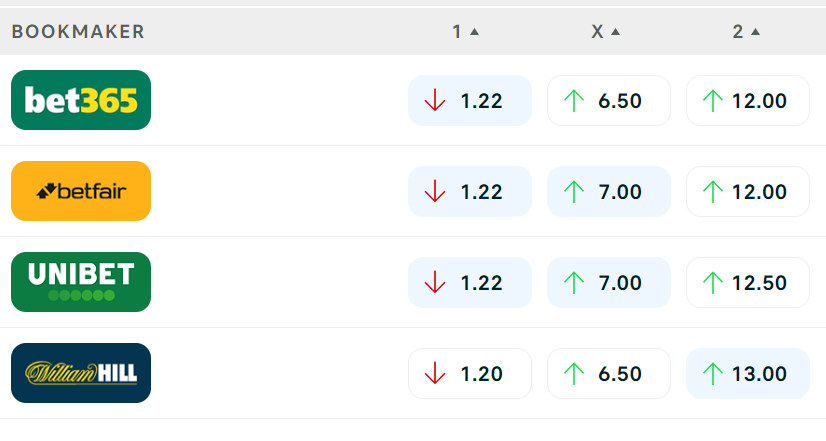
However, Liverpool were priced as low as 1.22 by the bookies for the match:

That is very similar to the sort of odds you would get if Liverpool had been in excellent form and had started the season strongly.

So the odds took no account of Liverpool’s poor start to the season – and in particular their leaky defence.

The bookies knew they would take a lot of money on Liverpool as they are a big club and are always backed heavily, so they offered only short odds on them, whilst the draw and Leeds were at attractive prices.

As it was, Leeds won the game 2-1, so those opposing Liverpool would have made a huge profit.

Liverpool v Leeds

Leeds beat Liverpool 2-1 at odds of 12/1 (from Flashscore.com)

In instances such as these there can be value on opposing these big-name sides.   

3. Over-reliance on statistical models: Bookmakers often use statistical models to analyze historical data and predict outcomes.

However, these models may not account for certain intangible factors such as team morale, motivation, or tactical adjustments, which can influence match outcomes.

If the bookmakers overly rely on their models and neglect important qualitative factors, it can lead to inaccurate odds.

Imagine for example a team that has just won the league and has been out celebrating. They may be tired and not have the same motivation for the next game – with the players metaphorically “on the beach” already. 

If the bookies price that team up the same as usual however, it can present value to oppose them. 

4. Human error: Bookmaking is a complex process, and errors can occur.

Human errors, whether in data input, odds calculation, or other aspects of the bookmaking process, can result in incorrect odds being offered. These errors can present opportunities for value betting.

Normally you see these errors in-play rather than pre-match, as sudden unexpected events during a game can present opportunities. 

Beware however of huge errors in the odds – for example odds of 100/1 being quoted instead of 10/1.

The bookies will class this as a “palpable error” and will be entitled to void your bet. 

5. Market factors: The odds offered by bookmakers are influenced by market demand.

If there is a sudden surge in betting on a particular outcome, bookmakers may adjust the odds to balance their liabilities.

Sometimes these surges can be irrational or an over-reaction to a piece of news, creating discrepancies between the odds and the true probabilities of an outcome, allowing sharp bettors to find value.

It’s important to note that while bookmakers can make mistakes, they are generally efficient at setting odds and have a vested interest in maximizing their profits.

However, by carefully analysing the available information and identifying opportunities where the odds deviate from the true probabilities, astute bettors can exploit these discrepancies and find value in the market.

Let’s take a look now at some value football betting strategies. 


Value Football Betting Strategies

Okay let’s take a look at some strategies that have proved able to consistently find value and produce a profit over the long term. 


1. Betting on the Draw

One of the most effective ways to find value football bets is through backing the draw. 

Partly this is because when thinking about football betting, opting for the draw is not typically the initial choice that springs to most punters’ minds.

It may appear an uncertain choice, as if you are unsure which team will emerge victorious.

football match

Players battling it out in a hard-fought match

However, this perception leads to a smaller amount of money being wagered on the draw compared to the teams’ outright victories, resulting in inflated odds for the draw.

As explained above, the bookies weight their odds to ensure they are not over-exposed to one outcome and have a balanced book. With little money backed on the draw, this can lead to inflated odds for it.

A perceptive individual named JK Diego recognized this and devised an incredibly successful system to take advantage of the additional value often found in draw odds.

It is important to note that blindly backing the draw would inevitably result in losses in the long run. Instead, Diego identified the crucial factors that help identify the specific instances where the draw is a value bet. 

For example, certain leagues and teams demonstrate a higher frequency of draws, and specific match characteristics increase the chances of a draw outcome.

Armed with this valuable information, Mr. Diego constructed a draw betting system that achieved an impressive feat, generating over $100,000 profit overall according to his recommended staking..

We tested this system ourselves extensively for 15 months and witnessed outstanding results, producing a remarkable $10,000 profit with $100 flat stakes. The system has continued to perform admirably since then.

Undoubtedly then JK Diego’s Draw Betting Strategy has proven to be an effective approach to finding value football bets.


2. Exploit In-Play Betting Opportunities

Rather than supporting teams in pre-match betting markets, bettors are increasingly attracted to in-play betting.

In-play markets offer valuable opportunities as odds fluctuate during the game. Naturally, these odds changes can be unpredictable and occur rapidly.

This dynamic environment provides ample chances for knowledgeable bettors to capitalize and make a profit.

inplay betting

In-play betting can give rise to some lucrative opportunities as odds fluctuate wildly

The majority of bookmakers now provide some form of in-play betting option and of course there are exchanges to use as well which can have excellent liquidity for in-play betting and tend to have better in-play odds. 

One way to find value on in-play bets is to look for instances where the in-play stats suggest a strong likelihood of a goal. 

This could be for example because one team is dominating, creating lots of chances and representing a value opportunity to back. 

Or it could be an open game where both sides are attacking, suggesting backing the overs is a good option. 

One service that has shown to be very effective at capitalising on in-play opportunities is Banker Bets Football Trading Clubs. 

They have a variety of in-play strategies focused on finding value and have proven very adept at doing so, making over 1,000 points profit in total. 

During our live trial they also performed very well, producing consistent profits throughout. 

You can of course also develop your own in-play strategies by following stats such as xG and goal attempts.

The key – as with pre-match bets – is to focus on instances where the stats and play indicate the odds are higher than they should be. 


3. Finding Value on Goalscorer Markets

Another good way to find value is to focus on a specific niche, getting to know it inside-out so you can spot any errors the bookies make. 

For example, you might want to concentrate on a particular market like over/unders, corners, or player passes.

Then you can study all the stats, angles and factors that go into making up the odds, making it your specialism. 

A service that has exemplified this approach is Anytime Goalscorer Bets, which concentrates solely on predicting whether players will score at any time during a game.

This particular market offers value opportunities by leveraging knowledge of team news, penalty and set-piece takers, as well as understanding player form.

goal scored

A player scoring a goal. The anytime goalscorer market offers value opportunities through knowledge of team news and set piece/penalty takers.

Becoming a team’s penalty taker can make a huge difference to a player’s chances of scoring a goal for example, but the odds might not change to reflect that. 

Having expertise on such matters has yielded impressive results for Anytime Goalscorer Bets, with our trial showing over £1,200 in profit to date with £20 per point stakes.

The service boasts a return on investment (ROI) of over 10% and a commendable strike rate of 32%.

Additionally, it adds an extra layer of excitement to cheer for a player to score without the need to worry about the overall outcome of the game.

So whether you want to follow the tips of Anytime Goalscorer Bets or develop your own speciality, focusing on a niche and knowing the market inside-out can provide you with value betting opportunities. 


Conclusion

In conclusion, football value betting is a strategy that offers the potential for long-term profits by identifying bets with higher probabilities of winning than the odds offered by bookmakers.

It involves finding discrepancies between the true probabilities of outcomes and the odds provided by bookmakers.

While bookmakers are generally efficient at setting odds, there are instances where they can get it wrong due to incomplete information, bias and public perception, over-reliance on statistical models, human error, and market factors.

Value betting is essential for long-term success in football betting, as it is the only way to viably make a profit. Simply taking bets where the odds are below the true chances of winning or fair value will result in losses or break-even results.

By identifying instances where the odds are wrong, astute bettors can exploit these opportunities and find value in the market.

Several value football betting strategies have proven effective in consistently finding value and producing profits. These include betting on the draw, exploiting in-play betting opportunities, and focusing on niche markets like goalscorer markets. 

In summary, by understanding value betting principles, analysing factors that can influence odds, and utilizing effective strategies, bettors can gain an edge and increase their chances of success in the world of football value betting. 


World Cup Betting Guide: How Betting on the World Cup Works

The World Cup is the most widely viewed sporting event in the world. It is an international
soccer tournament contested by men’s national teams from around the globe.

This football event happens after every four years and is organized by the Fédération Internationale de Football Association (FIFA).

Similarly, the World Cup is one of the biggest betting events worldwide, with millions of people
placing bets at online sportsbooks, physical bookmakers, and other betting establishments.

For example, people place bets on which team they think will win, which player will score the most goals, or how many goals will be scored in a specific match. We have prepared a guide that
focuses on how to bet money on the World Cup and the best tips that will even help you in
2026.

A Brief History of The World Cup

● The first World Cup tournament was held in 1930 in Uruguay. It was organized to
celebrate the 100th anniversary of the country’s independence and featured 13 teams
from around the world.
● The tournament was won by Uruguay, who defeated Argentina 4-2 in the final. The hosts
had previously won the Olympic football tournament in 1924 and 1928, making them the
first international football champions.
● It was not held during World War II but resumed in 1950 with the tournament held in
Brazil. The tournament featured 13 teams, including England, who had declined to
participate in the previous three games.
● The 1950 World Cup was won by Uruguay, who defeated Brazil 2-1 in the final at
Maracana Stadium in Rio de Janeiro. The match was attended by over 200,000 fans,
making it the largest crowd ever to watch a football game.
● The championship has since grown in popularity, with more teams participating and
more viewers watching each tournament. In 2018, the tournament featured 32 teams
from around the world and was watched by an estimated 3.5 billion people.
● In 2022 the event was held in Qatar in November and December, which saw Argentina
crowned champions for a third time.
● It’s important to note that Brazil holds the record for the most World Cup wins, having
won the tournament five times. Other multiple winners include Germany, Italy, Argentina,
and Uruguay.

How To Sign Up with a Sportsbook and Bet on World Cup

Whether you are an expert or just a beginner wondering how betting on World Cup works, this
guide will significantly help you. Signing up with a sportsbook and betting typically involves the
following steps:

1. Choose a reputable online sportsbook that offers World Cup betting. Consider
factors such as licensing, security, available markets, competitive odds, and user
reviews.
2. Create an account. Visit the sportsbook’s website and click on the “Sign Up” or
“Register” button. You’ll be asked to provide your details, such as name, address, and
email.
3. Deposit Funds. Navigate to the deposit section of the sportsbook’s website and choose
a payment method that suits you, such as e-wallet or cryptocurrency.
4. Explore Available Markets. These may include match outcomes, scores, goal scorers,
group winners, overall winner, and various prop bets. Click on the desired market to view
the available odds.
5. Place your Bets. Once you find the market or match you want to bet on, select the bet
you wish to place and enter the stake amount. Ensure to double-check the details before
confirming the bet placement. The bet slip will display the potential payout based on the
odds selected.
6. Monitor Bets and Enjoy the game. Once your bets are placed, you can monitor them
through the sportsbook’s website or mobile app. Track the progress of the matches and
potential outcomes of your bets.

It is important to note that betting on the World Cup, like any form of gambling, carries risk, and
individuals should only participate in responsible gambling practices. Therefore individuals
should gamble responsibly and set limits to ensure they don’t spend more than they can afford
to.

Can You Use Crypto to Bet on World Cup?

Yes, using cryptocurrencies to bet on the World Cup through websites for crypto bettors is
possible.

However, it’s important to remember that not all sportsbooks and betting sites accept
cryptocurrency, so it’s essential to research and find a reliable and reputable platform that
accepts crypto payments for World Cup betting.

However, these websites have risks and drawbacks, including limited acceptance, volatility complexity, and lack of regulation.

How To Bet on The World Cup From Your Phone

Using your phone to bet on the World Cup is a simple process. All you have to do is:

1. Find a reputable sportsbook that offers a mobile app or mobile-optimized website.
2. If the sportsbook has a dedicated mobile app, visit the respective app store, download,
and install the app.
3. Once you have downloaded the app or accessed the website, register for an account
by providing your details.
4. After registering, deposit funds into your account using one of the payment methods
offered by the sportsbook.
5. Navigate through the mobile app or website to find the World Cup betting markets.
Browse the available bet types, matches, odds, and other betting options the sportsbook
offers.
6. Once you have found the market or match you want to bet on, select the bet you wish
to place and enter the stake amount. Double-check the details before confirming the
bet placement.
7. After placing your bets, you can monitor their progress and potential outcomes
through the mobile app or website. If your bet wins, your winnings will be automatically
credited to your account.


Popular World Cup Bet Types

You must understand the bet types you can place to increase your chances of winning while
betting on the World Cup. Thus, the common ones are;

● Outright Bets. These bets focus on broader outcomes, such as predicting the teams
that will reach the semi-finals, the finalists, or the teams that will be eliminated in the
group stage.
● Match Result/Full-Time Result. This is a straightforward bet where you predict the
outcome of a specific match—either a win for Team A, a win for Team B, or a draw.
● Over/Under (Total Goals). In this type of bet, you predict whether the total number of
goals scored in a match will be over or under a specific number set by the sportsbook.
● Top Goal Scorer. This bet focuses on predicting the player who will score the most
goals throughout the championship.
● Prop Bets. It involves betting on various events surrounding the tournament, such as
which team will advance to the knockout rounds or which player will win the Golden Boot
award for the most goals scored.
● Tournament Winner. This bet involves predicting the team winning the entire World Cup
tournament. It can be placed before the tournament starts or during its progression.
● Both teams to score. This bet is on whether both teams will score a goal in the match.
● Correct Score. It entails predicting the exact final score of a match. It can be a
challenging bet type but offers potentially higher payouts.
● Handicap This bet gives one team an advantage over the other, usually by giving them
a certain number of goals.

World Cup Soccer Betting Tips

Betting on the World Cup is a fun and exciting way to engage with the tournament. Some of the
world cup bets tips to keep in mind are;

1. Do your Research. Take the time to research the teams and players involved in the
tournament and their recent performances and history in the World Cup. This can help
you make informed betting decisions.
2. Stay Informed. Keep up with the latest news and developments regarding the
tournament, including team news, injuries, suspensions, and any other relevant
information that may impact the matches.
3. Evaluate Team Strengths and Weaknesses. One of the important World Cup bets tips
is to assess the teams’ strengths and weaknesses in various aspects of the game, such
as defense, attack, set pieces, and individual player skills. Consider how these factors
match up against their opponents.
4. Manage Your Bankroll. Set a budget for betting and stick to it. Avoid chasing losses or
wagering more than you can afford to lose. Exercise discipline and consider employing
bankroll management strategies to mitigate risks
5. Study the Odds. Understand how odds work and what they represent. Odds reflect the
bookmakers’ estimation of the likelihood of an outcome. Higher odds generally indicate a
less probable outcome but offer greater potential returns. However, remember that odds
are not guarantees, and surprises can occur in sports.
6. Consider the Tournament Format. The championship consists of group stages
followed by knockout rounds. Understand the implications of different stages, such as
the importance of group stage matches for advancing to the knockout phase. Some
teams may prioritize avoiding defeat over going for a win in specific situations.
7. Understand the Betting Markets. There are many different types of bets, including
outright winner and prop bets. Make sure you understand the other betting markets and
choose the ones that you have the most knowledge of.
8. Consider Prop Bets. Prop bets can offer good value and can be a fun way to bet on the
World Cup. Look for creative and unique prop bets that can add excitement to your
betting experience.

Best World Cup Betting Sites

There are many WorldCup betting sites available, some of which you can consider for 2026
World Cup betting. Some of them are:

1. BetMGM. BetMGM is a leading online sportsbook with a wide variety of betting options
for the World Cup. They offer competitive odds, a user-friendly interface, and a variety of
deposit and withdrawal methods.
2. Paddy Power. Paddy Power is one of the famous world cup betting sites in Irish that
offers competitive odds on the World Cup. You can also find a variety of special bets and
promotions, so you can maximize your chances of winning.
3. FanDuel. FanDuel is another popular online sportsbook that offers a great selection of
World Cup betting options. They also offer a variety of promotions and bonuses, making
them a great choice for bettors of all experience levels.
4. Caesars. This is one of the World Cup betting sites to consider. It s one of the largest
casino operators in the world and a trusted and reputable brand in the gambling industry.
5. DraftKings. DraftKings is a well-known daily fantasy sports (DFS) site that similarly
offers World Cup betting. They offer various betting options, including moneylines,
spreads, totals, and prop bets.
6. Betway. Betway offers a variety of special bets and promotions for the World Cup. It has
an easy-to-use website and app, and 24/7 customer support.
7. Unibet. Unibet is one of the best World Cup betting sites in Europe. It offers a wide
range of betting options, including live betting options, so you can place bets on games
as they happen.
8. Bet365. Bet365 is yet another famous betting site in the world, offering a wide range of
World Cup betting options. You can bet on the winner of the tournament, the top
goalscorer, and various other markets.

Other best world cup betting sites to consider include; 888sport, PointsBet, and William Hill.
What Makes a Great World Cup Betting Site?

To have a smooth and seamless experience while betting on the World Cup, you must pick a
site offering several key features and qualities. These are:

● Reputation and Trustworthiness. A good betting site has a solid reputation and is
known for its trustworthiness. It should have a positive track record, be licensed and
regulated by a reputable authority.
● Competitive Odds. Sportsbooks should provide competitive odds that offer value to
bettors. Comparing odds between betting sites can help you find the best value for your
bets.
● Mobile Compatibility. With the increasing use of mobile devices, WorldCup betting
sites should have a mobile-responsive website or a dedicated mobile app. This allows
users to conveniently place bets on the go using their smartphones or tablets.
● Wide Range of Betting Markets. The site should offer diverse betting markets to cater
to different preferences. This includes popular bet types such as match results, goal
scorers, tournament winners, and more.
● Live Betting and Streaming. Including live betting options and live streaming of
matches adds excitement and allows users to bet on games as they unfold. Real-time
updates and in-play betting enhance overall engagement.
● Customer Support. Best World Cup betting sites should have good customer support
options, including live chat, email, and phone support, to help users with any issues or
questions.
● Promotions and Bonuses. Offering attractive promotions and bonuses enhances the
value for users. These can include welcome bonuses, free bets, enhanced odds, loyalty
programs, or other incentives that reward and engage bettors.

World Cup Betting Pool

A World Cup betting pool is a type of betting arrangement where a group of people put money
into a prize pool and then make predictions about the outcome of the matches. The person with
the most accurate predictions at the end of the tournament wins the prize pool.

Participants in a World Cup betting pool may use various methods to make their predictions,
such as selecting the winner or final score of each match or predicting which teams will advance
to specific rounds or the tournament’s overall winner. They can be organized among friends,
family, or co-workers.

Some factors to consider before participating in this pool include the pool size, payout structure,
rules, and financial situation.

Where is The World Cup Being Held in 2026?

If you have been asking, where is the world cup being held in 2026? You will be excited to know
that the FIFA World Cup 2026 final dates have been set for 19th July. It will be the biggest
tournament yet in more ways than one. Never before have 48 teams been involved in a single
edition. In addition, this is also the first World Cup to be held across three countries; Canada,
Mexico, and the USA.

Conclusion

The World Cup is one of the most prestigious and highly anticipated events in sports, attracting
billions of viewers worldwide. It is also one of the most significant betting events worldwide, with
millions placing bets at online sportsbooks or physical bookmakers.

To answer the question of how to bet money on the World Cup, you must first choose a reputable platform. You can consider many worldcup betting sites, such as BetMGM, Caesars, 888sport, FanDuel, and more. Next, you need to create an account, deposit funds, and explore the available markets before you place your bet. Remember to utilize world cup bets tips such as staying updated with the latest news about the teams and players, including injuries or suspensions.

Similarly, understand the betting markets, consider the odds, and manage your bankroll. You can use these tips for 2026 world cup betting as we wait to see which fan’s favorite teams, including
Spain, Argentina, England, Brazil, and France, will be crowned the world’s champions.


Get Your US Open Tips Here!

This week sees the third major of the season as the golfing world heads to the Los Angeles Country Club for the 123rd US Open.

Recognised as one of the top 20 golf courses in America, the LA Country Club will present a different test to your typical US Open venue – with wide fairways but deep bunkers, treacherous greens and penal barrancas winding their way through the picturesque course. 

And whilst the rough is not as long as you would normally see at a US Open, it is deep Bermuda rough that will test the players’ strength. 

Here is a look at exactly what the players will be faced with this week:

https://twitter.com/bturner23/status/1668770156812845056

So players will want to avoid that for sure and only a true champion who has withstood not just the physical test but also the mental challenge will emerge victorious on Sunday.

If you are looking for some tips for the US Open then we can highly recommend the Golf Insider, who has a phenomenal betting record.

He is coming off a huge 66/1 winner last week at the Canadian Open in the shape of Nick Taylor who won a thrilling playoff against Tommy Fleetwood. 

That put the Golf Insider +145 points in profit (backing to level stakes) since January 1st… and it’s now firmly on course for 2023 to be the most successful year in its 10 year history.

Last week’s winner is just the latest in a long line of big successes that include:

  • Marc Warren – WON at 150/1
  • Chris Kirk – WON at 125/1
  • Rasmus Hojgaard – WON at 200/1
  • Andrew Dodt – WON at 150/1
  • Corey Conners – WON at 175/1
  • Cameron Champ – WON at 150/1
  • Hennie Otto – WON at 80/1
  • Thomas Pieters – WON at 66/1
  • Martin Kaymer – WON at 70/1

Amazing stuff. Plus there have been a whole host of high-priced placed finishes as well, which are too numerous to mention here. 

In total the Golf Insider has made over £20,000 profit at £10 per point stakes since starting up in 2014 at an ROI of 27%, which is sensational tipping. 

He also absolutely crushed it in our live trial as well, making over 400 points profit with winners at prices of 250/1, 150/1, 20/1 and 30/1.

So the Golf Insider has been putting the bookies to the sword time and time again and making his members massive wads of tax-free cash.

He has some huge bets lined up for this week’s US Open:-

  • xxxxxxxxxxxx at 8/1 
  • xxxxxxxxxxxx at 16/1
  • xxxxxxxxxxxx at 28/1 
  • xxxxxxxxxxxx at 40/1 
  • xxxxxxxxxxxx at 66/1

All each-way and in with great chances. 

To unlock these tips and get your fully protected 100% money-back-guaranteed 30-day trial click here. 


How to Bet on Golf: The Best Markets Revealed

There is no secret sauce to betting on any sport unfortunately, which is why so many of us turn to tipsters that are experts in their field and have a long-term, verified set of results that analyses their profitability.

Golf is an interesting sport to wager on because there are a couple of simple rules you can follow that gives anyone a fighting chance of backing a winner (or securing place money): if the player is in form and has played well at the host course before, they have an excellent platform on which to build.

Tournament Win (With Places)

The most satisfying golf betting market to play is the tournament winner – if only it was easy to pick out the champion from the 156 or so players that tee it up in an event!

That’s why betting each way is vital. With Betfair golf betting, as just one example, you could secure eight paid places on the majority of PGA TOUR tournaments and sometimes more for majors – that means that for the Open Championship, you can secure a return if popular golf betting tips like Jordan Spieth (20/1), Dustin Johnson (28/1) and Justin Rose (33/1) finish in the places without necessarily threatening to win.

First Round Leader

This is the same as betting on the tournament winner market – albeit with fewer places paid.

What’s interesting about the First Round Leader (FRL) market is that the odds for each player at the head of the market are slightly longer than their main tournament betting prices – enabling us to squeeze extra value out of the big guns. There’s more variance to wagering on an 18-hole market than a 72-hole category, with more ‘shock’ results likely.

There are instances where punters can gain a genuine edge in the FRL market. Some golf courses play harder later in the day – maybe the wind has picked up, or the sun has come out and firmed up the course, also making the greens run faster.

It’s worth looking at the weather for a tournament, which will typically get underway on a Thursday, to see if there is a potential draw bias – half of the field will start their round in the morning, while the other half tees off in the afternoon.

Top Finishes

When you have a feeling that an outsider is going to play well, but not necessarily challenge at the top of the leaderboard, you can instead bet on them to deliver a Top 20/30/40 finish.

You’ll get shorter odds than in the main outright market, of course, but have so much more margin for error – especially when betting on the Top 40 finish category.

To offer some context, the 2023 Memorial Tournament was won by 18/1 shot Viktor Hovland. But finishing inside the top 30 on the leaderboard were players available in the outright market at around 100/1 – creating a handsome return even for those betting in a more conservative fashion.

Luke Donald – who was a whopping 300/1 before the off – finished tied 38th; netting Top 40 backers a decent 7/2 winner without him getting anywhere near to the trophy.

Top Nationalities

Many bookies break a PGA TOUR field down into smaller categories; one of which is centred around the player that will finish as the Top American, Top British & Irish, Top Asian and so on.

These markets are interesting because, where there are enough players, each way places are paid. For example, at the 2023 Canadian Open there were eight players vying to be Top Continental European – that means three places are paid. This is a unique way of betting on fancied outsiders like Vincent Norrman, who was available at 80/1 to win the tournament and 4/1 to best his continental compatriots.

So there are many different ways to bet on golf in a fun and responsible way – most of them don’t even require you to back a tournament winner to profit.


5 Expert Tips for Picking a Winning Horse

If you’re a fan of horse racing and enjoy the thrill of betting, then you know just how important it is to choose the right horse to bet on.

With so many horses to choose from, it can be overwhelming to know where to start. But fear not, as specialists who have tested out hundreds of horse racing tipsters and betting systems, we’ve compiled a list of 5 expert tips to help you choose the right horse to bet on.

From analyzing past performances to checking out the jockey, these tips will give you the edge you need to make informed decisions and increase your chances of a winning bet.

So, whether you’re a seasoned bettor or a newbie to the world of horse racing, these tips are sure to help you make the most of your betting experience.

Now if all the information below seems like a lot to take in, don’t worry. We’ve got a “cheat code” at the end that will save you a great deal of time and effort in finding a winning horse.

Before that though, let’s take a look at some expert tips for picking a winning horse.  

Get ready to saddle up and let’s get started!


Understanding the basics of horse racing

Before we dive into the expert tips, it’s important to understand the basics of horse racing. Horse racing is a sport where horses compete against each other in a race. The race can take place on a flat track or over jumps.

Jumps racing is often referred to “National Hunt” racing in the UK and there are different types of jumps races – fences and hurdles. 

There are also different types of horse races in both flat and jumps racing, which can be summarised as follows:-

  • Group (or stakes) races: the highest level of races in horse racing. They are divided into three categories: 1-3. Group 1 races are the most prestigious, featuring the highest-quality horses competing at the elite level for the biggest prize money. Examples of Group 1 races include the Kentucky Derby, the Prix de l’Arc de Triomphe and the Melbourne Cup.
  • Listed Races: the level just below Group races in terms of prestige. They are named as “listed” because the race conditions and entry requirements are listed by the governing racing authority.
  • Handicap races: a type of horse race where the weight carried by each horse is adjusted to equalize their chances of winning. The objective is to create a more level playing field by assigning weights based on the horse’s ability or past performance.
  • Claiming races: a type of race where horses are available for purchase by anyone who meets the price.
  • Allowance races: horses carry a certain weight and can only compete against other horses carrying a similar weight.


Resources to Help You Pick a Winning Horse

gamblers celebrate horse win

Gamblers celebrate picking a winning horse

To help you pick a winning horse it is worth having access to a racing guide or racecard for the day’s races. 

Good resources for racecards include The Racing Post, At The Races or geegeez.co.uk for racecards that should give you all the information you need to pick a winner. 

Within the racecards you can see info like the horse’s form, jockey & trainer stats and a host of other information.


Factors to consider when choosing a horse

When it comes to choosing a horse to bet on, there are several factors to consider.

These include:

  • Form: typically considered the most important factor in horse racing because it provides valuable information about a horse’s recent performances, which can help assess its ability, consistency, and potential for future races.
  • Distance: races are generally run at distances ranging from 5 furlongs (a sprint) up to around 3 miles for the longest jumps races. Certain horses will be suited by the distance of today’s race whilst others won’t. You can check the horses’ record over today’s distance and see how they’ve fared. 
  • Ground (aka “the going”): ground can vary from heavy (very wet and boggy) to firm. Analyzing the ground conditions and assessing a horse’s past performances on similar surfaces can provide valuable insights into its suitability for an upcoming race.
  • Jockey’s and trainer’s records: Jockeys and trainers can have a strong record at a particular track, demonstrating familiarity and understanding of the nuances of that specific track.
  • The horse’s age and experience: some horses have a habit of doing well in certain races year after year, whilst others may be relatively inexperienced. 


A Lot to Take In, But Don’t Be Overwhelmed! 

If you are new to horse racing, all this information may seem like a lot to take in and a bit overwhelming, but don’t worry! You don’t need to understand and analyse of all of this information in order to pick a winning horse.

There are plenty of simple strategies that can prove effective and don’t require you to spend weeks or months studying the intricacies of horse racing to find a winner. You can focus in on just one aspect of a race to pick your horse rather than trying to weigh up a whole host of different factors. 

Or, as we mentioned at the start, you can skip to the end for our special “cheat code.”

Anyway, before that let’s take a look at our 5 expert tips for picking a winning horse. 


Expert tip #1: Look at the horse’s past performance

The horse’s past performance is a key factor to consider when choosing a horse to bet on. It’s important to look at the horse’s recent form, including their last few races.

Form guides will typically include numbers written like this: 313-21, although there might be some variance in the layout depending on the publication. 

Here is an example of a horse called Flagman, from the Racing Post racecard:

Flagman’s form figures are below the number 11 on the left hand side. Basically, the numbers denote the horse’s results in its most recent races.

So the number on the right (number 1 in this case) signifies that the horse came first in its most recent race. The number 9 denotes that the horse came ninth in the race before that, the number 6 that it came sixth in the race before and so on. The numbers before the dash denote performances from last year.

Some people like to pick a horse that has very good form figures next to its name, with lots of 1s and 2s for example. Whilst this can hold a certain appeal, it is not usually the best way to find value as the odds will probably reflect that strong form and be quite short. 

If your sole aim is to pick a winner however, then this could be the simplest way of finding one! If the horse has impressive recent form and is at short odds – likely the favourite – then it will give you a decent chance of finding a winner. 

However, if you want to try and find some value and be a bit smarter than those punters just picking the obvious “form horses,” you could also consider the horse’s record at the track and distance of the race. A horse that has performed well in similar conditions to today is more likely to perform well in the current race.

A clue to look for on your racecard is for the letters “C” or “D”, or both together (“CD”) under a horse’s name.

The letter “C” means the horse has won on this course before, which is a good sign. 

Below is a horse called Joke Dancer, which has a “C” (encircled in grey next to “2 tips”). This means it has won at this course before. 

Different tracks can have their own characteristics and some horses always seem to perform well at the same tracks over and over again, whilst struggling at others. You may have heard the phrase “horses for courses,” well it’s amazing how often it proves to be the case! 

The letter “D” denotes that the horse has won at this distance before, which again is a good sign – showing it is capable of passing today’s test in terms of the length of the race. 

Here is an example, a horse called Luckofthedraw which has a “D” under its name, indicating that it has won at this distance before.

If you see the letters “CD” together it means the horse has won at the same course and distance as today’s race, which is a very good sign. 

The horse Our Laura B has the letters “CD” below her name, indicating she is a course and distance winner:

Note that in the case of Our Laura B the “C” and “D” are together, denoting she won at this course and distance in the same race

If however, the “C” and “D” are separated as per the example of Ribeye below, it means the horse has won at this course before and at this distance, but it wasn’t in the same race.

If a horse has been out of form recently but has been running at tracks and distances that don’t suit it, whilst today it is returning to a course and length of race that do suit it, that horse could be a value pick and worth following. 

Certainly it is less obvious than just picking the favourite or horse with the best recent form and it is an approach that can pay dividends. As we say, the age-old phrase “horses for courses” still rings true today, for good reason!  


Get Free Horse Racing Tips from Expert Tipsters here


Expert tip #2: Assess the jockey’s and trainer’s record

The jockey is a key factor in a horse’s performance. A good jockey can make all the difference in a race. When choosing a horse to bet on, it’s important to assess the jockey’s record. Look at their recent form, including their win percentage and their record at the track.

Here is the record of jockey Hollie Doyle, which you can see at a glance by clicking on her name on the Racing Post racecard:

From this you can see her record with different ages of horse and on different types of surface (turf and all-weather). 

In the column on the far right, under “£1 stake” you can see the returns if you had bet £1 on every horse Hollie Doyle has ridden under those particular conditions. 

It is important to bear in mind that whilst her numbers here don’t look good, the vast majority of jockeys will have a negative number as the results are taken at the industry starting price (SP), which isn’t very generous. Those taking early odds or the exchange odds are likely to have done considerably better. 

In any event, beyond the raw figures you can delve further into the jockey’s record to look at their recent form, which horses they have a particularly good (or bad) record on and more detailed stats.

It’s important to consider the jockey’s relationship with the horse. Some jockeys have a better rapport with certain horses, which can lead to better performances. Look for jockeys who have ridden the horse before and have had success with them.

Also worth considering is whether a jockey has a good record at the track and has won races in similar conditions. Just as it is a case of “horses for courses,” it can be “jockeys for courses” too!

Another aspect to consider is not just the jockey, but the jockey and trainer combination together.

Jockeys and trainers who have a strong record at a particular track often demonstrate familiarity and understanding of the nuances of that specific track.

They may have insights into the track conditions, layout, and the characteristics that can affect a horse’s performance. This knowledge can be advantageous when strategizing race tactics or making training decisions.

Here are a few examples of successful jockey/trainer partnerships in horse racing:

  1. Frankie Dettori and John Gosden: Frankie Dettori, a renowned jockey, has enjoyed great success riding for trainer John Gosden. Together, they have won numerous prestigious races, including the Prix de l’Arc de Triomphe, the King George VI and Queen Elizabeth Stakes, and the Breeders’ Cup. Their partnership has been known for their ability to strategize and execute race tactics effectively.
  2. Ryan Moore and Aidan O’Brien: Ryan Moore has formed a successful partnership with Irish trainer Aidan O’Brien. Moore has ridden for O’Brien’s powerful Ballydoyle stable and has achieved remarkable success in major races worldwide. Their partnership has resulted in victories in races like the Epsom Derby, the Prix de l’Arc de Triomphe, and the Breeders’ Cup Turf.
  3. Javier Castellano and Chad Brown: Jockey Javier Castellano and trainer Chad Brown have established a highly successful partnership in American horse racing. Castellano has been the go-to jockey for many of Brown’s top horses, and together they have achieved numerous victories in prestigious races such as the Breeders’ Cup Turf, the Arlington Million, and the Travers Stakes.
  4. William Buick and Charlie Appleby: Jockey William Buick has formed a successful alliance with trainer Charlie Appleby, primarily associated with Godolphin Racing. Their partnership has led to victories in significant races like the Epsom Derby, the Dubai World Cup, and multiple Group 1 races worldwide.

These are just a few examples of successful jockey/trainer partnerships, and there are many other notable partnerships in horse racing history. Successful collaborations between jockeys and trainers often rely on effective communication, understanding each other’s strengths and preferences, and building trust to make informed decisions during races.

Whilst you may not have any of the famous names above at the racecourse today, your race guide should have jockey and trainer statistics for the course. Have a look for any that stand out, for example those that have a high winning percentage at the track and/or distance. 

In particular, look out for examples where the jockey and trainer combination together has a good winning percentage. It’s the combination that can really make the difference and deliver the winning result we are looking for. 


Expert tip #3: Analyze the track condition

The track condition is an important factor to consider when selecting a horse to bet on. The track can be fast, slow, or somewhere in between. Some horses perform better on fast tracks, while others perform better on slower tracks.

Race course

A dirt, or all-weather, track. Some horses prefer dirt whereas others perform better on turf.

Analyzing a horse’s record in different ground conditions involves examining its past performances on various track surfaces to identify patterns and preferences. Here’s a step-by-step approach to analyzing a horse’s record in different ground conditions:

  1. Gather the horse’s race history: Collect the race history of the horse, including its past performances on different ground conditions. This information is usually available in race programs, online databases, or racing publications such as those listed above.
  2. Identify the ground conditions: Note the ground conditions listed for each race in the horse’s record. Pay attention to keywords such as “firm,” “good,” “yielding,” “soft,” or “heavy,” which describe the state of the track surface.
  3. Evaluate performance in different conditions: Assess the horse’s performance in various ground conditions by examining its finishing positions, margins of victory or defeat, and the level of competition faced in each race. Look for any consistent patterns or notable performances.
  4. Consider win percentage: Calculate the horse’s win percentage on different ground conditions. A higher win percentage on a particular ground condition may indicate a preference or better performance on that surface.
  5. Assess performance relative to competition: Compare the horse’s performance on different ground conditions to the quality of competition it faced. If the horse consistently performs well on a specific ground condition against strong competition, it suggests a higher level of adaptability and competitiveness.
  6. Analyze running style: Consider how the horse’s running style aligns with different ground conditions. Some horses may have a running style that suits certain ground surfaces better than others. For example, horses with a strong closing kick may excel on a yielding or soft surface that allows them to maintain their late speed.
  7. Consider pedigree and breeding: Take into account the horse’s pedigree and breeding. Certain bloodlines are known to produce horses that perform well on specific ground conditions. If the horse’s lineage has a history of success on a particular surface, it may indicate a genetic predisposition to perform well in those conditions.
  8. Assess recent form: Give more weight to the horse’s recent performances on different ground conditions as they provide a more accurate reflection of its current abilities and preferences.

By analyzing a horse’s record in different ground conditions, you can identify any patterns, preferences, or strengths it may have on specific track surfaces. This information can be valuable when assessing its prospects for upcoming races, especially when considering the ground conditions expected for the race day.

Of course, you may not have time to analyze the horse’s ground record in such detail. Don’t worry though, often the notes that accompany each horse in your race guide should tell you if the horse does well in today’s conditions. 

Here is an example for a horse called Thundering that is running at York:

The horse’s performance in its last race was poor, finishing fifth out of six horses in the race. However, the comments here suggest that the soft ground was not ideal, whereas today’s ground is due to be good. 

Looking at Thundering’s race record, we can see that it has performed well on firmer ground, with second places on good (Gd) and good-to-firm (GF) ground. 

It also had a win and a second on the all-weather track at Newcastle (St/Slw) which tends to be firmer than turf. 

The horse also finished second on soft ground back in April 2022, suggesting it can act on different types of ground. However, the results above suggest it is perhaps best suited by firmer ground conditions. 

You may come across horses with very distinct records of only doing well on certain types of ground. Those can be good horses to follow, particularly when the conditions are extreme – either very soft or very firm. 


Expert tip #4: Consider the horse’s age and experience

A horse’s age and experience are important factors to consider when choosing a horse to bet on. Younger horses may have more potential, but they may lack the experience and maturity to perform well in high-pressure situations. Older horses may have more experience, but their age may affect their performance.

Statistically, older horses tend to have an advantage over younger horses in terms of racing performance and maturity. 

This is down to their:

  1. Physical Development: As horses age, they typically undergo physical development and reach their peak athletic abilities. Their bodies become stronger, more robust, and better suited to handle the physical demands of racing. 
  2. Experience and Maturity: Older horses have had more time to gain experience and develop racing skills. They have been exposed to various race scenarios, track conditions, and competition levels, allowing them to learn and adapt. 
  3. Mental Preparedness: As horses age, they often exhibit increased mental maturity and focus. They become more accustomed to the racing environment, including the sights, sounds, and pressures associated with competition. 
  4. Development of Racing Form: Older horses tend to have a more established racing form, with a track record that provides a better indication of their abilities and potential.
  5. Class Advancement: Older horses often compete in higher-level races against stronger and more seasoned competition. This exposure to challenging races can improve their skills, competitiveness, and overall racing performance. 

The advantage of older horses over younger ones has been demonstrated in a range of different ways, including in:

  1. Stakes/Group Races: In stakes or group races, which are typically the highest level of competition, older horses often have a statistical advantage over younger ones. This is evident in races such as the Triple Crown races (Kentucky Derby, Preakness Stakes, and Belmont Stakes), where three-year-old horses compete against older horses. Historically, older horses have a higher winning percentage in these races.
  2. Win Percentages: If you examine win percentages across various age groups, you may find that older horses tend to have higher win percentages compared to younger horses. However, it’s important to consider factors such as class levels, track conditions, distances, and the specific competition faced by each age group.
  3. Handicap Races: In handicap races, which are designed to equalize competition by assigning weights based on horse ability, older horses are often assigned higher weights compared to younger ones. This weight assignment recognizes the maturity and development advantage that older horses possess.
  4. Longevity: Older horses have typically had more racing experience due to their longer careers. This additional racing experience can contribute to better overall statistics and a more established racing record.

Now of course all of this doesn’t mean you should just go and back old horses blindly! Age is just one factor among many and probably not the most important in itself. 

However, it is often overlooked and most punters are not aware of the disparity in age demonstrated by the stats above. So if other factors are lining up in an older horse’s favor, or you just feel a more experienced horse is being unfairly disregarded (what we might call “ageism”), it could represent value. 

There are a number of famous horses who achieved tremendous success at an older age.

Wise Dan, for example, achieved significant success as an older horse, winning multiple Grade 1 races. At the age of six, he won the Breeders’ Cup Mile in 2012 and repeated the victory the following year at age seven!

Winx, an Australian mare, achieved phenomenal success as an older horse in the 2010s. She won an unprecedented four consecutive Cox Plate races, a prestigious Group 1 race in Australia, from 2015 to 2018. Winx’s unbeaten streak extended to 33 races and she is considered one of the greatest racehorses in Australian history.

At the same time, John Henry had enormous success as an older horse, winning several prestigious races in the 1980s. At the age of nine, he won the Arlington Million, a Grade 1 turf race, for the second time in 1984. He also won the Santa Anita Handicap twice, at ages eight and nine.

So write off an older horse at your peril. As we say, going against the crowd when a high quality horse is being written off as “over the hill” can really pay dividends. 


Get Free Horse Racing Tips from Expert Tipsters here


Expert tip #5: Evaluate the horse’s physical attributes

The horse’s physical attributes are an important factor to consider when choosing a horse to bet on. Look at the horse’s build, weight, and overall health. A horse that is well-built and in good health is more likely to perform well in a race.

This is the sort of thing you can evaluate for yourself if you are attending the races in person. One of the best places to get a good view of the horses is in the parade ring, where they are displayed a few minutes before the race is due to start. 

Here are some key physical attributes to evaluate when assessing a horse’s betting potential:

  1. Conformation: Assess the horse’s overall conformation, which refers to the physical structure and proportions of its body. Look for balanced proportions, a strong and well-muscled build, and correct alignment of legs. A horse with good conformation is generally considered to have a better chance of soundness and efficient movement, which can positively impact its racing performance.
  2. Coat and Condition: Observe the horse’s coat and overall condition. A healthy, glossy coat, with well-defined muscles and a generally fit appearance, indicates a horse in good physical condition. A horse that looks fit and well-maintained is more likely to perform at its best.
  3. Musculature: Assess the development and tone of the horse’s muscles. Well-developed and defined muscles, particularly in the shoulder, hindquarters, and gaskin areas, can indicate strength and power. Look for a muscular horse without excessive fat or signs of poor conditioning.
  4. Legs and Hooves: Examine the horse’s legs and hooves for any signs of soundness and structural integrity. Check for straightness in the legs when viewed from different angles, the presence of any blemishes or swellings, and the quality of the hooves. Soundness and well-maintained hooves are essential for a horse’s performance and ability to handle different track conditions.
  5. Walk and Movement: Observe the horse’s walk and movement, both at the stable and during pre-race warm-ups. Look for a fluid and efficient stride with good reach and extension. A horse that moves with confidence, balance, and coordination is more likely to be agile and perform well on the racetrack.

It’s important to note that evaluating physical attributes alone does not guarantee success. It should be used in combination with one or more of the other factors described above.

If you are attending the races in person though, having a look at the horses’ physical attributes and how well they look could give you an edge over other punters and is an underappreciated angle to consider. 


Common mistakes to avoid when choosing a horse

When it comes to choosing a horse to bet on, there are several common mistakes to avoid. One of the biggest mistakes is betting on a horse based on their name or the color of their jockey’s silks. Another mistake is betting on a horse without doing your research. It’s important to take the time to analyze the factors listed above before making a decision.

It’s also important to avoid betting on too many horses. Focusing on a few horses that meet your criteria is a better strategy than betting on every horse in the race.


***CHEAT CODE – If You Want a Quicker Way to Find a Winner***

If all of this seems like a bit much and you want a quicker way to find a winner, there is a simpler option. 

You could just follow the advice of a tipster! 

Yes these horse racing experts follow racing very closely and analyse all the information listed above – and more – in choosing their tips. 

Now not all tipsters are worth following of course – most are actually quite bad and make a loss overall. However, here at Honest Betting Reviews we have tested hundreds of tipsters in search of the best ones. 

Here are three horse racing tipsters we would recommend:-

  1. The Bookies Enemy – over £22,000 profit at £25 per point and a 15% ROI.
  2. Hanbury Racing – over 1300 points profit with a 25% ROI.
  3. Loves Racing – over 900 points profit with a number of winners over 50/1.

Following one of these tipsters could not only save you a lot of time and effort but could also direct you to finding some nice winners. Certainly their long-term records are among the best in the business.


Conclusion

Choosing the right horse to bet on in horse racing can be a daunting task, but by following these expert tips, you can increase your chances of a winning bet.

You can choose to analyze the horse’s past performance, assess the jockey’s record, analyze the track condition, consider the horse’s age and experience, and evaluate the horse’s physical attributes – or use a combination of these factors. If all else fails, you can try a top horse racing tipster to do the hard work for you! 

By avoiding common mistakes and focusing on a few horses that meet your criteria, you can make informed decisions and enjoy a successful betting experience. Good luck and happy betting!



What to Look Out for When Choosing an Online Gambling Site: A Guide for New Players

If there is one hobby many Aussies love to indulge in, it’s online gambling. For many, there is no adrenaline rush that comes close to playing online casino games and potentially scoring life-changing jackpots. While there are plenty of seasoned pros out there, those who are new to the online gambling field may need a little help finding the right platform to play on.

The good news is that we’ve got you covered with this. Before signing up and getting stuck into the fun, here are some important things to look out for on an online gambling page that will ensure you have the best experience possible.

Licensing Authority

Arguably the most important thing to look out for – you need to ensure the gambling website is licensed by an official regulator. A quick Google search will bring up an abundance of gambling sites. However, there will be some who aren’t to be trusted.

Regulators are in place to ensure all online gambling websites operate safely and fairly. This means they will protect your details and make sure all games operate according to strict regulations.

Navigation

Once you’re confident the online gambling platform is regulated, the next thing to look at is design and navigation.

After all, you’ll want to use a website that’s easy to scroll through, otherwise, your stress levels may go through the roof!

Also, ensure the page is mobile-friendly too. This means if you’re on the go and away from home, you can access all your favourite games without any scrimping on quality. A well-designed online gambling website is what will lure you in, to begin with and keep you playing.

Choice of Games

Any online gambler is going to want plenty of choice when it comes to games. After all, a wide selection of titles is what will keep you sticking around. You want your online gambling experience to be full of fun, excitement, and entertainment.

However, if you opt for a gambling page whose repertoire is lacking, you may be itching to close your account and go elsewhere. The best gambling pages will feature a wide array of exciting games to play on. You’ll find many of them update their database regularly with fresh games to play on that will keep you wanting more and more.

Bonuses and Promotions

Let’s face it, online gambling and bonuses go hand in hand. To get the most out of your play and potentially win big, taking advantage of bonuses and promotions is essential.

Online gambling platforms that offer generous and versatile promotions will keep you playing on their page. You’ll find many online gambling websites offer attractive bonuses, so it’s recommended to look at the different options first before signing up.

Check out WhereGamble who provide expert casino reviews and gambling guides for Aussie players. They also do the hard work in finding the best casino bonuses, so you don’t have to – perfect!

Player Reviews

For those who are new to online gambling, we appreciate that you may have no clue what online gambling platform to sign up for. The good news is there are plenty of player reviews on the web that you can check out first.

These all come from past and present players who share their honest opinion about the website. When looking through ratings and reviews, if there are far more negative ones than positive ones, it’s wise to continue your search.

Payment Options

Just like with the wide selection of games to play, you will want to have a choice of payment options too. Whether you use your debit or credit card to play or use platforms like PayPal, the best online gambling websites will cater to all players.

Whether you’re making a deposit or withdrawing your winnings, any trustworthy gambling platform will have an array of payment methods. Knowing your hard-earned cash is kept safe and secure can reduce stress levels and put your mind at rest.

Customer Support

Once you sign up to an online gambling website and start playing, you may encounter an issue or two along the way. Whether you’re having trouble logging into your account or you believe your personal details have been compromised, knowing there is a customer support team in place to assist and help you can be a lifesaver.

Any reputable online gambling website will have a dedicated customer support group available around the clock. This means that regardless of what time of day or night it is, you’re able to get in touch immediately and get any issues sorted out.

Whether you’re old school and like a game of Blackjack or Roulette, or perhaps you enjoy checking out the latest slot titles, make sure to go through all the above before signing up to an online gambling website.