The Limits of Bonus Lists and the Alternative Built by CasinoBonusesFinder

Why Bonus Lists Don’t Work Anymore and What CasinoBonusesFinder Does Instead

Anyone who has spent time browsing “top 10 bonus” lists knows how it usually ends. The offer looks great at first, but once you click through, something feels off.

The bonus is no longer available, the conditions are worse than expected, or the casino quietly changed the rules.

That kind of disappointment is exactly why CasinoBonusesFinder was created. Instead of relying on fixed rankings and recycled lists, the platform focuses on keeping bonus information current, understandable, and relevant to how people actually play.

The real issue with traditional bonus lists

Most classic bonus lists were created to attract traffic, not to help players make better decisions. They struggle to keep up with how fast the market actually moves.

Common problems include:

  • Bonuses that look good on paper but expired weeks ago

  • Important conditions hidden behind big numbers and bold headlines

  • Casinos with questionable behavior still ranking high

  • No room for individual preferences or play styles

When “top 10” stopped meaning anything useful

Most ranking pages are updated manually and not very often. By the time you land on one, wagering rules, excluded games, or withdrawal limits may already be different.

That gap between what is promised and what you actually get is where trust starts to fall apart.

A bonus has value only when it is fair, current, and realistic for the way you play.

What CasinoBonusesFinder does differently

Casino Bonuses Finder takes a different approach. Instead of assuming all players want the same thing, it focuses on helping people find offers that actually fit their needs.

Features designed for real use, not just clicks

  • Bonus subscriptions so you know when an offer changes instead of finding out too late

  • Advanced filters that let you sort by wagering, payments, regions, or bonus type

  • Personal search tools that adapt to how you browse and what you care about

  • An active community that flags problems faster than any static review ever could

  • The option to hide claimed bonuses, keeping your shortlist clean and useful

Together, these features turn bonus hunting into a structured process instead of a guessing game.

Finding new brands and fast payouts without digging

For many players, it helps to look at things a bit more narrowly. Some are interested in newer casinos that are still trying to earn trust, while others care most about how quickly withdrawals are processed. Because of that, there is a clear separation between categories like new online casinos and casinos known for faster payouts.

Instead of being mixed into one long ranking, these offers can be compared and filtered on their own, which makes it easier to come back and check what has actually changed.

Personalization instead of rankings

Here is a simple look at how the old model compares to a more flexible one:

Aspect Traditional bonus lists CasinoBonusesFinder approach
Update frequency Rare and manual Ongoing and data-driven
Transparency Focus on headlines Terms shown early
Personalization None Filters and personal search
Community input Almost never Built in and active
Bonus management Static lists Hide claimed or unwanted bonuses

This shift explains why many users now see CasinoBonusFinder less as a blog and more as a practical tool.

Mission, direction, and what comes next

The idea behind the platform is simple. Transparency comes first, technology supports it, and the player experience stays at the center.

As noted in a recent feature by European Gaming, CasinoBonusesFinder is steadily shifting the focus back to player control and transparency.

In the near future, more automation will help catch changes in bonus terms faster, while longer-term plans include stronger community features and even smarter personalization designed to adapt to how players actually browse and compare offers.

The team behind Best Online Casino Bonuses 2026 – CasinoBonusesFinder is also working on clearer signals around fairness, so misleading offers are filtered out before they waste your time.

Fewer surprises usually mean more confidence when you finally decide to claim a bonus.

Why this approach holds up over time

Static lists will not disappear overnight, but they are losing relevance because they do not adapt. A platform that listens, updates, and evolves naturally keeps pace with both the market and its users.

When you are close to choosing where to play, payout speed often becomes the deciding factor. That is why many players prefer using the dedicated section for Fast Payout Casinos instead of relying on generic rankings.

In the end, BonusFinder is not trying to shout louder than outdated lists. It focuses on being more useful, more accurate, and more honest.

That is exactly why more players are moving away from headlines and toward tools that actually help them make better choices.


How To Judge Spanish Sportsbooks Online Before You Bet

Odds shift fast on a live match page, and the best price can vanish in seconds.

That speed makes it easy to skip the checks that actually matter—licensing, payout rules, that sort of thing.

Taking a review mindset slows you down just enough to spot the red flags before your money’s gone.

The review framework you’ll find at foreign betting sites in Spain focuses on real deposits and real withdrawals. It also compares odds across La Liga and other sports, because those small price gaps?

They add up over months. That mix of hands-on testing and actual maths is pretty much how serious tipsters judge any service.

Start With Legal Status And Site Identity

If a sportsbook targets Spain, start by checking whether it operates under Spain’s rules.

Spanish regulation sits on the national gambling law, and licensed operators must meet set standards. The legal base is laid out in Ley 13/2011, which defines licences and oversight.

A licence check is not about a logo in the footer, or a badge you cannot verify. Look for the operator name, the trading brand, and the domain you will actually use. If those do not match, treat the offer as a warning sign and move on.

Also check whether the domain redirects through strange mirrors or extra pop ups during login. A regulated operator keeps the path simple, so you do not sign in elsewhere by accident.

If the page pushes you off site for deposits, stop and confirm what you are authorising.

Spanish reviewers often treat the DGOJ licence as the first filter before ranking any operator. They also test sites in the same conditions, so the results match what a normal bettor sees.

That approach is explained alongside the DGOJ licence check and monthly ranking update notes there.

Test Payments And Withdrawals Like A Reviewer

Many complaints start after a win, when a withdrawal turns into a slow email chain. Before you chase odds, learn how the cashier works, and how fast money returns to you. Apuestas.guru says it runs deposits in euros, places bets, then requests withdrawals to Spanish banks.

Check the payment methods that fit Spain, because they affect both speed and friction at checkout.

Their review notes local options like Bizum and PayPal, plus transfers to banks like Santander. If a site pushes only crypto, or hides fees, treat that as extra risk for casual bettors.

Account checks can also slow withdrawals, even when your balance is small at first glance.

Read what documents are required, then confirm the help pages match the support replies you get. A fast first cashout tells you more than a welcome bonus headline ever will in practice.

Use a small first deposit to test the process, then read the rules before you scale up. Focus on points that change real results, not just bonus headlines or banner claims later.

These checks take minutes and reduce the chance of a nasty surprise later at withdrawal.

  1. What identity checks happen before you can withdraw, and how long they usually take in Spain.
  2. Whether the site lists withdrawal fees, and if it charges for bank transfers in euros.
  3. How the operator handles cancelled bets, voids, and early payouts during live markets sessions too.
  4. Which limits you can set, including deposit limits, timeouts, and self exclusion before you start.

Compare Odds With Simple Maths, Not Hopes

A flashy app can hide a bad price, and price is the cost of every bet you place. Spanish reviewers track odds on common sports like football, tennis, and basketball each week too.

They note that even a 0.05 difference in odds can matter across a full season.

You do not need advanced models to compare value between two bookmakers at home either. Pick the same market, same stake, and write down the decimal odds side by side. Repeat that for ten bets, then you will see who keeps prices tight most often.

Odds also change faster in live betting, so you should test the refresh rate yourself.

Check whether the cashout button works as stated, and whether slips settle cleanly after goals. Apuestas.guru says slowdowns during live betting cost points in its tests right away at times. If you follow tipsters or systems, odds drift matters even more than it seems on paper.

A tip shared at 2.10 can land at 1.95, and that change can flip profit to loss. This sports betting basics for beginners guide covers odds formats and simple bet types clearly.

Price checks protect you from bad timing, and they also expose books with wider implied margins.

Use Limits And Records To Stay In Control

A legal licence reduces fraud risk, but it does not stop you from overbetting after losses. Tools like deposit limits and self exclusion exist for a reason, and Spanish sites must offer them.

The same review page links responsible play tools to licensing, and treats them as a key feature.

Regulators also track operator details, including registered URLs and responsible gambling sections for audits often.

The DGOJ online office describes how licensed operators report URL changes and related information online. That reporting flows into the Registro General de Licencias, which helps supervision stay current in Spain.

Many bettors also need a basic plan for stake size, so swings do not wipe them out. This bankroll management basics guide explains why many bettors use 1% to 5% stakes per bet. Flat staking keeps decisions calm, and it helps you judge a tipster on results, not mood.

Keep a simple record of bets, odds taken, and the closing line where possible each day. A record shows whether you win because of price, or because you hit a good run. It also makes withdrawals easier to judge, because you can map delays to real events.

A Short Checklist You Can Reuse Each Month

A good review process fits on one page, and you can reuse it across sports and seasons.

Use this list before you open a new account, and again after major site updates. It keeps you focused on facts that protect your bankroll and your time every week.

  1. Check the legal basis for Spain, and read the operator terms with care before betting.
  2. Verify the operator details match the domain you will use for deposits each time online.
  3. Run a small deposit, place a bet, then test a withdrawal to your bank account.
  4. Compare odds on markets you bet most, and note weak pricing patterns over time there.
  5. Set deposit limits and session limits, then track bets for at least thirty days after signup.

Monthly updates matter, because odds margins and payment speeds can change without warning quickly now. Apuestas.guru says it updates rankings monthly and retests operators during big football events too often.

If you keep your own checklist, you can spot changes early and cut risk fast.

For bettors who take reviews seriously, the best edge is often plain discipline over months.

Start with licensing and payments, then price, then limits, then records you can trust later. That order keeps you away from scams and helps you judge any service with clear eyes.


Live Horse Betting Apps Dominate Downloads

Mobile apps for horse race betting are now consistently ranking among the most downloaded apps on major marketplaces.

As more people access the internet primarily through their phones, betting updates arrive instantly and race results appear in real time.

According to industry monitoring groups, downloads increased by 27 percent last season alone.

More People Use Apps on Phones

Seconds tick by as fingers swipe through live odds on glowing screens, and interest in horse racing bet Ireland markets continues to grow within the wider online casino space as punters follow major meetings from Dublin to Leopardstown.

Today, more than two-thirds of all bets are placed through mobile apps. Handheld devices now dominate the market, leaving traditional desktop sites behind. Fewer than one in four wagers are placed from larger screens.

When odds shift by even small margins, hesitation can change a bettor’s decision.

Live racing demands instant updates, and app developers prioritise fast deposits and seamless performance.

Simple navigation and quick bet placement are among the most valued features for mobile users.

Many platforms now include features such as:

  • Live race streaming within the app
  • Real-time odds updates
  • One-tap bet placement
  • Secure digital wallet integration

Users who engage with these features tend to stay longer. On average, active users spend around 14 minutes per visit, suggesting that convenience and live interaction encourage deeper engagement.

Live Features Boost Interaction

In-play betting adds intensity to the racing experience. As races unfold, odds fluctuate by the second, heightening excitement and encouraging quicker decisions.

Industry reports indicate that live wagering has increased by 34 percent compared to pre-race betting activity.

Modern apps deliver live statistics while races are in progress. Information such as horse speed, track conditions, and jockey performance history appears instantly.

These real-time updates help bettors make informed decisions and decide which races to follow next.

Fast payment systems also contribute to sustained engagement. Deposits are typically processed instantly, while withdrawals—though sometimes taking longer—are generally completed efficiently. When financial transactions run smoothly, user confidence increases.

Trust builds when platforms provide reliability and transparency.

(Promotional content removed to maintain editorial neutrality and improve overall readability.)

Revenue Growth and Market Trends

Horse racing betting apps continue to generate increasing revenue each year.

Industry analysts estimate that around 50 percent of total betting revenue now comes from digital wagering channels.

These platforms frequently appear near the top of finance and sports app charts.

The majority of users fall within the 25–45 age bracket, with a clear preference for mobile betting over visiting physical betting shops.

During peak racing seasons, users typically log in every few days to place wagers or monitor odds.

Individual bets often remain modest in size, with many users placing smaller stakes for entertainment rather than high-risk returns.

However, the frequency of participation drives overall revenue growth. Regular engagement, rather than large single wagers, is the key factor behind rising digital income.

Responsible Play Still Matters

While horse betting is a form of entertainment, it should always be approached responsibly.

Betting odds are structured to include a margin for operators, meaning that long-term profit is never guaranteed.

Like attending a concert or going to the cinema, betting should be treated as paid entertainment rather than a source of reliable income.

Setting clear financial limits is one of the most effective ways to maintain control. Allocating a fixed weekly budget can help prevent overspending.

Many apps now offer built-in tools such as deposit limits, spending alerts, and session reminders to support responsible play.

Healthy betting habits include:

  • Deciding in advance how much you are willing to spend and sticking to that limit
  • Avoiding the temptation to chase losses
  • Taking regular breaks during betting sessions
  • Using built-in limit and reminder features

Remaining calm and disciplined when managing money leads to a more sustainable and enjoyable experience.

As regulations strengthen across the industry, platforms are increasingly transparent about odds and responsible gambling practices.

Today, reminders promoting safer play are standard across most reputable betting apps.


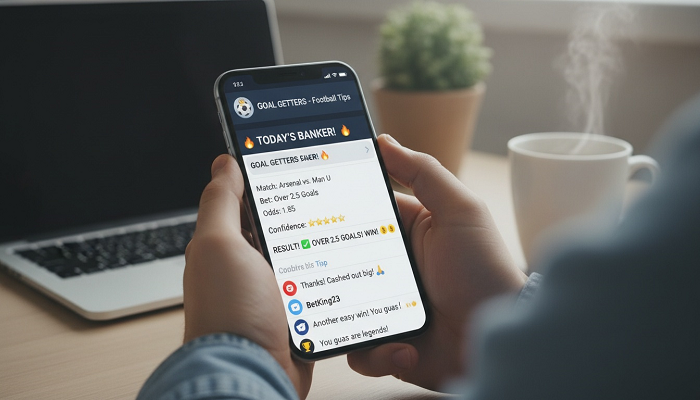
The Best Football Tipsters on Telegram

Telegram has quietly become the beating heart of modern football betting.

Open the app and you’ll find thousands of channels promising “value bets”, “VIP winners”, and “serious profit”.

Tips ping straight to your phone. Screenshots of winning slips flood your screen. Big claims. Big numbers. Big confidence.

But here’s the uncomfortable truth:

Most Telegram tipsters look impressive at first glance.

Very few stand up to proper scrutiny.

So if you’re searching for the best football tipster on Telegram, what you’re really asking is this:

➡️ How do you separate real tipsters from noise, hype, or just empty marketing?

That’s exactly what this guide is here to answer.

In this article, we’ll break down:

  • Why Telegram has become the platform of choice for football tipsters
  • The common tricks and red flags used by low-quality or scam operators
  • How we at Honest Betting Reviews independently verify tipsters using live trials, full results tracking, ROI, strike rate and long-term data
  • What “best” really means when it comes to football tipping
  • And finally, our Top 5 football tipsters on Telegram right now

This isn’t a hype list. It isn’t based on follower counts or flashy screenshots.

It’s based on long-term performance, verified results, realistic odds and services that have stood up to real tracking over time.

If you’re serious about finding a Telegram football tipster you can follow with confidence — and avoid the endless cycle of jumping between “hot” channels — read on.

Let’s separate the noise from the genuinely profitable.

Why Telegram Is So Key for Football Tipsters

Before we talk about specific tipsters, let’s unpack why Telegram matters.

Telegram’s rise in the betting world is no accident. It’s:

  • Fast — tips land instantly, often way ahead of email or social posts.
  • Direct — no middleman algorithms, no delays.
  • Flexible — channels, groups, pinned messages, voice notes, links and spreadsheet files all in one place.
  • Private — some tipsters run subscriber-only groups with added content.

These features make Telegram a natural choice for tipsters and bettors alike — but they also attract less scrupulous operators who rely on hype, faked screenshots and marketing instead of genuine analysis.

That’s where Honest Betting Reviews comes in.

Separating the Scams from the Genuine Tipsters

There are hundreds of tipster channels on Telegram, and not all of them are what they first appear to be. Some common scam or low-quality tactics include:

  • Only showing winning tips and deleting losers
  • Posting results that look unrealistic or “too good to be true”
  • Using flashy screenshots instead of transparent records
  • Pressuring users into private VIP groups without proof
  • Claiming “certainties” or “guaranteed profits” — which in betting simply don’t exist.

At Honest Betting Reviews (HBR), we help readers cut through this noise by verifying tipsters and assessing them based on data, not marketing.

Here’s how we do that:

📊 1. Independent Verification of Results

Rather than just quoting a tipster’s claimed record, we:

  • Run live, independent trials on each service
  • Follow the tips exactly as a subscriber would
  • Track every bet in real time — including losers
  • Publish full history including P/L (profit/loss), strike rate, and ROI (return on investment)

This means you don’t just see a cherry-picked set of wins — you see the unvarnished reality of long-term performance.

🧠 2. Data-Driven Metrics You Can Trust

When we review a tipster, we dig into:

  • Strike rate (how often bets win)
  • ROI (profit relative to money risked)
  • Monthly and yearly performance
  • Odds availability (did suggested prices actually exist when the bet was placed?)
  • Staking plan clarity
  • Bankroll growth potential

These metrics matter because they give you an honest picture of how a tipster performs — not just highlight reels.

🔍 3. Transparency and Accessibility

We publish the full results of our trials on the site, including spreadsheets and breakdowns. This transparency means:

  • You can see exactly what we saw.
  • You can judge for yourself whether a tipster is delivering long-term value.
  • You can compare services in a meaningful way.

This is especially important on platforms like Telegram, where flashy claims often hide a lack of verifiable proof.

🛡️ 4. Ongoing Monitoring

Tipster performance can change over time — and so do markets. We don’t just publish reviews and forget about them:

  • We revisit and update reviews regularly
  • We report changes in performance, strategy, or tipping volume
  • We re-assess whether a tipster still deserves a “Passed” rating

This ongoing work ensures readers aren’t following outdated recommendations or tipsters whose edge has vanished.

So What Does That Mean for You?

If you’re searching for the best football tipster on Telegram, it’s not enough to go by:

  • Pretty screenshots
  • Big win claims
  • High follower counts
  • “VIP only” pressure tactics

You want evidence — real proof that a tipster can deliver profit over hundreds of bets, across different market conditions, and at odds you can realistically get. That’s exactly what we strive to provide.

By checking tipsters against real data, long-term performance metrics, and transparent results history, we help you avoid the scams and focus on the services that genuinely offer value — whether they deliver tips via Telegram, email, or other channels.

What “Best Football Tipster Telegram” Actually Means

People searching for a Telegram football tipster are usually trying to find one (or more) of the following:

  • A tipster proven to make money over the long term
  • A tipster with transparent records
  • Someone who offers real value — not hype
  • A channel that uses realistic odds and staking advice
  • Reliable selections that you can follow and replicate

The danger, of course, is hype-driven tipsters that rely on psychological tricks — cherry-picked wins, deleted losses, or unstoppable claims that don’t survive scrutiny.

So what sets a great tipster apart?

What to Look For in a Telegram Tipster

Here’s a quick checklist you can use before joining any Telegram tipster group:

1. Transparency of Results

A good tipster shows all results — wins and losses — not just cropped screenshots. They often provide:

📌 Monthly breakdowns
📌 Odds taken vs closing odds
📌 Clear staking plans

This is the difference between real analysis and fake hype.

2. Consistent Staking and Markets

Random stake sizes are a red flag. Good tipsters use a consistent staking plan that’s easy to track and manage.

3. Realistic Odds

If the average recommended odds are unrealistically high (like 7/1 every day with wild strike rates), take caution — it usually isn’t real value.

4. Reasoned Analysis

The best ones explain why they selected a bet — not just what the bet is.

⚠️ 5. Avoid Red Flags

Red flags include:

❌ “Guaranteed” bets
❌ Edited posts after matches
❌ Claims of insider or fixed knowledge
❌ Only winners shown

These are warning signs that the service is more about marketing than genuine analysis.

Top 5: Best Football Tipsters on Telegram 

Now onto the list you came for. Below are five Telegram-accessible football tipsters that stand out for different reasons — from specialist niches to long-running performance, and straight-forward market coverage.

5️⃣ Neil Mac’s Soccer Betting Edge — Best for Established, Consistent Main Market Betting

Neil Macdonald’s tips — now supplied under the name “Neil Mac’s Soccer Betting Edge” is one of the more enduring names in football tipping circles.

He’s been around for well over 10 years now and has established himself as a respected expert in betting on Europe’s top leagues. 

Neil delivers selections via Telegram as part of his service and his picks come with detailed reasoning and analysis.

🟢 Why It’s Worth Loading

Long-running service — longevity matters in tipping
Main markets focus — match odds, regular bets
Telegram delivery for timely alerts

For many bettors, that stability and clarity is what “best” really means — a service you can rely on without constant noise or hype.

In his long tipping record stretching back over 10 years, Neil has placed over 7,600 bets that have been tracked and verified by various sources — including our own review where we tracked the bets for seven months (under the service’s previous name of Bookie Insiders Football), during which Neil performed very well.

His tips have achieved a long-term return on investment of over 4% and more than 430 points profit.

This isn’t a side hustle for Neil — it’s a career built on discipline, research and betting edges the public often misses.

For us it’s all the things we like in a Telegram tipster — consistent, solid, long-term results that have been fully verified and no hype — just good, honest tipping.

4️⃣ Football First — Best for Detailed Analysis and Betfair/Exchange-Friendly Betting

Football First is a service run by a professional trader who uses statistical and analytical tools to build selections for Betfair Exchange and bookmaker markets.

Tips are sent daily via email and a private Telegram group, and the selections often include Asian handicap, BTTS, Over/Under and match odds.

📌 What You Should Know

📈 Long-term data shows notable profit and ROI in trials
📈 Detailed reasoning behind each pick
📉 Not always high volume — it’s about quality insights
📉 Consistency varies but good over long term

The service’s long-term results are very strong, with a profit of over 400 points made in total since starting up in 2021.

The total return on capital (bank growth) stands at over 600%, which is no mean feat, whilst the strike rate has been maintained at over 50% in the long run, meaning around half the bets have been winners. 

In terms of return on investment (ROI) achieved to date, that sits at a healthy 8%, which is more than respectable for a football tipster to have achieved over a period of five years.

Although the consistency has varied a little over time, the long-term results are still worthy of praise and Football First has proved itself to be a top Telegram tipster.

3️⃣ Net Gains Football — Best for Straightforward English Football Tips

If your betting style is more straightforward — e.g., main markets like match winner, both teams to score — then Net Gains Football is designed with that in mind.

Net Gains Football covers the English leagues and focuses on simple, easy-to-follow selections.

🟢 Why It Appeals

💡 Mainstream markets that most bettors can place easily
💡 English league focus — perfect for UK and Ireland-based bettors
💡 Telegram alerts keep you updated in real time

This setup is especially good if you dislike overly complex markets or just want clear tips you can execute quickly.

Although it has not been running as long as some of the other Telegram tipsters on this list, Net Gains Football has delivered some very impressive results in a short space of time.

Since launching in August 2024, they have amassed over 64 points profit, at a strike rate of 61% and a return on investment of 20%.

Those are some of the best stats we have seen from a football tipping service, whether on Telegram or elsewhere.

And tipping in the popular English football markets means there is generally good liquidity.

So all in all Net Gains Football is one of the hottest properties in town and a footy tipster well worth keeping an eye on.

2️⃣ JK Diego — Best for Draw Betting and System-Oriented Strategy

JK Diego is one of the names that regularly appears when bettors think about structured strategies — especially a system built around draw betting.

Unlike some tipsters who just post predictions, JK Diego’s approach has a coherent betting philosophy behind it — targeting draws with logic based on data, value and pattern recognition.

He built his draw betting strategy over the course of many years studying betting markets and identified eight key factors likely to lead to a draw in a football match. From that JK was able to find value opportunities to back the draw. 

🟢 What Makes It Stand Out

Clear strategy rather than scattergun tips
Telegram feed central to communication
✔ Focus on a specific market theme (draws)

This makes JK Diego a good choice if you prefer system-based betting and want a defined logic — not just a stream of random selections.

We conducted our own review of his tips and they performed very well, producing over 100 points profit in total. 

The strike rate was high at 44% whilst the ROI was solid at 7%

It’s a service for high rollers only as the subscription costs are considerable, but JK Diego has continued to produce good profits since our review ended and is widely respected as the top draw expert out there.

1️⃣ Scottish Confidential — Best for Niche Specialist Tips

If you want a tipster with a clear niche, Scottish Confidential is one of the strongest examples in the Telegram ecosystem.

Rather than trying to predict dozens of matches across dozens of leagues, Scottish Confidential focuses on the Scottish football leagues only — where detailed analysis and local expertise can create strong value opportunities.

🟢 Why It’s Worth Considering

Niche focus — targeting leagues where fewer tipsters specialise
Quality over quantity — selective, thoughtful betting ideas
Telegram delivery for real-time alerts

This is a service that has stood the test of time and delivered consistent profits – around 200 points profit in total to date in fact.

That would be £10,000 profit if betting £50 per point or £4,000 profit if betting £20 per point.

The results over the last couple of years have been particularly impressive, with 80 points profit made at a return on investment (ROI) above 10% and a strike rate of more than 40%

We have fully tracked and verified these tips and have been impressed with the performance the service churns out season after season — for over 10 years now.

That’s the kind of longevity and consistency we love to see and is why Scottish Confidential ranks as the best football tipster on Telegram for us. 

How These Tipsters Compare

Here’s a quick comparison table summarising how these tipsters compare:

Channel Best For Markets
Scottish Confidential Niche league expertise Scottish leagues
JK Diego System-focused bets Draws & strategies
Net Gains Football Simple mainstream tips English leagues
Football First Analytical selections Asian Handicap, BTTS
Neil Macdonald Tips Consistent long-term service Main markets

So whether you want niche picks or selections from the top European leagues, there is something for everyone on this list.

Final Thoughts — Choosing the Best for You

If there’s one thing this guide should make clear, it’s this:

The best football tipster on Telegram isn’t the one with the biggest channel, the flashiest graphics, or the boldest claims.

It’s the one with:

  • 📊 Verified long-term results
  • 📈 A sustainable ROI
  • 🎯 Clear strategy and staking
  • 🧠 Realistic expectations
  • 🔍 Transparency you can check for yourself

Telegram is simply the delivery method. The real value lies in the process behind the tips.

Some bettors will prefer the niche focus and decade-long consistency of Scottish Confidential.

Others may lean toward the structured draw strategy of JK Diego.

If straightforward English league betting appeals, Net Gains Football could fit the bill.

For analytical depth and exchange-friendly markets, Football First stands out.

And if longevity and steady main-market betting is your thing, Neil Mac’s Soccer Betting Edge offers exactly that.

There’s no universal answer. There’s only the service that aligns with your temperament, bankroll and betting style.

But here’s the most important takeaway:

Even the best tipster in the world won’t help if you:

  • Chase losses
  • Ignore staking advice
  • Jump between services after one bad week
  • Fail to track results properly

Long-term betting success isn’t about excitement. It’s about discipline.

At Honest Betting Reviews, we’ll continue doing what we’ve always done — independently tracking services, publishing full results, and calling out hype where we see it. Because in a world full of bold promises, evidence still matters.

If you’re going to follow a Telegram tipster, follow one with proof.

And then give the strategy time to work.

That’s how you turn Telegram from a noisy marketplace into a genuine edge.


Social Casino Vs Sweepstakes Casino: A Practical Operator Guide For 2026

Operators who follow independent review sites know reputation can turn on one bad month. Lately, the social casino vs sweepstakes casino question is showing up in due diligence calls.

A clean sweepstakes model gives entertainment value, plus a lawful prize path in many regions. Done right, sweepstakes software development lets teams launch fast, then iterate responsibly.

Why this comparison suddenly matters to sportsbooks and casinos

For many brands, it’s not about games; it’s about the operating framework and perceived fairness.

In a sweepstakes setup, players use virtual coins, and prizes are redeemed through a promotional structure.

That “no purchase necessary” backbone is what reviewers look for when separating wheat from chaff. Get it wrong, and your brand reads like a cautionary tale.

Social casinos keep everything entertainment-only, so coins can’t be cashed out. In the social casino vs sweepstakes casino comparison, the sweepstakes side adds redeemable sweeps currency.

That dual-currency labeling needs clarity in the lobby, wallet, and terms pages. When those screens feel honest, players stay longer, and complaints drop. And yes, it helps partners judge risk, too.

Building a compliant experience without killing speed

Sweepstakes is not a loophole; it’s a structure, and regulators still watch closely. State-by-state guidance shifts, so operators should build rules, disclosures, and geo-controls from day one.

Players must have a free entry path, and promotions must be documented like any other sweepstakes.

That kind of rigor is also what review platforms expect before recommending anything.

On the product side, the tough part is often the wallet logic, not the games. You’re tracking two balances, pacing bonuses, and triggering redemptions without creating friction.

Reviewers and players both spot confusing flows, especially around verification and prize withdrawals. A tidy audit trail and transparent terms keep those conversations short and calm.

Platform decisions that survive reviewer scrutiny

For sportsbook owners, sweepstakes can be a side brand or a retention lab for core bettors.

Either way, you need fast content loading, device-friendly UX, and real-time reporting. NuxGame’s platform points to essentials like a dual balance system and live gameplay tracking.

It also supports broad game providers, plus agent and referral modules for acquisition experiments.

If you want to earn “trusted” status, think like a reviewer and run a simple stress test.

Can a first-time user understand coins, prizes, and limits in under two minutes?

Does support have scripts for the top five misunderstandings before they snowball?

Here’s a quick operator checklist that keeps launches tidy and review-proof.

  • Clear coin labels in lthe obby, wallet, and checkout screens
  • “No purchase necessary” free-entry route that’s easy to find
  • Prize redemption steps with thresholds, timing, and ID checks
  • Geo and age controls aligned with your target jurisdictions
  • Automated game updates, plus incident alerts for providers
  • Reporting that ties promos to retention and lifetime value

Payments are still part of the story because many brands sell coin bundles for convenience.

Operators usually mix cards, e-wallets, and sometimes crypto, then mirror that into redemption rails.

A reliable integration layer should log every transaction, flag anomalies, and keep reconciliation painless.

When finance teams sleep at night, marketing can push promos with confidence.

Where NuxGame fits for teams that need speed and control

Most operators don’t need a science project; they need a dependable stack that scales.

If your team is still asking what is a sweepstakes casino, start with the rules, then map product flows. NuxGame’s sweepstakes package is built around quick API setup and real-time callbacks for balance updates.

That’s handy when you’re integrating studios, monitoring sessions, and keeping support tickets down.

Branding also matters because review sites judge the feel as much as the math. A customizable admin panel, clean UI templates, and segmentation tools help you localize offers for the US and EU.

NuxGame highlights configurable features, real-time analytics, and a dual-coin approach designed for retention. Pair that with a responsible tone, and you’ll read well on “honest” review pages.

Common mistakes reviewers call out, and how to avoid them

Honest Betting Reviews built its name by calling out scams and poor-quality services. Operators can borrow that mindset by auditing copy, bonus claims, and help-center answers every month.

If a promo can’t be explained plainly, it probably shouldn’t ship. Clarity is cheaper than refunds, chargebacks, and reputation repair later. And it keeps partners from quietly walking away as well.

Fairness messaging is another landmine, because “random” means nothing without context. Spell out how outcomes are generated, how prizes are funded, and how disputes are handled.

Make verification steps predictable, with clear timelines, so players don’t assume the worst. When your process is consistent, even skeptical reviewers tend to soften.

Conclusion: Trust scales better than hype

Sweepstakes isn’t a shortcut; it’s a different product category with its own guardrails. The social casino vs sweepstakes casino distinction matters most when you’re protecting reputation.

If you design coins, disclosures, and redemptions for clarity, the rest gets easier. That’s how you earn repeat play, fewer complaints, and better reviews over time.

Start small, measure everything, and treat compliance as a feature, not paperwork. Choose partners that ship fast, but also document decisions and support your ops team.

When your platform can explain itself, reviewers have less to criticize and more to praise. And if you keep it simple, your launch won’t feel like herding cats.


Identifying Promo Structures That Favor Bettors in 2026

By 2026, most bettors have come to one important realization: not all promotions are created equally.

The day of the day when a bettor simply seeks out the biggest bonus offer is a thing of the past.

Rather, it’s the structure of a promotion, how it’s built, and how a bettor can actually benefit from it that has become the biggest differentiator between a promotion that’s truly offering value and one that’s simply a marketing ploy.

Bookmakers are constantly improving their acquisition strategies, while regulators are cracking down. It’s the smartest promotions, though, that are becoming increasingly subtle.

They look great, feel great, and offer a great reward for a disciplined approach. It’s a great thing for bettors, though, as long as they understand how to spot these types of offers.

Why Structure Matters Over the Size of a Promotion

In years gone by, a promotion’s size was what always mattered. 100 pounds, 10 times wagering, etc.

It’s 2026, though, and any discerning bettor is looking beyond the size of a promotion and directly at its structure.

It’s no longer about how big a promotion is, but about the structure in which it’s built.

Good promotion structures are ones that don’t force a bettor into any particular situation. It’s not about forcing a bettor into a particular range of odds, nor is it about making a bettor lose money simply because they’ve won.

Rather, it’s a structure that simply makes sense in line with how a bettor operates. Low friction is a sign of a promotion that’s built for the bettor.

Low-Friction Signals a Bettor-Friendly Offer

One of the most obvious signs of a bettor-friendly promotion is low friction.

What does that mean? Essentially, it means that there aren’t a lot of barriers in place. There can be a few different signs of low friction, but they tend to include low wagering requirements, flexible minimum odds, and relaxed restrictions.

In general, a more open-ended approach, allowing for betting in standard match odds as opposed to more niche markets, is a sign of a more bettor-friendly promotion.

Equally as important as how a promotion is constructed is how it handles a losing scenario. Bet-and-get or insurance-style promotions tend to minimize variance in a way that does not impede a player’s decision-making process.

It is here that a promotion, such as those found at a site like NetBet Sport, truly excels, as it tends to focus more on mechanics rather than complicated bonus ladders that only make sense on paper.

Time Windows Reveal the True Intent

Another factor that is often overlooked is time. If a promotion has a very short time window, it is likely that it is not designed with the bettor in mind.

In fact, it is likely designed in a way that maximizes variance, which is counterintuitive for a sportsbook.

In a more bettor-friendly structure, time is a luxury that is often given. It recognizes that, no matter how skilled a player is, there is no way to manufacture a quality bet.

In fact, a more relaxed time structure is a sign that a sportsbook believes in its own promotion, as it knows it can stand up to a more relaxed time structure.

In 2026, time flexibility is one of the strongest signs of a more bettor-friendly sportsbook.

Transparency Beats Cleverness Every Time

The most honest sportsbook promotions today are often the ones that are the least clever. In fact, it is often a sign that a sportsbook is trying to hide something.

The most honest sportsbook promotions tend to be clear in their terms, with no hidden exclusions or loopholes.

This is more important than ever, as more and more gamblers are comparing the expected value of different sites.

If an offer takes three reads to understand, it probably isn’t worth it. While clarity is not the same as generosity, it is often found alongside it.

Honest structures cut down on conflicts, increase retention, and allow bettors to accurately measure risk before investing their capital.

Personalization Is Replacing One-Size-Fits-All

Mass promotions are no longer relevant in 2026.

Although this may be viewed negatively by casual bettors, it could be viewed favorably by experienced bettors with consistent, reliable betting patterns.

The key is to understand whether this form of personalization will improve your betting strategies or subtly divert you from them.

The best bettors to benefit from this development are those with a thorough understanding of their advantage.

Promos Are Tools, Not Opportunities

The greatest mindset shift in modern betting is understanding that promotions are tools, not opportunities.

This is because, in 2026, a great promo complements your betting strategies, while a poor promo seeks to replace them. In 2026, the best bettors do not seek bonuses. Instead, they seek structures that respect logic, cut down on unnecessary risk, and are profitable.

Once you spot these patterns, promotions are no longer distractions but leverage.


The Evolution of User Expectations in Online Betting

Online betting looks totally different in 2026 when compared to the first sites that appeared in the mid 1990s.

Rather than being a quirky pastime for those with computers, it’s now accessible to everyone, as it’s estimated that 5 billion people hold smartphones worldwide.

And naturally, the technology we hold in our pockets is better than the first few computers!

This has led to better sportsbooks that look and feel effortless. If you handed a modern punter an early website, they’d be disappointed. Where is the speed? The ease?

This article explores how user expectations have changed in online betting, why this is a good time, and when it can be damaging.

Defining User Expectations in Online Betting

Before we look at the pros, cons, and everything in between, let’s quickly clarify what we’re talking about.

User expectations in terms of online betting refer to what bettors believe a standard digital sportsbook should deliver.

So, this usually includes how quickly bets load, how clearly odds are presented, how smooth payments feel, and how fairly disputes or issues are handled.

You might notice that these expectations look similar to those you’d have for other digital services.

For example, you’d also want a streaming platform to have easy payments and quick loading times. This is simply because when people use fast streaming apps and instant payments daily, they expect the same features from betting platforms.

Jonas Kyllönen, Online Casino and Betting Expert at Mr Gamble, stated that “Players now check sportsbook reviews before signing up, not only for bonuses and markets, but also for features like compatible apps, customer support, fast loading times, and good payment systems. A sportsbook needs to deliver in each area to catch a loyal playerbase.”

Why User Expectations Are Growing

So, it’s true that sportsbook user expectations are growing. But did this happen overnight? Not at all.

Simply, user expectations are growing because technology has raised the bar in all areas of life. As mentioned above, bettors now compare sportsbooks to streaming sites, and also platforms like retail sites and payment apps (e.g., PayPal).

Competition within the sportsbook realm is another powerful factor. There are hundreds of sportsbooks online now, and the owners know that to get players, they need to actually stand out. Any poor features (e.g., slow interface or payments) could lead to bad reviews and a drop in business.

We can’t leave regulation out of the question. Licensed and regulated online sportsbooks must meet higher standards to hold the seal of trust.

Most players opt for these options, and so, have the idea that quality and safety should be the norm at top bookmakers in the UK.

Common Sportsbook Expectations in 2026

We’ve mentioned a few factors players look for these days as the expectations rise. However, let’s break them down into more detail below.

Factor Importance
Payment speed Very high
Mobile-friendly web design (or app) High
Transparent odds and T&Cs Very high
Reliable support High
Responsible tools Very high

Fast and Safe Payments

Whether for a sportsbook or simply a clothing website, today’s users expect instant transactions.

In sportsbetting, the best practices include proper support for digital wallets (such as Skrill or Neteller), mobile payments, and, in some cases, alternative methods like cryptocurrency. Delays aren’t tolerated for withdrawals.

Mobile-First Design

Did you know that most betting now happens on phones? Whether via an app or the website on a mobile browser, users prefer a clean design and navigation. The site must also handle heavy traffic in global betting events.

Transparent Odds, Rules and T&Cs

Any brand that lies or provides vague terms will be ignored.

In 2026, players don’t settle for less. They demand clear odds and straightforward bonuses and wagering requirements. Users want to know exactly what they are betting on without hidden surprises.

Reliable Customer Support

While rare, when issues do arise, bettors expect fast and helpful support in their native language. Sportsbooks should also have more than one way to contact them, as extra channels build trust.

Common ways to contact support include:

  • Live chat
  • Email
  • Phone
  • Social media

Responsible Betting Tools

While perhaps not as exciting as fast payments, in 2026, users prefer to play with sportsbooks that cover responsible gambling tools. This is another clear show of trust, just like a valid licence.

When User Expectations Go Too Far

While high standards are healthy and often what drives a safer experience, sometimes expectations can become unrealistic. This can put players at risk.

For example, instant payouts may not always be possible due to verification or regulatory checks. Trying to skip these would mean betting at an unsafe, unregulated website. Likewise, demanding constant promotions at every step can conflict with responsible gambling practices.

Paavo Salonen, Online Casino and Betting Expert at Mr Gamble, explained that “While higher expectations are overall positive, some players want to go above and beyond the norm. This can lead to them seeking out grey-area sportsbooks that might not have their best interests at heart. Always check a brand’s licence and look for a real parent company before you make an account to stay safe.”

How to Strike a Good Balance and Find a Legit Sportsbook

Even if you’re an experienced bettor, it’s always good to remember what makes a safe platform.

Use the checklist below to evaluate whether an operator meets modern expectations without cutting corners.

What to Look For Why I
Clear licensing information Confirms the sportsbook operates legally and keeps players safe
Transparent payment timelines Sets realistic withdrawal expectations and doesn’t promise the world
Fair and readable terms Prevents misunderstandings or hidden rules
Responsive customer support Helps resolve issues quickly and in the correct language
Positive user reviews Reflects real user experiences without bias

Wherever you choose to wager, use the checklist above and make sure you practice responsible gambling.


Top Draw Tipsters in 2026: Mastering the Art of Draw Predictions

Many football bettors overlook the draw market – but those who know how to spot undervalued draw opportunities can find real profit potential.

Today, draw tipsters – specialists in predicting football matches that end in a draw – are fast becoming a valuable resource for punters seeking an edge in the betting markets.

In this guide, we’ll take a deep dive into the world of draw tipsters, explore their strategies, and explain how you can use their insights to improve your betting results.

What Are Draw Tipsters?

Draw tipsters are betting experts who focus specifically on predicting football draws. Their goal is to identify matches likely to end in a stalemate – an outcome often priced at higher odds by bookmakers.

Because draws are less frequent than wins or losses, football draw betting offers excellent value – if you know what to look for.

Skilled draw tipsters use a mix of data analysis, match trends, and football form insights to uncover value in the market.

They pay particular attention to leagues with a higher percentage of draws, such as Serie A or Ligue 1, where stalemates are more common.

This niche approach allows them to consistently find value bets that many casual punters miss.

Why Draw Tipsters Matter in Football Betting

Betting on draws offers a unique advantage: higher odds and bigger payouts, thanks to the unpredictability of the outcome.

But pinpointing which games will end in a draw isn’t easy.

That’s where football draw tipsters shine. They combine expert-level analysis, statistical models, and deep football knowledge to make accurate predictions.

Following a proven draw tipster can:

  • Save you hours of research
  • Increase your win rate on draw bets
  • Help you capitalise on mispriced odds in the market

This approach is particularly effective when supported by head-to-head stats, current team form, and league-specific trends.

How to Find a Reliable Draw Tipster

Not all tipsters are created equal – so it’s important to evaluate their track record before putting your money on the line.

Here are some key factors to look for when choosing a draw betting tipster:

  • Consistent Results: Because draws are relatively rare, consistency is key. Look for tipsters with a solid history of correctly predicting football draws.
  • Strong ROI: The best draw tipsters will show a positive return on investment (ROI) over time, backed by a sound and logical staking plan.
  • Transparency: Reputable tipsters publish detailed records of their past tips, allowing you to verify results and track their performance over time.

By choosing a trusted tipster with a proven strategy, you put yourself in the best position to profit from football draw betting.


Best Draw Tipsters

When looking for the top draw tipsters it’s important to judge them on their track record, consistency and transparency.

Here are the top draw tipsters based on their verified track records:


3. Back of the Net

One of the current standout services in the world of draw betting is Back of the Net, a tipster that focuses on betting strategies with a unique advantage.

The service has earned a strong reputation for consistently delivering profits by pinpointing potential lay the draw opportunities in live football matches.

What sets Back of the Net apart is its highly analytical approach. They utilise comprehensive data and in-play stats to identify scenarios where a goal is likely. 

This can be particularly effective in live football markets, where stats and game flow present significant value opportunities for finding potential lay the draw bets.

Members receive regular selections via e-mail with clear instructions on how to place bets, making it simple even for those new to draw betting.

The filters that trigger the alerts take into account several factors that have shown a
goal is very likely due.

The typical lay price of selections is between 1.40 – 1.70. So this is low-liability laying.

The results have been impressive, with Back of the Net generating over 70 points of profit to date since starting up in just May 2023.

That would be over £3,500 profit if betting £50 per point.

The strike rate has also been very good so far at 41%.

If you’re seeking a draw betting service with a proven track record of success, Back of the Net is one of the top dogs these days. 


2. Predictology

Predictology is a cutting-edge football prediction platform that leverages the power of AI and machine learning to deliver highly accurate draw betting tips.

Unlike traditional tipster services, Predictology uses advanced algorithms and large datasets to generate precise football match outcome probabilities, including predictions for draws.

This makes it a great resource for bettors who want to incorporate data-driven strategies into their betting portfolio.

One of Predictology’s standout features is its football prediction models, which are built on years of football statistics and historical data.

The platform doesn’t just rely on current form, but digs deep into head-to-head statistics, team tactics, and other variables like xG numbers.

This comprehensive approach provides a strong basis for betting on draws, especially in leagues with high draw rates such as Ligue 1 and Serie B.

For those who want to take an even more tailored approach, Predictology allows users to create their own custom prediction models.

This means you can fine-tune a system based on your preferences, whether you’re focusing specifically on draws or incorporating other betting strategies.

Another key feature of Predictology is its in-play betting strategies, which can be used for for in-play draw opportunities. 

Overall, Predictology combines AI football predictions with a deep understanding of football match patterns, making it one of the most innovative tools for bettors looking to refine their draw betting strategies.

Whether you’re a seasoned bettor or just starting, Predictology provides a robust set of tools and insights that can significantly enhance your betting approach.


1. JK Diego’s Draw Betting Tips

The number one pioneer in the world of draw betting is a figure who more than anyone else transformed the world of betting on draws and that is a man called JK Diego

After spending considerable time studying draws in football matches and the factors that made a draw more likely, JK Diego discovered there were eight factors to focus on.

From this he developed his Draw Betting System, which identified value draw opportunities from matches being played all over the world. 

The system produced stellar results and quickly began attracting attention. Few people had seriously considered betting on draws before, but like many pioneers JK Diego was thinking outside the box. 

After hearing about this new strategy that was making waves in the football betting community, we decided to launch our own review of the service and tracked the tips in a live trial for over 15 months.

From the outset, the service impressed, initially earning a 4.5-star rating and a “PASSED” verdict after generating $4,366 in profits during a six-month trial.

Over the course of the full 15 month trial, the service amassed over $10,000 in profits using $100 flat stakes—making it one of the most successful football draw betting strategies we’ve encountered.

What truly sets JK Diego’s system apart is its remarkable consistency. Betting on draws is often an underutilised market in football betting, but through detailed football draw analysis and refined tactics, JK Diego developed a formula that yields steady profits.

His system spanned various football leagues across the world in search of low-scoring leagues with a high propensity for draws. 

After running the service for over 5 years, in early 2024 JK Diego decided to take a break from providing his draw tips.

However, the good news is that he is now BACK and providing his draw tips again, much to the joy of the football betting community. 

It has to be stressed that due to the high subscription costs, these tips are for high rollers ONLY. If you do have access to a decent-sized betting bank though then there is no doubt this is the top draw betting system and that JK Diego has earned his title as the unofficial “Draw Betting King.”

You can check out JK Diego’s Draw Betting System here.


How Successful Draw Tipsters Operate

Top draw tipsters don’t rely on guesswork or gut feelings. Instead, they use proven football betting strategies rooted in data analysis, match statistics, and predictive modelling.

Here’s how they identify profitable draw betting opportunities:

1. Data-Driven Analysis and Predictive Models

Modern draw tipsters often depend on football statistics, algorithms, and machine learning to calculate the probability of match outcomes, particularly draws.

By analysing thousands of data points – including team form, scoring trends, possession stats, and more – they develop football draw prediction models that consistently deliver results.

For instance, if historical data shows a team has a 40% chance of drawing at home, that insight can be combined with other variables to identify a value betting opportunity.

2. Evaluating Team Form and Head-to-Head Records

Form guides and historical performance play a big role in football draw betting strategies.

  • Teams with defensive mindsets or a track record of low-scoring games are often strong candidates for draw bets.
  • Head-to-head records can reveal patterns – if two sides frequently draw against each other, it’s worth considering that trend again, especially in derby matches where tensions run high and goals can be scarce.

3. Factoring in External Variables

The best draw tipsters look beyond stats. They take into account external factors that can influence a match’s outcome, such as:

  • Weather conditions
  • Key injuries (especially to attacking players)
  • Team motivation or fatigue
  • Fixture congestion

For example, if a side is missing its main striker, it may struggle to score, increasing the likelihood of a low-scoring draw.

How to Use Draw Tips in Your Betting Plan

To get the most from draw betting tips, it’s important to use them as part of a balanced and well-thought-out betting plan.

Here are some key tips for implementing them effectively:

1. Diversify Your Bets

Rather than relying solely on straight draw bets, consider combining them with related strategies like:

This spreads your risk and enhances your overall chances of profitability.

2. Manage Your Bankroll Wisely

Bankroll management is vital when betting on draws due to their relatively low hit rate – even though the odds are higher.

  • Avoid chasing losses
  • Use a consistent, disciplined staking plan
  • Be prepared for short-term losing runs

A solid draw betting bankroll strategy ensures you can stay in the game long enough to benefit from long-term value.

3. Always Hunt for the Best Odds

Draw odds can vary significantly between bookmakers and exchanges.

Using odds comparison tools like Oddschecker ensures you’re always getting the best value – a crucial factor in profitable betting over time.

Mistakes to Avoid When Following Draw Tipsters

Even if you’re using tips from the best draw tipsters, certain missteps can hinder your success. Here are some common draw betting mistakes to steer clear of:

1. Following Tips Blindly Without Understanding

While expert tips are helpful, blindly backing them without context can lead to poor decision-making.

  • Understand the reasoning behind each tip
  • Track the tipster’s performance
  • Record the odds you’re able to achieve

If you’re consistently getting lower odds than those advised, your long-term profits may suffer.

2. Overestimating the Frequency of Draws

While draws can be profitable, they’re not extremely common – typically occurring in 25-30% of matches, depending on the league.

Betting too frequently on draws without value or statistical backing can quickly drain your bankroll.

3. Ignoring the Value in Odds

It’s not just about predicting a draw – it’s about making sure the odds offer value.

If a draw is priced too low, it might not be worth the risk. Always assess whether the odds reflect a genuine edge before placing your bet.

The Future of Draw Tipping: AI and Machine Learning

The landscape of football betting is evolving rapidly thanks to advancements in AI and data science.

Here’s how AI football predictions and machine learning in sports betting are reshaping draw tipping:

AI-Powered Draw Prediction Models

AI algorithms can scan massive datasets, recognise patterns, and make football draw predictions with increasing accuracy.

As machine learning models improve over time, they refine their calculations and adapt to changing match dynamics, creating smarter, more reliable tips.

Blending Human Expertise with AI

While AI is a powerful tool, experienced football tipsters still bring critical context, insight, and intuition to the table.

The future likely lies in combining the strengths of both:

  • AI for data-crunching and speed
  • Human tipsters for match context and nuance

However, ethical concerns around AI betting systems and responsible gambling will need to be addressed as the technology grows.

Conclusion: Why Draw Tipsters Matter in 2025 and Beyond

Draw tipsters offer a powerful edge in a market that many bettors ignore.

By combining statistical insight, football knowledge, and now even AI-enhanced analysis, they uncover betting value where others don’t look.

As we move into 2025, those who leverage expert draw predictions – alongside smart bankroll management and a solid strategy – stand the best chance of consistent profits in the ever-changing world of football betting.

Whether you’re new to draw betting or a seasoned punter, now is the perfect time to explore this overlooked but rewarding niche.


Predicting Horse Racing: How to Find Value, Winners and Beat the Bookies

Horse racing is one of the hardest betting markets to crack — not because it’s impossible to pick winners, but because it’s very easy to pick winners at the wrong price.

Every day you’ll see “tips” flying around: TV naps, WhatsApp groups, Telegram channels, racing forums, and paid services promising a steady stream of profits.

The problem? Most of it looks convincing…right up until you track it properly, account for odds availability, and sit through the first brutal losing run.

At Honest Betting Reviews, we don’t sell horse racing tips. We test them.

We sign up to tipsters, track every bet they post, record the odds (including Betfair SP) and publish the results so you can see what actually holds up in the real world.

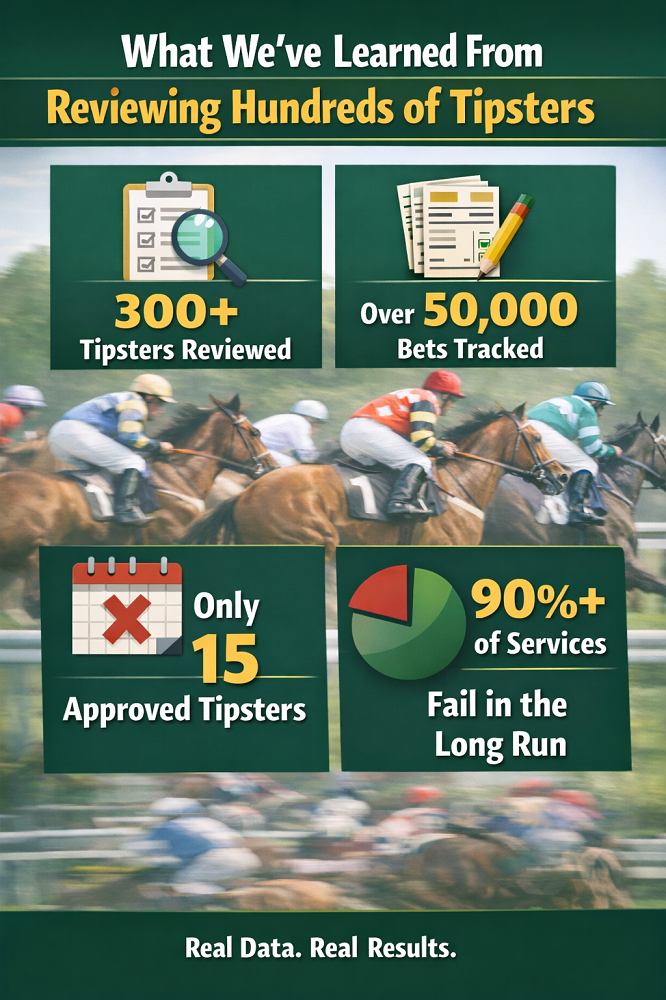
After reviewing 300+ tipsters and logging 50,000+ bets, one conclusion is hard to ignore: long-term profitability is rare — and more than 90% of services fail once you remove cherry-picked winners and marketing spin. 

Making a long-term profit on the horses isn’t easy and only an elite few manage it. 

In this guide to predicting horse racing, we’ll show you how smart bettors really do it: using data, understanding value, and (crucially) knowing when not to bet.

We’ll also break down the three main routes to getting predictions — free tips, paid tipsters, and DIY analysis — so you can choose the approach that fits your time, temperament, and bankroll…without getting taken in by the next “can’t miss” system.

If you want a repeatable process that puts evidence ahead of gut feel, you’re in the right place.
The Three Routes to Horse Racing Predictions

Three main routes exist for horse racing fans seeking predictions:

  1. Follow free tips
  2. Pay for professional tipsters; or
  3. Build your own prediction approach.

We’ll go through each option in detail below so you can decide which one is best for you.

Each has its advantages and drawbacks – here’s a quick summary table looking at all three:

Route Pros Cons
Free horse racing tips No cost, multiple opinions, accessible Herd behaviour shortens odds, quality varies wildly
Paid tipsters Time-saving, structured approach, some have proven edges Subscription costs, many scams, requires vetting
DIY analysis Full control, deep learning, can specialise in niches Time-intensive, steep learning curve, easy to fool yourself

Now let’s take a look at each of the three options in more detail.

Free Prediction Sites & Community Tipsters

Free horse racing tips sites typically offer daily selections, star ratings or value indicators, hot trainer/jockey lists, and comprehensive coverage of big horse racing festivals like Cheltenham, Royal Ascot, and the Grand National.

Many provide a nap of the day as their headline pick.

Benefits are obvious: no cost, access to multiple opinions, and data summaries including hot streaks, draw biases, and course stats.

You can consume daily horse racing tips without risking subscription fees.

The downsides are subtler. Popular free tips can shorten prices rapidly, especially around major ITV racing tips on Saturday afternoons.

When thousands of punters pile onto the same selection, the value evaporates before you get your first bet on.

We regularly see this around other races televised nationally—by the time you check odds, the 4/1 shot is now 5/2. 

That is exactly what we saw in our review of Hugh Taylor’s tipsexcellent results on the face of it, but the prices simply weren’t obtainable. 

Treat consensus tips as a starting point, cross-checking with your own analysis or with independently verified tipsters we review.

There are some good free tipsters out there, as highlighted in our guide to the best free racing tipsters—but beware of the pitfalls in following free tips, particular the risks of odds collapsing when following a popular tipster. 

Why Paid Tipsters Can Be One of the Best Routes to Profitable Horse Racing Predictions

When done properly, following a paid horse racing tipster can be one of the most effective ways to access profitable predictions — but only if the service has been thoroughly vetted first.

The reality is that the betting markets are tough to beat. Identifying value consistently requires time, data, discipline, and emotional control.

Good paid tipsters already have those foundations in place, which is why they can offer a genuine edge for bettors who don’t want to analyse every race themselves.

However, this route only works if you separate the few proven operators from the vast number of services that fail once results are tracked honestly.

That’s exactly where Honest Betting Reviews comes in.

We are an independent tester.

That means we run live trials of paid and free services—including horse racing systems—and publish full results with return on investment (ROI) and drawdowns.
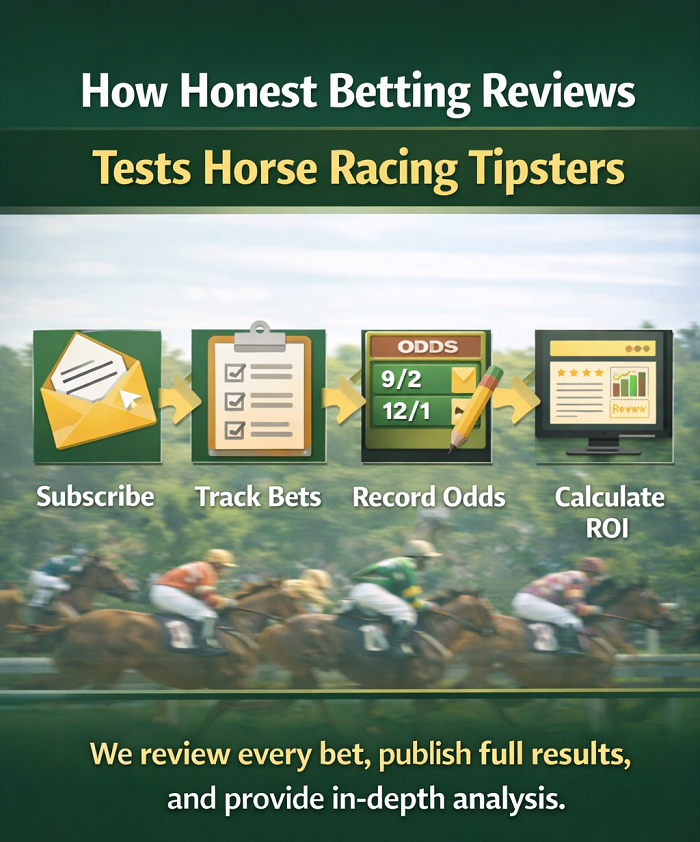
A long running horse racing tipster we trialled in 2024 for example, delivered 91 points profit over 1740 bets at advised prices but a 7 point loss at Betfair SP, highlighting the importance of price availability.

You can use our reviews to decide whether to copy a tipster, blend multiple services, or focus on learning your own predictive skills.

Why Vetting Matters (and Why We Do It)

The problem is that for every genuine professional tipster, there are dozens of services selling hype, screenshots, and short-term variance as “proof”.

That’s why we independently test paid tipsters through live trials, tracking:

  • Advised odds vs what’s actually available
  • ROI at level stakes
  • Drawdowns and losing runs
  • Strike rate and bank growth
  • Performance at Betfair SP

Only after months of data do we publish a verdict — positive or negative.

If you’re considering following paid tipsters, we recommend starting with our Best Horse Racing Tipsters list, where we detail services that have demonstrated long-term performance rather than short-lived runs of luck.

The Advantages of Following a Properly Vetted Paid Tipster

When we look at the paid services that have performed well in our long-term trials, they tend to offer several clear advantages:

  • Time efficiency – The analysis is done for you, allowing you to follow a structured strategy without spending hours studying racecards.
  • Consistent methodology – Profitable tipsters use repeatable processes rather than gut feeling or chasing narratives.
  • Value-driven betting – The best services focus on price and probability, not just picking likely winners.
  • Emotional discipline – Tipsters operate to a staking plan, removing the impulse and “tilt” that damage many DIY bettors.
  • Specialisation – Many successful services focus on specific race types, tracks, or seasons where they’ve identified an edge.

In short, you’re not paying for “inside information” — you’re paying for process, discipline, and experience.

Paid Tipsters Worth Checking Out

Based on our reviews and ongoing monitoring, the following services are well worth further investigation:

  • Bookies Enemy No.1 – Beating the bookies for over 15 years, with more than 1,100 points profit made since 2017. Voted the no.1 horse racing tipster by punters. 
  • Andy Holding – One of the most respected analysts in racing, known as the “pundit’s pundit.” Over 300 points profit made in our live trial and +680 points made in the six years prior. 
  • Loves Racing – A service specialising in big race meetings and festivals, where it has landed over 300 points profit at Betfair SP. Over 700 points profit made in total. 
  • Racing Intelligence – Racing expert with network of contacts used to find under-the-radar selections. Made 192 points profit in our trial and over 1,000 points win-only betting.
  • The Bet Alchemist – Jumps specialist with excellent Cheltenham record, over 750 points profit made. 

As always, the key isn’t subscribing to lots of services — it’s choosing one or two that fit your temperament, bankroll, and expectations, and following them with discipline.

Paid tipsters aren’t a shortcut to guaranteed profits, but when properly vetted and followed correctly, they remain one of the most reliable routes to profitable horse racing predictions available today.

DIY Prediction: Everything You Need to Know

Okay so if you don’t want to follow free or paid tipsters, there is another option: doing the work yourself. 

It takes a lot more time and discipline, but can be worth it in the long run—if you can make it work.

We’ll run through everything you need to know about DIY horse race predicting now, so buckle upbecause there’s a lot to know!

Building Your Own Edge

Building your own predictive edge offers full control, deeper understanding of risk, and the ability to specialise in niches where less attention means less market efficiency.

Irish racing tips for smaller meetings, five-furlong sprints at specific tracks, or apprentice races might offer opportunities that mainstream tipsters overlook.

A simple roadmap to start:

  1. Focus on one race type (e.g., UK handicap hurdles, 2m–2m4f)
  2. Gather data from 2022–2025 seasons using free racecards and results databases
  3. Test a few simple rules (e.g., ground plus trainer angle, or horses dropping in class)
  4. Keep a results log in a spreadsheet tracking selection, odds, and outcome
  5. Compare performance versus SP and Betfair SP to gauge if your predictions beat the market

Free or low-cost tools include racecards from Racing UK sites, basic databases, and form guides.

The key is honest record-keeping—fooling yourself with selective memory is the biggest trap.

One option is to combine DIY work with insights from reviewed tipsters. Learn from their write-ups and reasoning while still demanding statistical proof.

Many of the best services we review started as individuals refining their own predictive methods over many years, not overnight systems created to sell.

How to Find Value

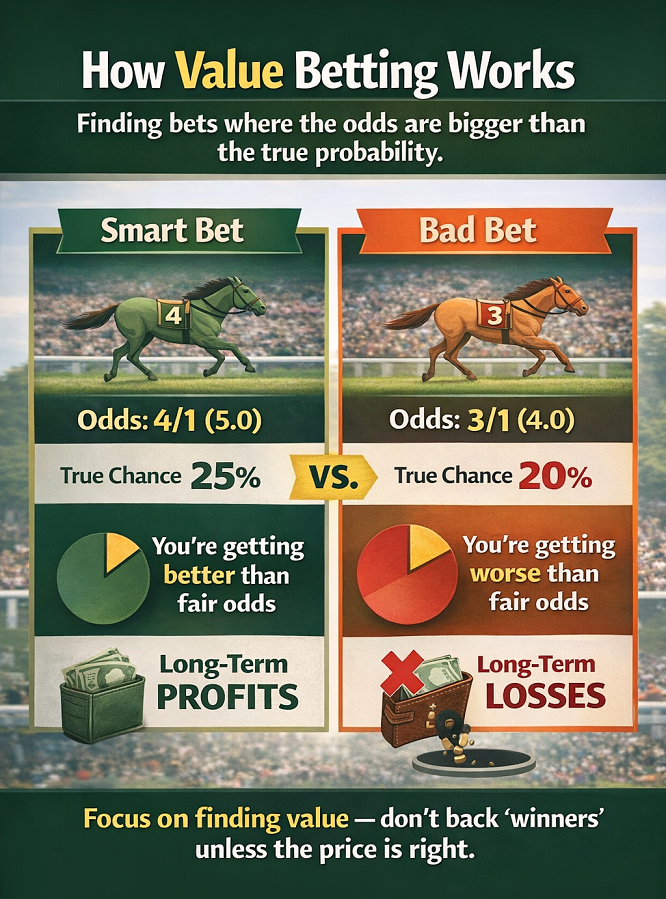
Predicting a race doesn’t mean knowing who will win. It means estimating each horse’s percentage chance of winning—and accepting that even a horse with a 40% chance will lose more often than it wins.

The goal is to find situations where your estimated probability exceeds what the betting odds imply, creating what’s known as a value bet.

Across our reviews, one of the most damaging misconceptions we see is the belief that good prediction equals frequent winners.

Any successful bettor will tell you however that it’s about finding those mis-priced horses—ones that the bookies have quoted too big a price on because they’ve focused on the horse’s last performance when conditions weren’t in its favour for example.

So if you can find a horse priced at 4/1 when really it should be 3/1, that’s a value bet and what you need to focus on.

Conversely, if you’re consistently backing horses that have already been backed in—maybe because a popular tipster has tipped them or the stable is confident in the horse’s chances—you might be backing 3/1 shots that should actually be 4/1. 

In that scenario you will only lose money over the long-term because you aren’t identifying value—just following the crowd.

Many losing systems post impressive strike rates but still fail because the odds are too short to support long-term profit.
What Drives a Successful Prediction Model

Three broad inputs drive any serious prediction model.

  • First, you need to assess horse ability and recent form: how fast has this horse run, against what quality of opposition, and how recently?
  • Second, context matters enormously—ground conditions, distance, the draw (starting position), and course characteristics all influence outcomes in ways that vary by race type.
  • Third, market information such as betting odds, money movements, and liquidity tells you what the crowd believes and where potential edges might exist if you disagree.

The prediction challenges differ sharply between race types.

A five-furlong sprint at York in August 2025 with 20 runners, where races can be decided by a nose and the draw plays a massive role, presents a very different puzzle than a small-field novice hurdle at Wetherby with just six runners and a clear class standout.

Flat races at Royal Ascot in 2025 will demand attention to speed figures and draw bias, while National Hunt racing at the 2026 Cheltenham Festival requires deeper analysis of jumping ability, stamina, and trainer patterns at the track.

Consider that five-furlong sprint at York. With a large field, the stalls on the stands’ side rail, and firm ground, you’d need to factor in draw position (historically low numbers have an edge), the likely pace scenario (will several front-runners clash?) and how each horse handles quick ground.

Contrast that with a Grade 1 novice chase at Sandown in December with four runners—here, class is easier to assess, but the sample size of runs is smaller and one mistake at a fence can change everything.

Understanding these structural differences is the first step toward realistic horse racing predictions.

When reviewing tipsters, we generally find that services that specialise narrowly—for example in all-weather racing, flat handicaps or high-quality jumps races, rather than trying to predict everything—consistently outperform generalist approaches in our long-term trials.

Key Data Factors in Predicting Horse Races

A strong prediction model doesn’t rely on a single angle or system.

Instead, it mirrors how professional bettors and quantitative teams weight multiple data factors, combining them into a coherent assessment of each runner’s chances.

Below are the core factors to consider, each of which can be turned into a repeatable checklist for your own analysis.

At Honest Betting Reviews, we don’t sell ratings or systems—but we regularly test commercial ratings and tipsters that claim to exploit these factors.

When we trial a prediction service, we look for evidence that they’ve built their methods on solid data, not cherry-picked examples.

  • Ground conditions and going: How does this horse perform on today’s surface?
  • Recent form and fitness: What have the last three to five runs shown, and how long since the last outing?
  • Trainer form: Is this yard in a purple patch or a cold spell?
  • Jockey and trainer form combinations: Do the rider and trainer have a strong recent strike rate together?
  • Draw and stall position: In flat races, does the draw advantage or disadvantage this horse given field size and going?
  • Course and distance suitability: Has this horse won or placed at this track over this trip before?
  • Pace setup and running style: Will the likely race shape suit this horse’s preferred running style?
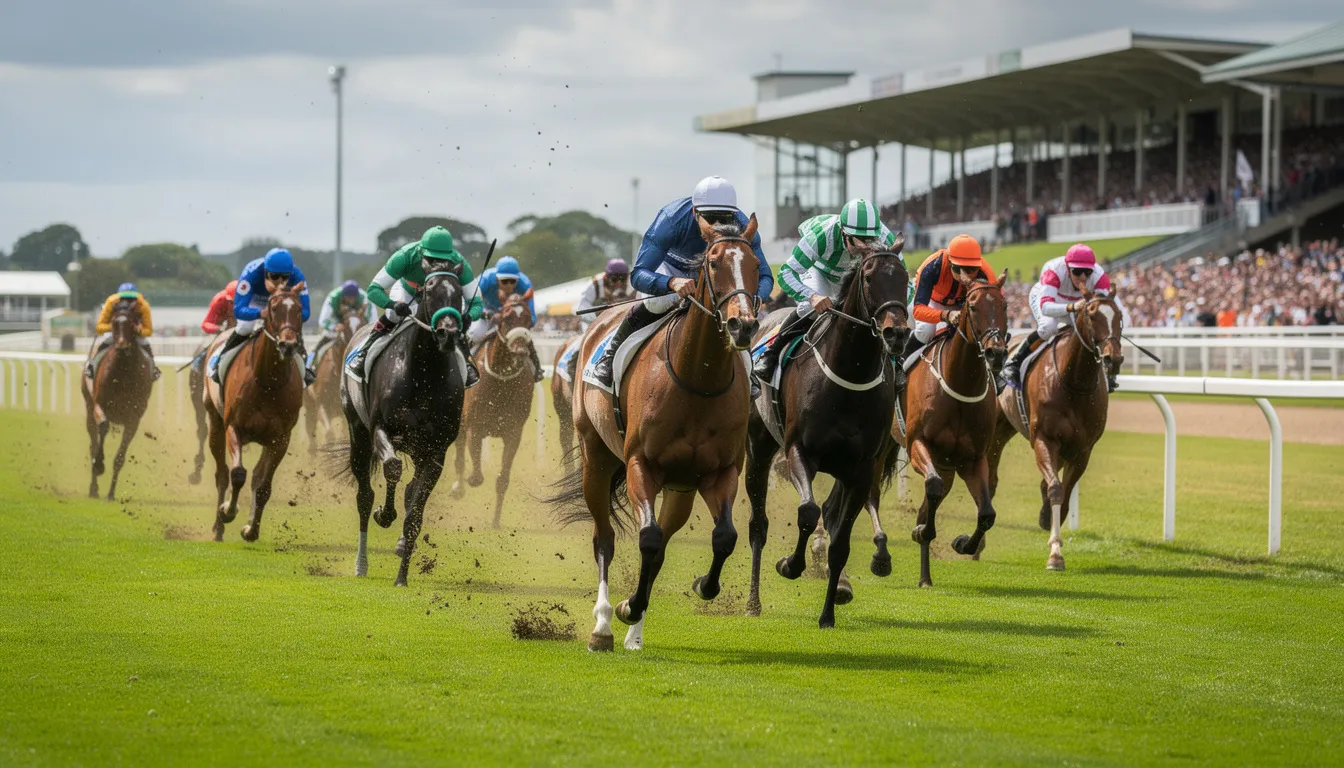
A dynamic scene of horses racing on a UK turf racecourse, showcasing a competitive field as they thunder down the track, capturing the excitement of horse racing fans. The image highlights the intensity of the race, perfect for those seeking the best horse racing tips and predictions.

One consistent finding from our reviews is that systems built around a single “magic angle” almost always fail once exposed to live betting conditions.

Sustainable prediction methods tend to combine at least three to five factors but often many more, applied consistently across large data sets.

Ground Conditions & Going

Going descriptions on UK racecards—firm, good to firm, good, good to soft, soft, and heavy—directly affect performance.

Some horses are transformed by soft ground, while others need a fast surface to show their best.

This is central to any prediction model, and ignoring it will cost you over time.

In our trials, tipsters who fail to adjust selections after late going changes almost always underperform.

Accounting for real-time conditions is not optional—it’s essential.

Constitution Hill’s dominance at the Cheltenham Festival in 2023 came on soft ground that suited his powerful galloping style.

By contrast, horses like Stradivarius consistently delivered their best performances on good to firm ground at Ascot.

When you’re scanning a form line, look for comments such as “acts on soft” or “needs a sound surface” and check whether the horse has won on comparable going in the last 12–18 months.

Predictive models typically convert historical going performance into numeric scores.

You can do something similar manually: if a horse has run five times on soft ground and won twice with two more placed finishes, that’s a 40% win rate and 80% place rate—strong evidence the conditions suit.

If it’s never won on heavy, treat that as a warning.

Here’s a quick summary table for what to check when assessing the ground:

What to check What you’re looking for Why it matters Quick tip
Today’s going Firm / Good–Firm / Good / Good–Soft / Soft / Heavy Some horses need fast ground; others improve massively when it’s softer. Confirm the official going on race day.
Proof on similar ground Wins/places on today’s surface (ideally within last 12–18 months) Recent evidence is far more reliable than old form or “gut feel”. Check recent runs on comparable going, not just overall record.
Form comments Notes like “acts on soft” or “needs a sound surface” These clues often reveal whether a horse will underperform on the wrong ground. Use comments as a guide — then verify with results.
Simple going stats How often it wins/places on that ground Turns “ground preference” into something measurable. Example: 5 runs on soft, 2 wins + 2 places = strong fit
40% win / 80% place
Red flags Never won on heavy (or repeatedly ran poorly) Not a guarantee — but it’s a warning sign the conditions may blunt performance. Be cautious if there’s no evidence they handle testing ground.
Late changes Rain shifting “Good” to “Good–Soft” (or worse) A going change can flip the race bias and invalidate earlier picks. Recheck going about 1 hour before the off.
Tipster adaptability Whether selections are adjusted after going updates In HBR trials, tipsters who ignore late going changes tend to underperform long-term. A “set and forget” approach is usually a bad sign.

Mobile tip: swipe left/right on the table to see all columns.

A practical habit: check the official going again an hour before the off. Late rain can shift conditions from good to soft in minutes, changing the bias and therefore your predictions.

Racing tips that don’t account for going adjustments are incomplete.

Recent Form & Fitness

Most quantitative systems weight the last three to five runs more heavily than older history, and they track days since last run to gauge fitness.

A horse returning after 200+ days off is a very different proposition from one backing up 30 days after a confidence-boosting win.

In National Hunt racing, there’s a common pattern where horses improve on their second run after a wind operation or after a seasonal reappearance.

If you’re analysing November–January races and spot a horse that ran flat on debut but has a trainer known for bringing them on for a second outing, that’s worth noting.

Context matters when interpreting finishing positions. A fifth of 20 in a strong Class 2 handicap at Royal Ascot in 2025 may represent better form than an easy win in a weak Class 5 at a minor track.

Learning to “read between the lines” of results separates sharp bettors from those who just back last-time-out winners blindly.

Some trainers are renowned for having horses ready to win fresh. Nicky Henderson’s autumn National Hunt runners often arrive fit to race first time up, while William Haggas on the flat is known for seasonal debutants primed to perform.

At Honest Betting Reviews, we favour prediction services that demonstrate a robust method for form adjustment rather than simply following obvious momentum plays.

Trainers, Jockeys & “Hot” Connections

Trainer and jockey strike rates—wins divided by rides—matter, but current form streaks matter more when predicting races in any given week or month.

A yard hitting 30% winners over the last 14 days is in a purple patch that lifts the chances of all their runners.

Consider January 2025 National Hunt meetings where a trainer like Paul Nicholls enters a hot streak after a quiet spell.

Suddenly, backing anything from that yard at tracks like Exeter or Wincanton becomes appealing.

Some models use rolling 30-day win percentages or level-stakes profit figures to assign a “hot” bonus to certain yards and riders.

That said, blindly following big names loses money over time because the market already prices in reputation.

The value lies in context: a top jockey like William Buick taking a spare ride in a low-grade handicap at Wolverhampton is more significant than a claimer booking in a Group 1 at Ascot.

Gordon Elliott sending a well-handicapped horse to a smaller Irish meeting with a conditional jockey aboard might offer more value than his obvious Cheltenham contenders.

At the same time, one pattern we repeatedly see in profitable tipsters is a willingness to oppose fashionable yards when prices are compressed. Reputation is usually overvalued by the market.

Draw, Course & Distance

Draw bias is real but widely misunderstood. Low draws help over five furlongs at Chester, where the tight left-handed bends favour inside positions.

On soft ground in large-field sprints at Ascot, high draws can gain an advantage on the stands’ side rail. Stall data from 2024–2025 seasons should inform your predictions in flat races.

“Horses for courses” is more than a cliche. Epsom’s undulations, Cartmel’s tight bends, and the stamina-sapping uphill finish at Sandown all suit specific types.

Prior course wins affect prediction ratings because they confirm a horse handles the idiosyncrasies of that track.

Distance suitability comes from pedigree and past performance. Milers stepping up to ten furlongs in the Juddmonte International at York may struggle to stay, while staying types targeted at the three-mile-two-furlong Cheltenham Gold Cup trip need proven stamina evidence in their form.

Before betting any particular race, scan course record, distance record, and assess whether the draw looks advantaged or disadvantaged given field size and going.

At Honest Betting Reviews, when we test prediction systems claiming to beat the market via draw bias or course factors, we insist on long-run proof over multiple seasons—not a handful of winners at Chester.

An aerial view of a distinctive UK racecourse showcases the intricate layout of the track, ideal for horse racing fans and those looking for the best horse racing tips. The image highlights the winding paths and starting points, setting the scene for prestigious races and big horse racing festivals.

Pace, Running Style & Race Shape

Pace maps—diagrams showing where each horse is likely to position itself in the early stages—are increasingly used by sophisticated bettors.

Front-runners, prominently raced horses, and hold-up performers are affected differently by field composition and race tempo.

At certain all-weather tracks like Lingfield over specific trips, front-runners hold an edge because the surface rewards those who control the pace.

Conversely, in big-field six-furlong handicaps at Ayr’s Gold Cup meeting, strong early pace often leads to collapses where closers sweep past tired leaders late on.

Advanced prediction models simulate likely race shape and downgrade horses drawn wide with a hold-up style in slowly-run races, since they’ll give away ground with no pace to run into.

You can apply a simpler manual method: count the likely leaders in the racecard comments and imagine what happens if they duel early versus one getting an easy lead.

A lone front-runner in a tactical race has a significant edge.

Many commercial ratings ignore pace entirely. When we review a tipster that uses pace maps or sectional times, we highlight that as a plus—it shows more advanced data integration than surface-level form analysis.

Andy Holding is a tipster for example who uses sectional timings in his speed ratings and is one of the best horse racing tipsters we have reviewed.

Traditional vs Algorithmic Prediction Methods

Old-school “form students” predict races by manually reading racecards, studying previous form, and applying intuition built over years of watching racing.

This approach can work but is time-consuming and prone to cognitive biases. You might overweight a horse because you backed it before, or dismiss a runner because the jockey once cost you money.

Statistical and machine learning models now used by betting syndicates and some paid services take a different approach.

Common methods include speed figures (translating times into comparable ratings), handicap ratings analysis, regression models that weight multiple factors, and more opaque “black-box” AI systems that claim to find hidden patterns.

Research on horse racing prediction has shown that logistic regression models can achieve around 28% win prediction accuracy—slightly better than the roughly 26.4% achieved by simply backing the market favourite.

Random Forest classifiers edge this further at around 28.9% in some studies.

No algorithm is perfect. Unpredictability from trouble in running, jockey decisions, and pure random variance means upsets happen regularly.

The 2009 Grand National winner Mon Mome started at 100/1—no model would have confidently predicted that outcome.

We independently test services that claim to use AI models, tracking real bets over months to see if the marketing matches reality.

Be sceptical of vendors promising guaranteed profits or “can’t lose” AI systems, especially if they hide long-term records.

If a system genuinely delivered consistent profits, its creators would use it quietly rather than selling it for a monthly subscription fee.

What a Good Horse Racing Algorithm Actually Uses

A credible algorithm typically draws on historic race results spanning five or more years, sectional times where available, official ratings, going records, draw data, plus trainer and jockey statistics.

The depth of data matters—superficial inputs produce superficial outputs.

Consider the example of analysing all UK flat races from 2018–2024 to estimate how much a wide draw at Kempton over seven furlongs really matters after adjusting for field size and going.

This requires thousands of data points and careful statistical controls.

Done properly, such analysis might reveal a 3% disadvantage for high draws in fields of 12+ runners—useful information if the market hasn’t priced it in.

Serious models test against out-of-sample data: building on 2018–2022 results, then validating on 2023–2024 outcomes.

This guards against “curve fitting” where a model appears brilliant on historical data but fails on future races because it was overly tailored to specific past patterns.

When we trial algorithm-based tipsters, we look for proof that they’ve done this kind of validation.

Back-fitted winning streaks mean nothing; forward-tested results over hundreds of live bets mean everything.

Limitations & Randomness in Race Prediction

Sources of randomness in horse racing are numerous: bad starts, traffic problems in running, jockey errors, unreported minor injuries, sudden weather shifts, and plain bad luck.

A horse can prepare perfectly, travel smoothly, and still get boxed in on the rail when the gap closes.

Grand National renewals provide notorious examples—false starts, pile-ups at fences, and loose horses interfering with the field have all shaped results.

Big-priced winners at Royal Ascot routinely rewrite narratives that seemed certain beforehand.

Previous winners of prestigious races sometimes return and run nowhere for reasons never fully explained.

Even elite prediction models endure losing runs and losing months. A 28–30% strike rate means roughly 70% of selections lose. Success is about long-term edge, not short-term perfection.

If you approach racing predictions expecting consistent winners every day, you’ll either quit or go broke.

The question to ask isn’t “Will this system win today?” but “Will this approach profit over 500 bets?”

Using Odds & Value: Turning Predictions into Profits

A prediction is only worth backing if the odds are bigger than the true probability. This is value betting in its simplest form.

If you believe a horse has a 25% chance of winning but the betting odds imply only a 20% chance (5.0 decimal, or 4/1 fractional), you have an edge.

Back enough of these situations and you’ll profit over time, even if many individual bets lose.

Walk through a concrete example: a 10-runner handicap at Sandown in June 2025. You analyse the race and estimate probabilities for each horse.

Your top selection has, you believe, a 20% chance.

The market prices it at 6.0 (5/1), implying just 16.7% probability. That’s a value bet. Another horse you like at 15% is priced at 4.0 (3/1, implying 25%)—not value, so you skip it despite fancying the horse.

To convert fractional odds to implied probability: divide 1 by (decimal odds). So 5.0 decimal = 1/5 = 20% implied probability.

Compare that with your own estimate or a respected rating’s implied chance.

Honest Betting Reviews ranks horse racing tipsters not just on headline winners but on long-term ROI at level stakes, which reflects value-finding ability.

A tipster with a 22% strike rate and +10% ROI is more valuable than one with 35% winners and -5% ROI, because the second is backing too many short-priced horses without true edge.

Each-way value often exists in big fields. In races with 16+ runners—think Grand National-style handicaps or cavalry charges at Glorious Goodwood—extra place offers from UK bookmakers can shift the maths in your favour.

Best odds on each-way terms sometimes exceed the underlying probability of placing, creating value even if the win bet doesn’t.

Bankroll Management & Staking

Even accurate predictions fail without sensible staking. A 50-bet losing run is possible even with a genuine 30% strike rate—it’s just variance, not proof your approach is broken.

Protecting against downswings matters as much as finding winners.

Kelly staking—a formula that sizes bets according to edge and odds—is mathematically optimal but dangerous if you overestimate your edge.

For most readers, simple level stakes or small percentage staking works better: risking 0.5–2% of your total betting bank per selection limits damage during cold streaks.

A numerical example: you start with a £1,000 bank and stake £10 per point (1% of bank). After 50 bets at 28% strike rate and average odds of 4.0, you might easily see your bank drop to £850 before recovering.

That’s not a crisis—it’s normal variance. But if you’d staked £50 per bet (5%), the same run could wipe out half your bank.

At Honest Betting Reviews, we record tipsters using point-based staking in trials alongside other metrics like ROI and strike rate so readers can easily compare services and estimate realistic variance.

We also encourage separating a dedicated betting bank from everyday finances. Bet responsibly, set limits, and never chase losses with inflated stakes.

UK-licensed bookmakers offer deposit limits and self-exclusion tools—use them if needed.

Practical Prediction Workflows for Major Races & Festivals

Predicting everyday midweek meetings differs from analysing marquee events like the Cheltenham Festival, Royal Ascot, Grand National at Aintree, and the Epsom Derby.

Big events attract more data, more public interest, and more market efficiency—but also more opportunities to find overlooked angles.

For each major event, a structured research workflow three to seven days before helps:

Festival Typical Dates Key Workflow Steps
Cheltenham Festival Mid-March (2026: March 10–13) Analyse Irish raiders, check ground forecasts, review trainer festival strike rates
Royal Ascot Mid-June (2025: June 17–21) Focus on draw data, speed figures, and three-year-old improvers
Grand National Festival Early April (2026: April 9–11) Study jumping records, weight trends, and previous Aintree runs
Derby Festival Early June (2026: June 5–6) Pedigree analysis, trial form, and ability to handle Epsom camber

At Honest Betting Reviews, we approach big meetings by focusing on tipsters and prediction models with proven historic ROI at those specific festivals.

A service that excels at Cheltenham handicaps may struggle with Royal Ascot sprints—specialisation matters.

Example: Predicting a Cheltenham Festival Handicap

Walk through a hypothetical analysis of a 20+ runner Cheltenham handicap chase in March 2026.

These races are notoriously competitive but rich in data if you know where to look.

Start with trends: what age range wins most often? What official rating band tends to succeed? How important is previous Cheltenham experience?

Historical data from the last 10 renewals provides a statistical shortlist before you even look at this year’s entries.

Layer in ground conditions. Cheltenham ground varies dramatically—the 2023 Festival ran on soft, while some years produce good ground. Horses with proven soft-ground form gain an edge when the forecast is wet.

Trainer patterns matter enormously. Irish raiders, particularly from Willie Mullins and Gordon Elliott, dominate certain Cheltenham races while UK yards hold an edge in others.

Previous winners often come from the same connections year after year.

On race morning, combine your initial statistical shortlist with live market moves.

If a horse you’ve identified as overpriced suddenly shortens from 16/1 to 10/1, that’s informative. If it drifts to 25/1, that might also tell you something.

Each-way betting and extra places from bookmakers often make sense in these races.

With 20+ runners, a horse with a 10% win chance might have a 35% place chance at races offering extra places down to sixth.

Run the numbers—sometimes the place element carries more expected value than the win.

At Honest Betting Reviews, we specifically assess festival-focused tipsters.

Some services peak in these big-field, data-rich environments where their edge compounds across multiple selections.

Loves Racing is one such tipster with an excellent record at the major festivals, with over 300 points profit made at major festivals.
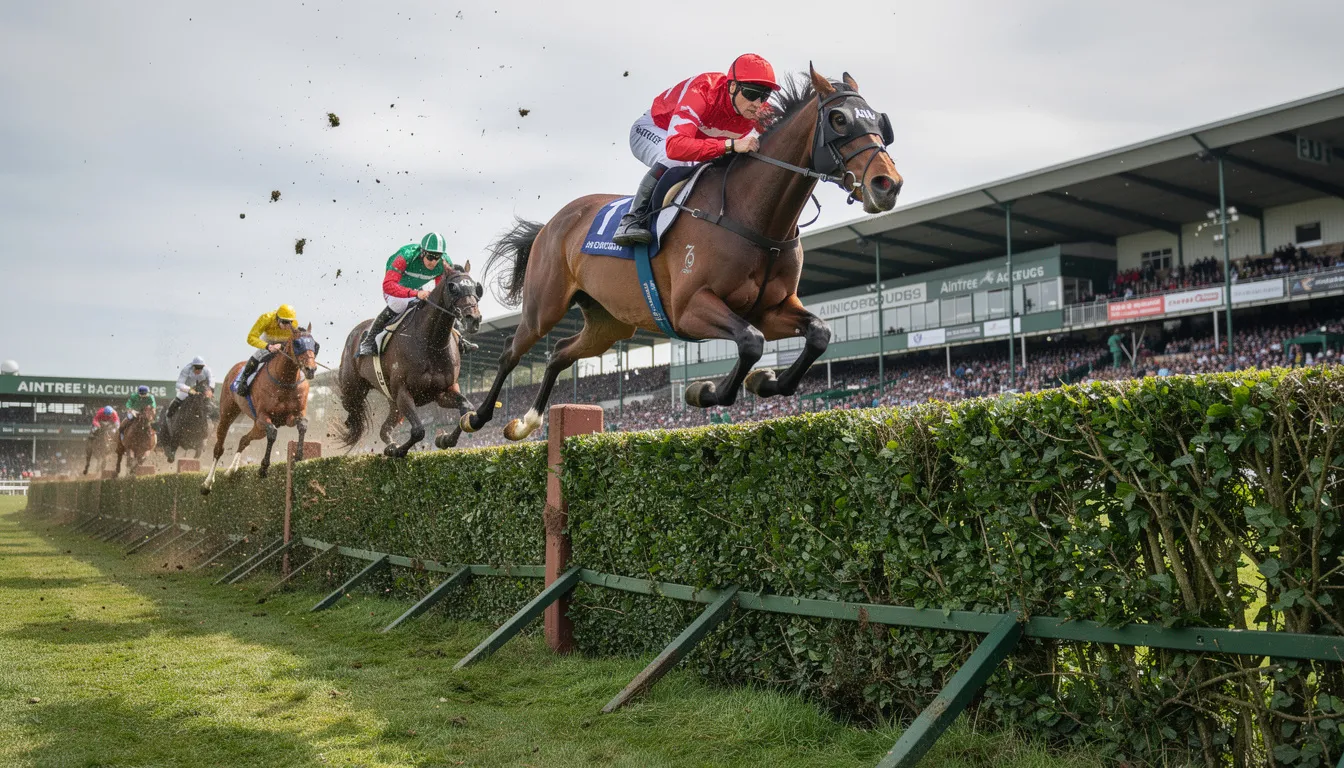
The image depicts a thrilling moment at Aintree racecourse, where multiple horses are gracefully leaping over fences during a prestigious horse racing event. This scene captures the excitement of horse racing, appealing to fans and enthusiasts looking for the best horse racing tips and predictions.

Example: Predicting the Grand National

The Grand National at Aintree—30 fences, four miles two and a half furlongs, and a field of 40 runners—presents unique prediction challenges.

The error rate is higher than virtually any other race because so many things can go wrong.

Over the last 20 years, winners at 50/1 and 100/1 have landed, scrambling form books and prediction models alike.

Neptune Collonges won by a nose, Auroras Encore came from nowhere at 66/1, and Mon Mome’s 100/1 success in 2009 remains etched in racing folklore.

Randomness and luck play a larger role here than in any other major race.

A cautious predictive approach focuses on:

  • Jumping reliability: clean rounds at Aintree previously or over similar fences
  • Proven stamina: winners in 3m+ races, ideally 3m2f or beyond
  • Weight trends: horses towards the lower end of the weights historically outperform
  • Trainer intentions: yards that target the race specifically (often evidenced by prep runs at Haydock or Wetherby Grand National Trial)

Consider spreading stakes over a small portfolio of selections—three or four horses with genuine chances—rather than lumping on a single pick.

Place markets and “without the favourite” markets can offer value when the outright win looks too random to predict confidently.

At Honest Betting Reviews, we evaluate Grand National strategies on multi-year performance.

A tipster who found the 2024 winner but lost on the previous five renewals hasn’t proven anything useful.

Exotic bets and each-way multiples need evidence across multiple big events before we recommend them.

Evaluating Prediction Services: How Honest Betting Reviews Helps

Our core process at Honest Betting Reviews is straightforward: we select a horse racing prediction service, paper-trade or real-bet their tips over three to six months, then publish full, unedited results.

No cherry-picking winners, no hiding losing runs.

The metrics we track include:

  • Strike rate: percentage of winning selections
  • Return on investment (ROI): level-stakes profit as a percentage of total staked
  • Maximum drawdown: worst peak-to-trough decline during the trial
  • Number of advised bets: sample size matters for statistical reliability
  • Average odds: services backing short prices need higher strike rates to profit
  • Odds availability realism: comparing advised odds to what was actually available

Some reviewed services fail. We leave negative results online to protect readers and illustrate the difficulty of beating horse racing markets.

Anyone can find winners occasionally; consistently finding value is rare.

Use our detailed reviews to cross-check any prediction product or tipster you’re considering rather than relying on vendor marketing alone.

We test services that cover today’s horse racing, tomorrow’s racing, Irish racing tips, and every race from big meetings to quiet midweek cards.

New customers considering a tipster subscription deserve independent verification before committing money.

Whether you’re chasing free bets from bookmaker sign-ups (remembering that free bet stakes aren’t returned, free bets expire after set periods, and eligibility restrictions often apply), using sports free bets strategically, or building a serious betting approach with multiple bet types across betting exchanges and traditional bookmakers, prediction accuracy underpins everything.

Customer offer promotions—whether free bet rewards valid for specified periods, acca free bets, or free bet builders—can add value, but only if your underlying selections have genuine edge.

Racing across UK and Ireland today offers endless opportunities—from novice hurdle races at small tracks to the biggest events on the calendar.

Horses from trainers like Indian River stables or big shout yards at the middle east meetings now held under UK and Ireland rules all feed into the data generated by modern prediction systems.

Single bets, multiple bet combinations, and bet slip construction all depend on finding genuine value in the odds.

At Honest Betting Reviews, we’re transparent about what works and what doesn’t.

We’ve tested services covering flat races, National Hunt racing, best horse racing tips claims, and everything in between.

Our goal isn’t to sell you anything—it’s to help you navigate a market full of exaggerated claims and protect your betting bank from predatory scams.

Predicting horse racing outcomes requires patience, discipline, and acceptance that even the best models lose regularly.

The difference between profitable bettors and everyone else isn’t luck—it’s evidence-based decision-making, honest record-keeping, and the willingness to walk away from bad value.

Check our review database before subscribing to any service, compare long-term ROI rather than headline winners, and approach every race with realistic expectations.

That’s how you turn predictions into profit.

 

Why Betting Strategies Fail More Often Than People Admit

Betting strategies are everywhere.

From paid systems and tipsters to Telegram groups promising “long-term profit,” many bettors believe that finding the right strategy is the hardest part. Once you have it, the rest should be simple. Place the bets, follow the rules, and wait for the results.

This belief is understandable. A good strategy promises certainty in a space defined by uncertainty. Find the edge once, follow it blindly, and let the maths do the work.

In reality, things rarely work that way.

Many bettors follow the same strategies, yet end up with very different outcomes. Some make steady profits, while others struggle or suddenly hit a wall.

And often, the reason has very little to do with the strategy itself.

For example, two bettors might follow the same football over 2.5 goals system, using identical leagues, filters, and staking.

One places bets early with soft bookmakers and quickly runs into stake limits.

The other spreads bets across exchanges or multiple accounts and continues without interruption.

On paper, they followed the same strategy. In practice, they operated in completely different environments.

The difference in results comes from execution and platform behaviour, not the quality of the selections.

Betting Systems Are More Popular Than Ever

The demand for betting systems keeps growing. People want structure. They want logic. They want something that feels controlled in a space that’s naturally uncertain.

Systems reduce emotional decision-making. They replace instinct with rules, and that alone can feel like progress for many bettors.

Tipsters show spreadsheets. Systems show historical results. Everything looks clean and convincing on paper.

Upward-sloping profit curves, neat strike rates, and carefully chosen time frames can make almost any system look compelling.

But betting doesn’t happen on paper. It happens on real platforms, with real rules, limits, and human decisions behind the scenes.

This gap between theory and reality is where many strategies quietly fall apart.

A common example is a back-tested system that shows strong profits at average odds of 2.10. In real time, those prices might only be available for seconds.

By the time most bettors try to place the bet, the odds have already moved and the edge has gone.

What looked profitable in theory becomes marginal once real-world execution is factored in.

When a “Winning Strategy” Still Loses

This is where frustration starts.

A bettor follows the system perfectly. The picks are correct. The timing is right. The results are positive. Then suddenly, something changes.

Stakes are limited.
Certain markets disappear.
Odds drop faster than usual.
Accounts get restricted.

At first, these changes often feel subtle. Limits are reduced quietly. Maximum stakes become odd figures like £4.37 or £7.12. Bets still go through — just not at the level the strategy requires.

At this point, many players blame bad luck or assume the system has stopped working. In reality, the environment has changed, not the strategy.

A strategy designed around £25 or £50 stakes simply cannot function when those stakes are no longer allowed. The maths no longer works, even if the selections continue to win.

The Problem Nobody Likes to Talk About: Player Limiting

One uncomfortable truth in betting is that winning players are often not welcome.

Many betting sites quietly limit accounts once a player shows a consistent winning streak. This does not always happen overnight.

Sometimes it starts slowly with smaller maximum bets, fewer available markets, or delays that were not there before.

This process is rarely explained clearly and is almost never acknowledged openly by bookmakers.

From the bettor’s perspective, it can feel arbitrary and unfair — especially when nothing appears to have changed on their side.

For casual players, this may never become an issue. But for anyone trying to bet seriously or consistently, it becomes a major problem.

A strategy cannot perform if you are no longer allowed to place meaningful bets.

Matched betting provides a clear illustration. Many matched betting strategies are genuinely risk-free in theory.

Yet once a player extracts consistent value from offers, accounts are often limited or closed entirely.

The strategy worked exactly as intended — the platform simply stopped allowing it.

The same dynamic applies to many profitable betting systems.

Strategy Is Only Half of the Equation

This is the part many bettors underestimate.

They spend weeks choosing a system but almost no time evaluating where they will actually place their bets. Yet the platform itself has a huge impact on long-term results.

Bookmaker policies, risk tolerance, and enforcement behaviour can undermine a strategy just as quickly as poor selections.

Things like how often accounts get limited, how withdrawals are handled, whether rules are applied consistently, and how transparent the operator really is all affect outcomes just as much as any betting model.

Consider a tennis value betting approach that targets underdogs priced between 2.50 and 3.50. The edge relies on being able to consistently take those prices.

If a bookmaker routinely restricts winning players or voids bets due to “palpable error,” the model breaks down — even if the selections beat the closing line.

The issue is not predictive accuracy, but operational friction.

Why Transparency Matters More Than Ever

More experienced bettors are starting to think differently.

Instead of chasing the next winning tip, they focus on understanding the full setup — both the strategy and the platform.

They look for clear terms, known operators, and real user experiences rather than flashy promises.

This shift often comes after negative experiences: sudden stake limits, delayed withdrawals, or unexplained account restrictions.

Once that happens, transparency becomes more valuable than headline ROI figures.

This shift toward transparency is long overdue, especially in an industry where problems are often discussed only after something goes wrong.

Many experienced bettors now prioritise reliability over maximum odds. Being able to place the same stake consistently, without interference, is often more valuable than chasing slightly bigger prices in unstable environments.

How Some Bettors Research Platforms Before Committing

Rather than trusting ads or word of mouth, some bettors now use independent review resources to get a broader picture of betting and gambling platforms.

This approach mirrors how people research financial products or online services — by checking multiple sources before committing money.

One example is legit.casino/reviews, where users can find structured information about online gambling platforms, including licensing details, ownership, country restrictions, and reported player issues.

It is not about finding “the best” site. It is about understanding where potential risks exist before money is involved.

We regularly hear from bettors who only discover platform issues when attempting their first withdrawal. Delays, unexpected verification requests, or sudden rule changes can quickly undermine trust and disrupt a strategy.

Final Thoughts

A betting strategy can look perfect in theory and still fail in practice.

Not because it is flawed, but because the real-world conditions do not support it. Limits, restrictions, and platform behaviour play a much bigger role than most people want to admit.

Many strategies later labelled as “bad systems” or “scams” were simply incompatible with the environment they were used in.

Applied elsewhere, under different conditions, they may have performed very differently.

Long-term betting success is not just about picking winners. It is about choosing the right environment to operate in — one that allows you to actually apply your strategy without constantly changing the rules.

Ignoring that part is often the most expensive mistake bettors make.